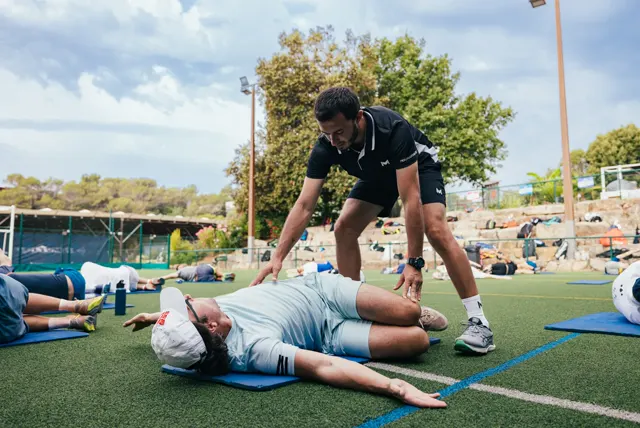
Preparation · Relaxation
Relaxation in tennis: exercises for a more fluid game
Relaxation in tennis is the ability to tense only the muscles you need, at the right moment. A loose arm is faster, tires less and gets injured less: you train it with breathing, wrist and shoulder release exercises and a between-point routine.
Key takeaways
- Loose does not mean limp: the stroke stays dynamic, but without needless tension before and after contact.
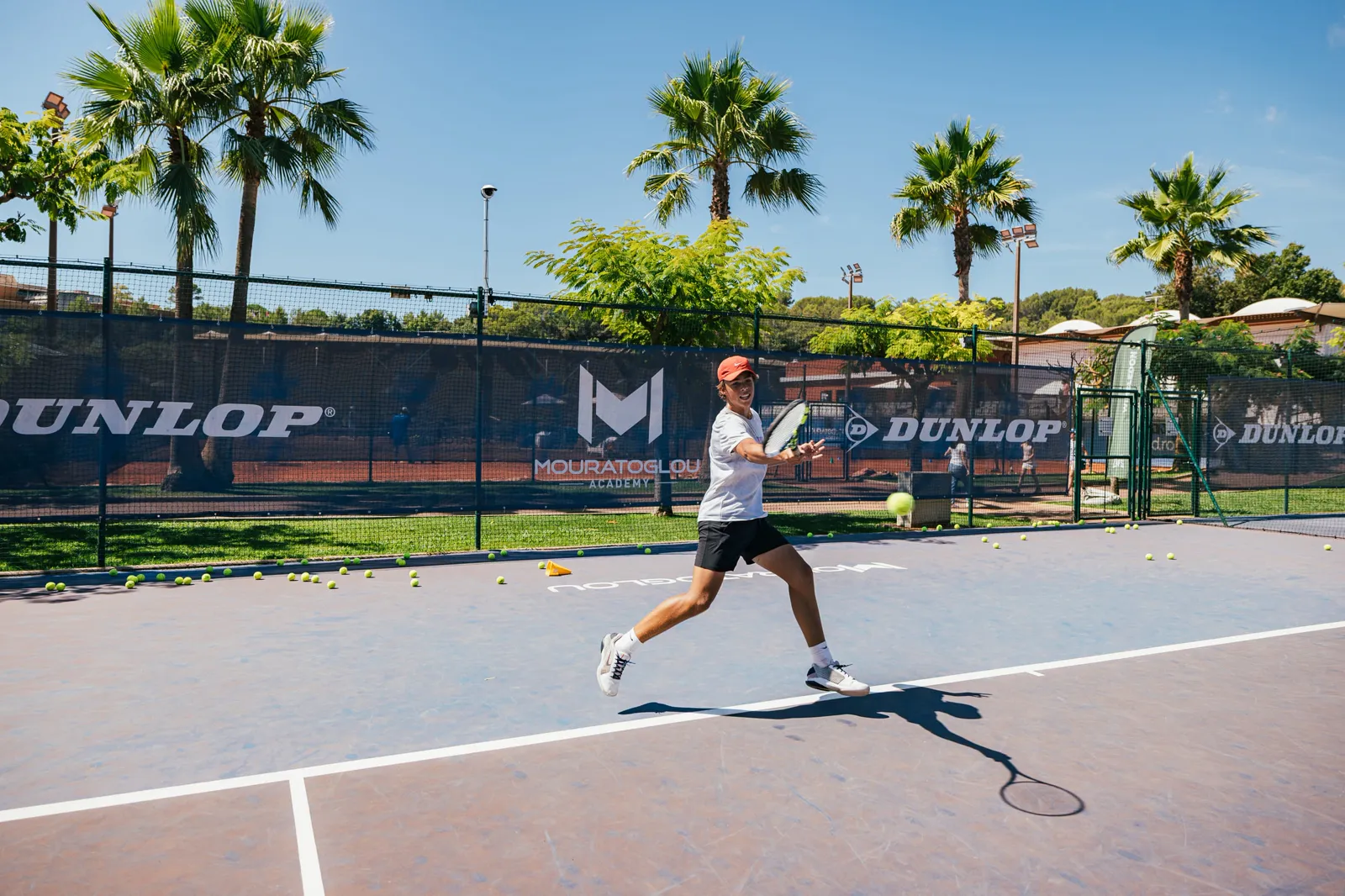
- More speed: a relaxed arm works like a whip and produces more racquet-head speed than a stiff one.
- Fewer injuries: repeated tension in the shoulder, elbow and wrist encourages pain.
- The grip benchmark: a pressure of 3 to 4 out of 10 on the handle is enough during the preparation.
- Mind and body are linked: stress tightens the muscles; breathing loosens them.
Why is relaxation essential in tennis?
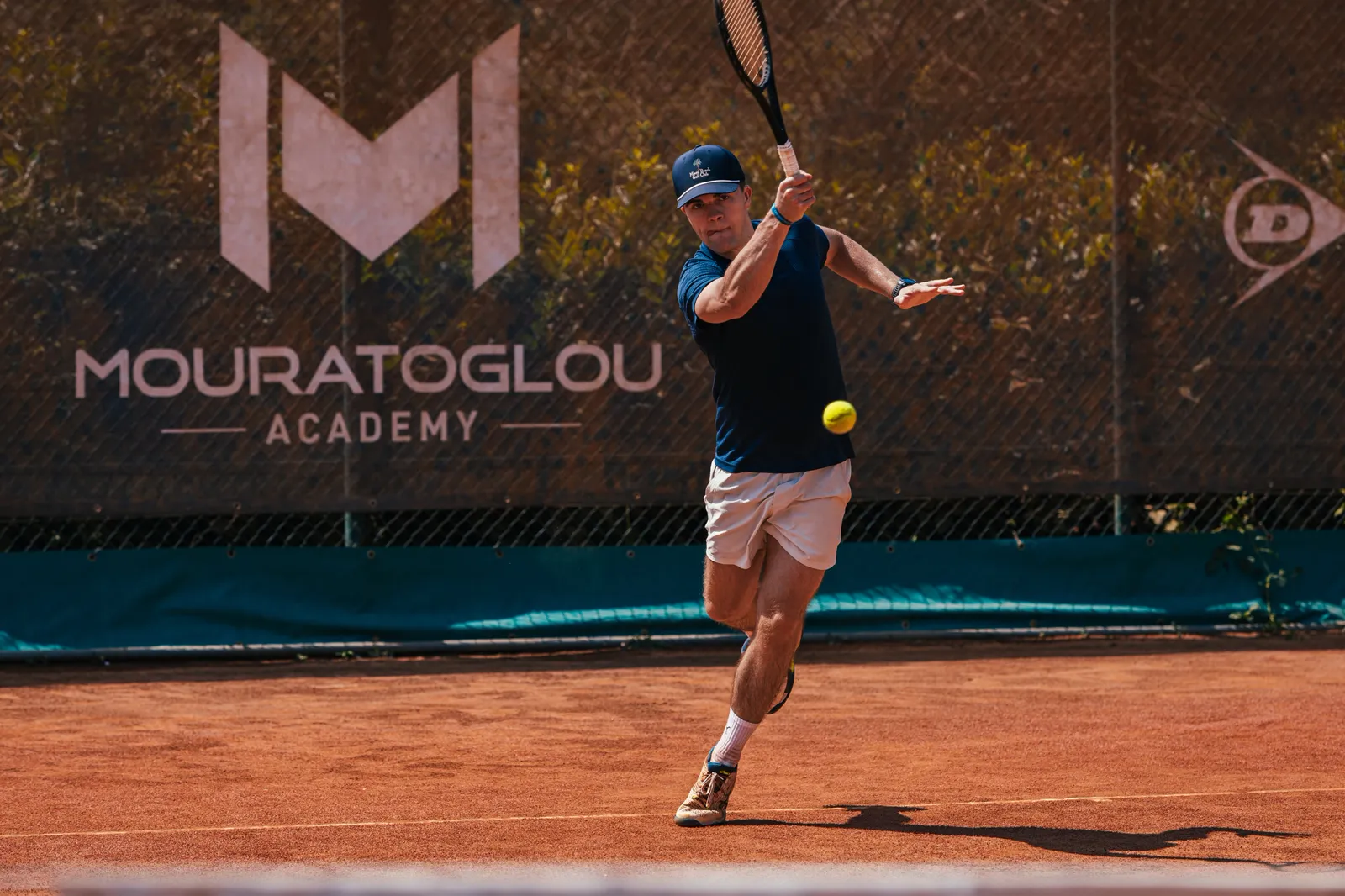
Many beginner and intermediate players tense their muscles far more than needed. Relaxation in tennis means using only the tension that helps: the legs and trunk work, while the arm and hand stay supple until contact.
What muscle tension costs you
- Less speed: a tense muscle brakes the movement; the arm no longer “whips”.
- Less range: strokes become short and jerky.
- Less touch: a clenched hand feels the ball poorly, especially on volleys and drop shots.
- More fatigue: you waste energy, rally after rally.
- More injuries: repeated tension loads the shoulder, elbow and wrist (see preventing tennis injuries).
What relaxation gives you
More fluid strokes, more ball speed for the same effort (especially on serve), more accuracy and the ability to play longer without tiring.
Which exercises help you relax in tennis?
Exercise 1: conscious breathing
Breathe out as you hit, audibly if needed: exhaling stops you holding your breath and loosens the upper body. Between points, take 2 cycles of breathing in through the nose and a long breath out through the mouth.
Exercise 2: wrists and shoulders
- Let your arms hang and shake your hands for 10 seconds, as if drying them.
- Lift your shoulders towards your ears, tense, hold 3 seconds, then drop them. Repeat 3 times.
- Do 10 slow, wide backward shoulder circles.
- With racquet in hand, draw slow circles while feeling the weight of the racquet head.
Exercise 3: the pressure scale
In a rally, deliberately grip the handle at 9 out of 10 for 5 balls, then at 2 out of 10 for 5 balls, then find your middle ground (3 to 4). The contrast teaches you to feel and dose your tension.
Exercise 4: active relaxation on the move
When running to the ball, look for light footwork and smooth, not jerky, movement. In mini-tennis, play “in slow motion” with a supple arm, then gradually increase speed without losing that feeling.
Exercise 5: the relaxed serve
Serve at 50% power, thinking only about a loose arm and a racquet head that accelerates by itself. The ball often goes almost as fast as when you force it. Then raise the intensity step by step.
How do you build relaxation into your game?
A relaxation routine
- In the warm-up: shoulder, wrist and neck mobility before hitting hard.
- Between points: back to the net, drop your shoulders and jaw, breathe, then straighten your strings. See our between-point routines.
- At changeovers: a few seconds with eyes closed, scanning for tension (hands, shoulders, face).
Mental relaxation, the key to physical relaxation
Stress turns straight into tension. Stay focused on the ball and the current point, not on the result. Breathing, visualisation and progressive relaxation are detailed in our article on mental preparation techniques.
Which mistakes should you avoid?
| Mistake | Result | Fix |
|---|---|---|
| Forcing for power | Stiff arm, slower and less accurate ball | Accelerate with legs and trunk, loose arm |
| Squeezing the handle all the time | Tired forearm, loss of touch | Relax the hand between shots |
| Holding your breath | Upper-body tension | Breathe out at contact |
| Skipping recovery between points | Tension builds up | Short routine: breathe, release, refocus |
How do you stay loose on the big points?
Tension creeps back on break points and at the end of sets. Prepare a single cue for those moments: a long exhale before serving, a deliberately lighter grip, or a keyword such as “whip”. Tie it to your between-point routine so it becomes automatic. Staying loose also helps you beat a lower-ranked opponent, when fear of losing tightens the arm, and cuts down forced errors.
At the Mouratoglou Academy on the French Riviera (Biot, near Nice), relaxation is part of the technical and mental work of the Mouratoglou Method.
Why work on relaxation with a coach?
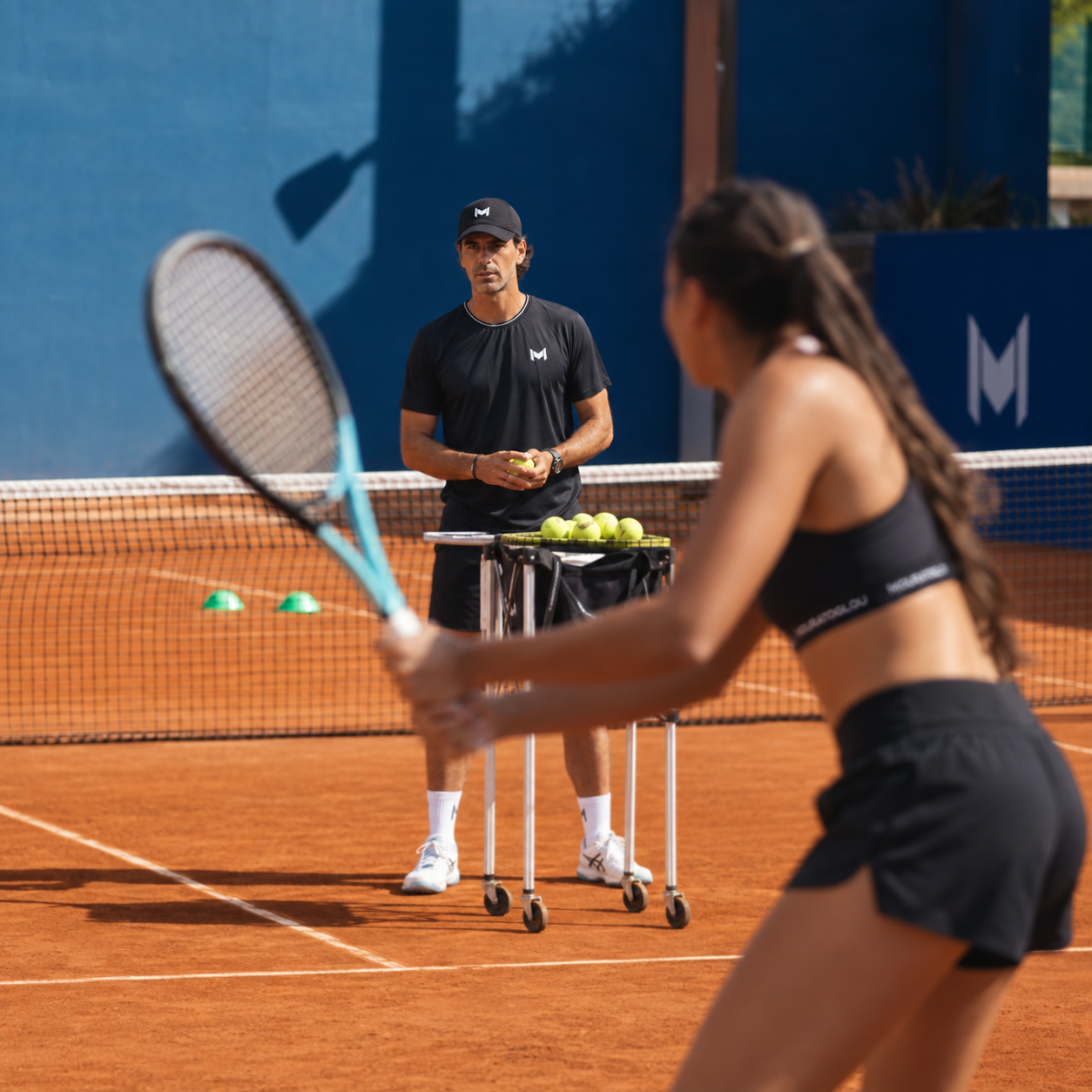
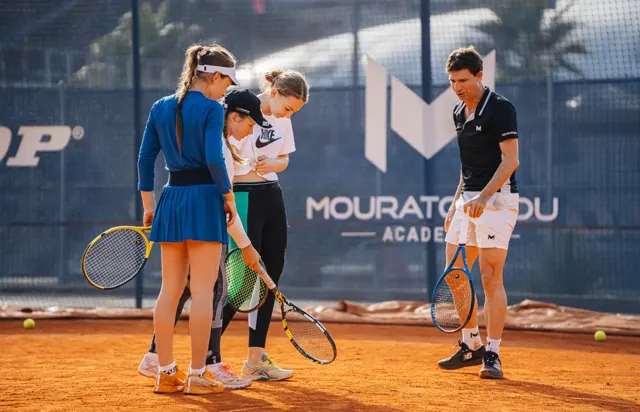
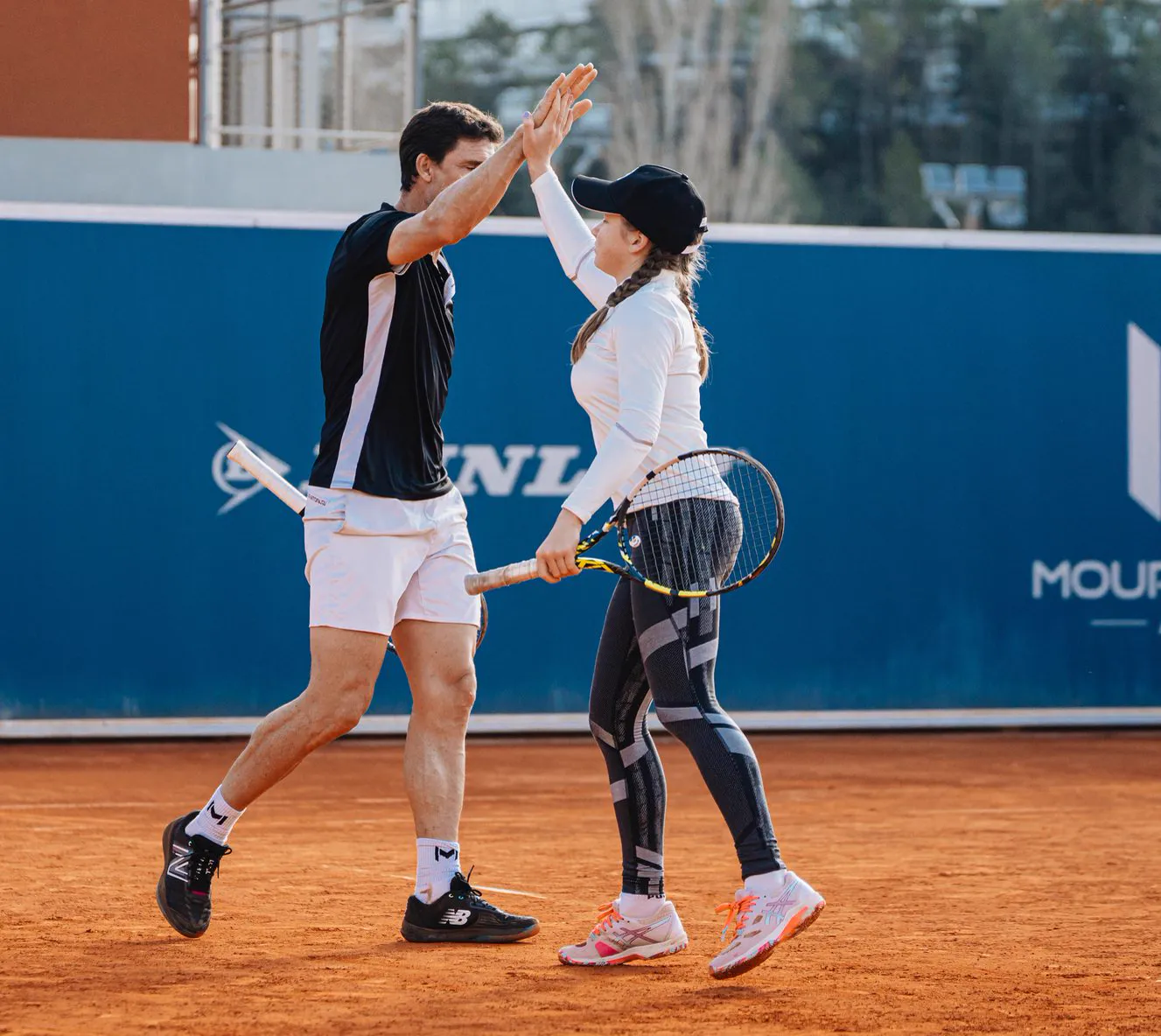
Tension is hard to perceive in yourself. A coach sees it (raised shoulders, locked elbow, stiff preparation), gives instant feedback, suggests suitable exercises and tracks your progress. It is one of the points worked on from the first sessions of the Performance Camp Adult.
 AdultsFull daysAll levelsPerformance Camp AdultA week of intensive tennis, 4 players per coach: technique, match play, physical and mental training.DISCOVER
 Frequently asked questions
How can I be more relaxed when playing tennis?
Loosen your grip on the handle (3 to 4 out of 10), breathe out as you hit and let the speed come from your legs and trunk. Between points, release your shoulders and jaw with slow breathing.
Why do I tense up in matches but not in practice?
Because stress raises muscle tension. Practise breathing and release routines in training, then use them every time in matches, especially on big points.
Does relaxation help you serve faster?
Generally, yes. A supple arm acts like a whip: the racquet head accelerates more than with a stiff arm. Many players serve as fast, or faster, while forcing less.
Can tension cause injuries?
It contributes to them: repeated tension in the shoulder, elbow and wrist encourages pain and tendinitis. If pain persists, see a health professional.
Is relaxation trained differently with juniors?
Young players are often naturally looser but tighten up quickly when something is at stake. Coaches favour low-speed accuracy games and simple cues such as exhaling at contact. On the Performance Camp Junior, relaxation is built into technical sessions and themed match play.