Preparation · Parents
Tennis parents: supporting your child in competition
The role of a parent whose child plays competitive tennis is to be a steady emotional support, not a second coach. In practice: praise effort over results, respect your child’s pace, stay calm and neutral during matches, and let the coach handle technique and tactics.
Key takeaways
- Support, not pressure: your child must feel that your affection does not depend on the score.
- Effort before results: praise commitment, attitude and progress, not just wins.
- During the match: stay calm, neutral and respectful of the opponent and officials; no coaching from the side.
- Each to their role: the coach handles the game, the parent handles the framework (sleep, food, logistics, listening).
- Enjoyment first: a child who loves playing keeps improving for longer than one who fears losing.
What is a tennis parent’s role in competition?
Competition is demanding for young players, and for their parents too. Your presence has a direct impact on your child’s motivation and confidence: it can lift them or freeze them. The challenge is finding the right balance between support, encouragement and managing expectations.
Be an emotional anchor
Your first job is to provide a stable, reassuring environment. After a defeat, your child needs a parent, not an analyst. A simple sentence is enough: “I loved watching you fight”, “shall we get something to eat?”.
Encourage without forcing
Pushing a child to train more or enter more tournaments can create stress and burnout. Respect their pace, let them express what they want and make sure they keep having fun while improving.
Praise effort rather than results
Applauding commitment, fighting spirit and progress builds a lasting competitive mindset. Tennis is a long game: patience and perseverance matter more than the results of one junior season.
How should you behave during matches?
| Do | Avoid |
|---|---|
| Stay calm and neutral, whatever the score | Sighing, head in hands, fidgeting |
| Applaud good points by both players | Celebrating the opponent’s errors |
| Respect the umpire and the calls | Disputing calls from the stands |
| Let your child make their own decisions | Giving technical or tactical instructions |
| Step away if you feel your own tension rising | Sitting in the front row showing your stress |
Respecting opponents and officials shows your child the importance of fair play. And let the coach be the coach: two different voices create confusion.
How can you help your child prepare well?
The physical side
Tennis demands endurance, speed and power. As a parent, you mainly manage the framework: enough sleep, balanced meals, good hydration and recovery after matches (gentle stretching, rest). If pain persists, see a professional: read our advice on preventing tennis injuries.
The mental side
Managing emotions, staying focused and handling pressure can be learnt. You can encourage a few simple tools: breathing to calm down, visualisation before a match, a between-point routine (bouncing the ball, straightening the strings). To go further, see our guide to mental preparation for tennis and our advice on the pre-match routine.
The logistics
Packing the bag the night before, arriving early, bringing water and snacks: anything that reduces the unexpected also reduces your child’s stress (and yours).
How do you manage pressure and expectations?
- Do not compare your child with other juniors: everyone develops at their own pace, physically and technically.
- Set progress goals (a stroke, an attitude) rather than ranking goals.
- Take the drama out of results: a lost match is information, not a personal failure.
- Protect the joy of playing: if winning becomes the only goal, the passion may fade.
Solid self-confidence is built precisely on visible progress and a supportive eye: see our article on self-confidence in tennis.
How do you communicate well with your child?
- Before the match: reassure and lighten the stakes (“have fun, give it your best”). Avoid last-minute instructions.
- Right after the match: let the emotion settle. No immediate analysis, especially after a defeat.
- Later: let your child speak first. Ask open questions (“what went well?”).
- Day to day: watch for signs of fatigue or loss of motivation. Sometimes you need to ease off or lighten the schedule.
When should you look for structured coaching?
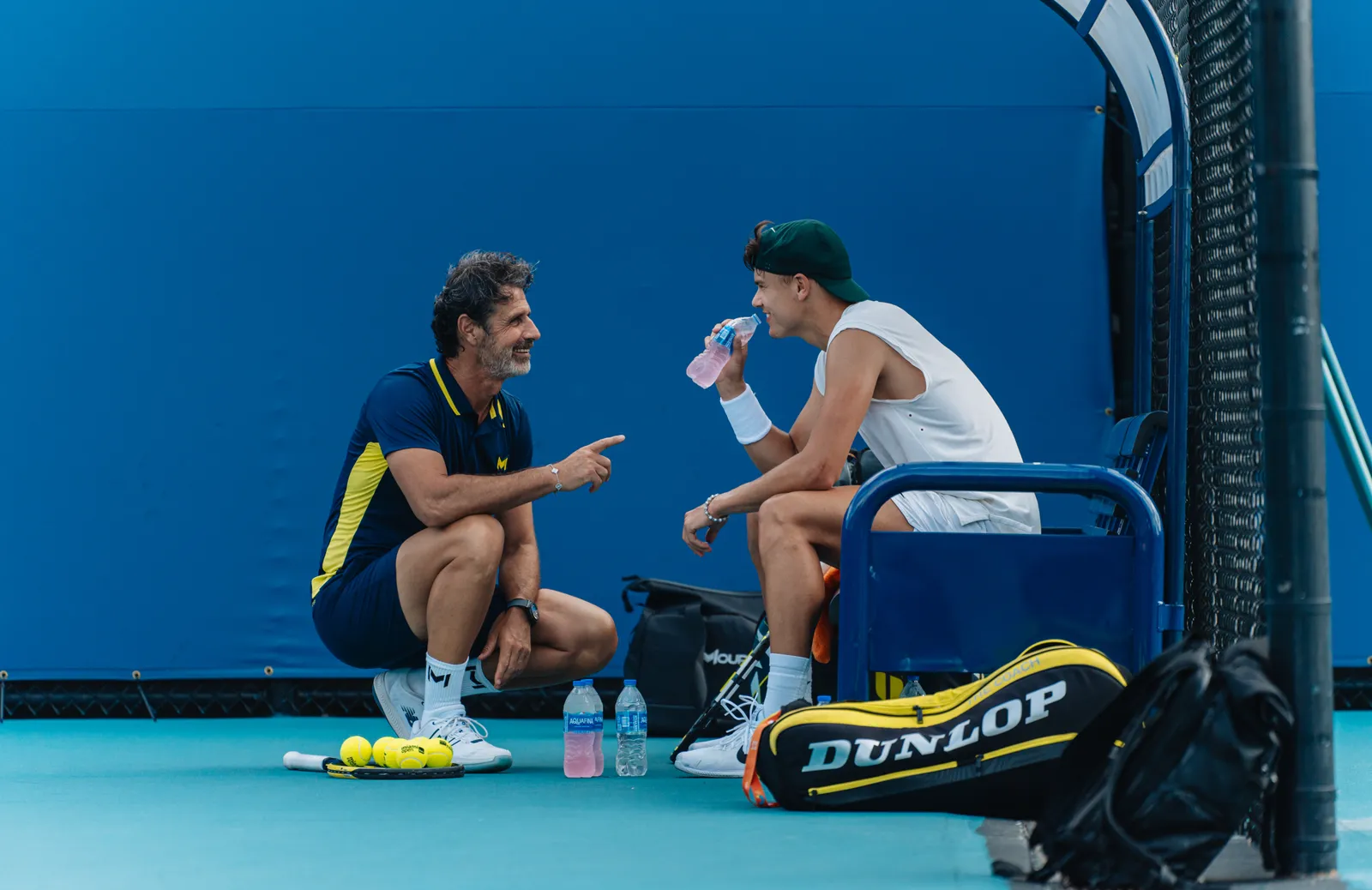
When competition becomes more important, a professional setting takes pressure off the parent-child relationship: the coach handles the game and tournaments, the parent stays a parent. The Tournament Camp Junior lets young players compete in tournaments with coaches by their side; for a year-round project, the Tennis & School programme combines training and schooling.
At the Mouratoglou Academy on the French Riviera (Biot, near Nice), parents are treated as partners in the project: the Mouratoglou Method, shaped by Patrick Mouratoglou, puts the coach-player-parent relationship at the heart of progress. In the Tournament Camp Junior and our other junior camps, coaches share clear process goals with the family, linked to work on self-confidence and mental preparation.
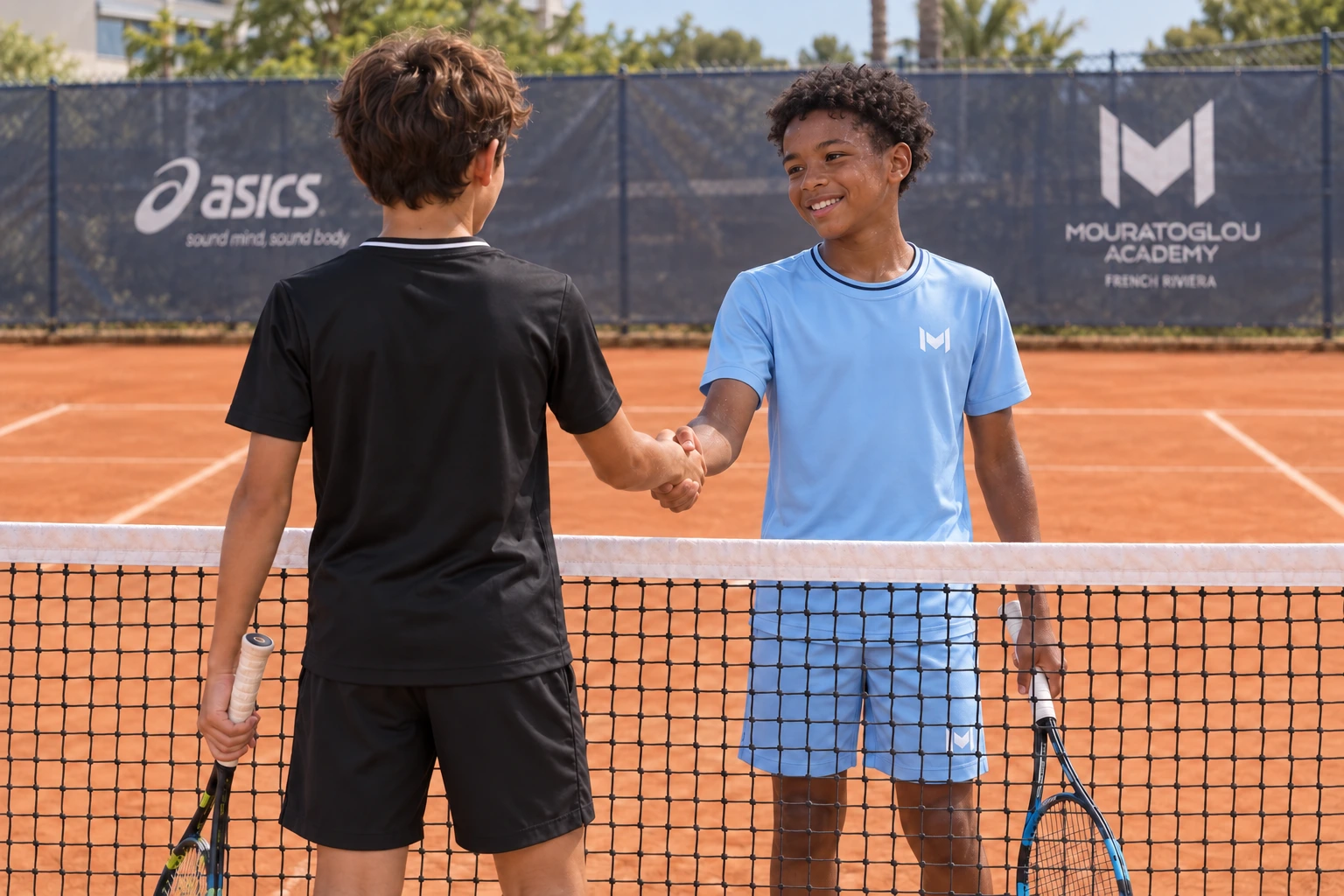 Ages 9–172 weeksCoached tournamentsTournament Camp JuniorTwo weeks of training and tournaments, with a coach by your side during matches.DISCOVER
 Frequently asked questions
How can I help my child handle pressure in competition?
Teach them simple tools such as deep breathing and visualisation, and take the drama out of results. Praise effort and attitude rather than winning, and stay calm during their matches.
How do I avoid putting too much pressure on my child?
Avoid goals based only on results or rankings, do not compare them with other players and respect their pace. Your reaction after a defeat is the best indicator: it should be the same as after a win.
What is the parents’ role during tennis matches?
To support their child, stay positive and respect the rules, the opponent and the officials. They should not interfere with the coach’s instructions and should let the child make their own decisions on court.
At what age can children start competing in tennis?
Young children often discover competition through adapted events and matches (reduced balls and courts) around the age of 7 or 8. What matters is that the child wants to play and the format suits their age, on their coach’s advice.
How do you choose a tennis camp for a competitive child?
Look at the player-to-coach ratio, the share of supervised matches and whether mental and physical coaching is included. A good competition camp debriefs every match and sets goals to keep working on at home. The Tournament Camp Junior combines training and tournaments; for a full-year project, Tennis and School builds in academic schooling.