Juniors · First steps
Kids tennis: how to teach and develop a young player
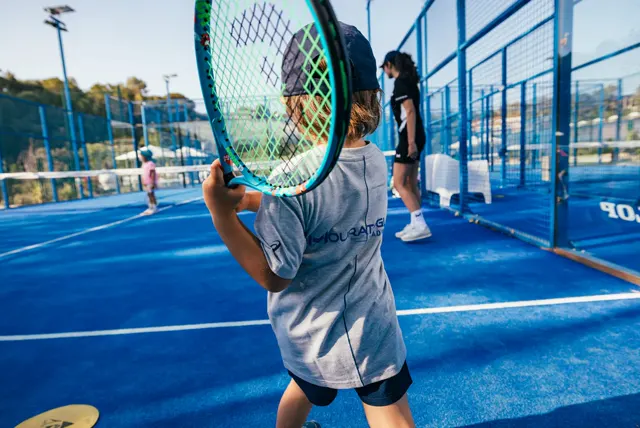
A child can discover tennis from the age of 3 or 4, as long as everything is adapted: court size, racquet, balls and above all the way it is taught. At that age you do not learn a stroke, you learn to play: coordination, fun and success. The goal of the first years is simple: make them want to come back to the court.
Key takeaways
- From 3–4 for discovery, around 5–7 for learning the strokes.
- Adapted equipment: right-sized racquet, foam then low-compression balls, smaller court.
- Play before technique: fun drills, challenges and plenty of success.
- Few instructions: one idea at a time, shown rather than explained.
- Parents praise effort, not results.
What age should a child start tennis?
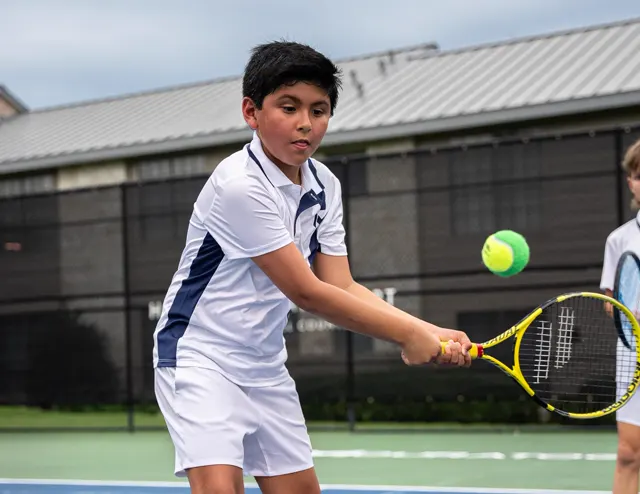
There is no “too early” for discovery: from age 3, a child can throw, catch, roll a ball and hit a foam ball with a small racquet. That is the idea behind baby tennis. Around 5 to 7, coaches start introducing the first strokes (forehand, backhand, simplified serve) on a smaller court.
| Age | Stage | Equipment |
|---|---|---|
| 3–5 | Discovery: coordination, motor skills, games | Foam balls, 17–19 inch racquet |
| 5–8 | Mini-tennis, first rallies | Red balls, 19–23 inch racquet |
| 8–10 | Mid-size court, first matches | Orange then green balls, 23–25 inch |
| 10+ | Full court, structured training | Green then regular balls, 25–26 inch |
For racquet size, follow our guide to choosing a junior racquet; for balls, our article on mini-tennis balls.
The principles of teaching tennis to children
In his series on teaching tennis to kids, Patrick Mouratoglou stresses that children learn by playing and by succeeding. These are the main principles our coaches apply every day:
- Lots of success: a child who misses ten balls in a row loses heart. Adjust the difficulty so they succeed often.
- Very short instructions: one idea at a time, demonstrated by the coach rather than explained.
- Constant movement: no queues; every child touches as many balls as possible.
- Challenges rather than repetition: “how many rallies without a miss?” motivates more than “do your forehand again”.
- Varied activities: running, throwing, jumping and catching are all part of learning tennis.
Games and drills for young children
- The waiter: carry a ball balanced on the racquet while walking, then running. Builds control of the strings.
- Dribbling: bounce the ball on the ground with the racquet, then upwards. Hand-eye coordination.
- Throw and catch: the coach throws, the child catches after one bounce, then throws it back. Prepares positioning.
- The target: aim for a hoop on the ground on the other side of a small net.
- Mini-match: cooperative rallies first (counting together), then competitive play.
Adult mistakes to avoid
- Using regular balls on a full court: the ball bounces too high and the child cannot succeed.
- Handing over a heavy adult racquet: bad habits and a risk for the arm.
- Over-correcting technique: at 6, coordination matters more than a perfect stroke.
- Putting pressure on results: first matches should remain a game.
- Comparing with other children: everyone progresses at their own pace.
Parents play a key role, especially once the child starts competing. We devote a full article to it: advice for tennis parents.
Helping a child progress over time
Between 6 and 10, two sessions a week are enough, alongside other sports (football, gymnastics, swimming) that develop general motor skills. Early specialisation is not necessary: most top players practised several sports as children.
From 9–10, if the child wants to, training can become more structured and the first tournaments can begin. School holidays are an ideal time for a camp: several hours of tennis a day, with children of the same age and level, clearly speed up progress.
Whatever the age, keep an eye on the signs that matter: does the child talk about tennis at home, ask to play, look forward to sessions? Those signals count far more than results. If the pleasure fades, change the format (group, coach, friends on court) before increasing the training load.
Kids tennis camps on the French Riviera
The Mouratoglou Academy in Biot, on the French Riviera, welcomes children from age 3 with teaching adapted to each age, based on the Mouratoglou Method. 3–5 year olds discover tennis through play at the Baby Tennis Camp, 6–17 year olds progress at their own pace at the Player Camp Junior, and young players who want more intensive training join the Performance Camp Junior. See all our camp options and book your child’s holiday.
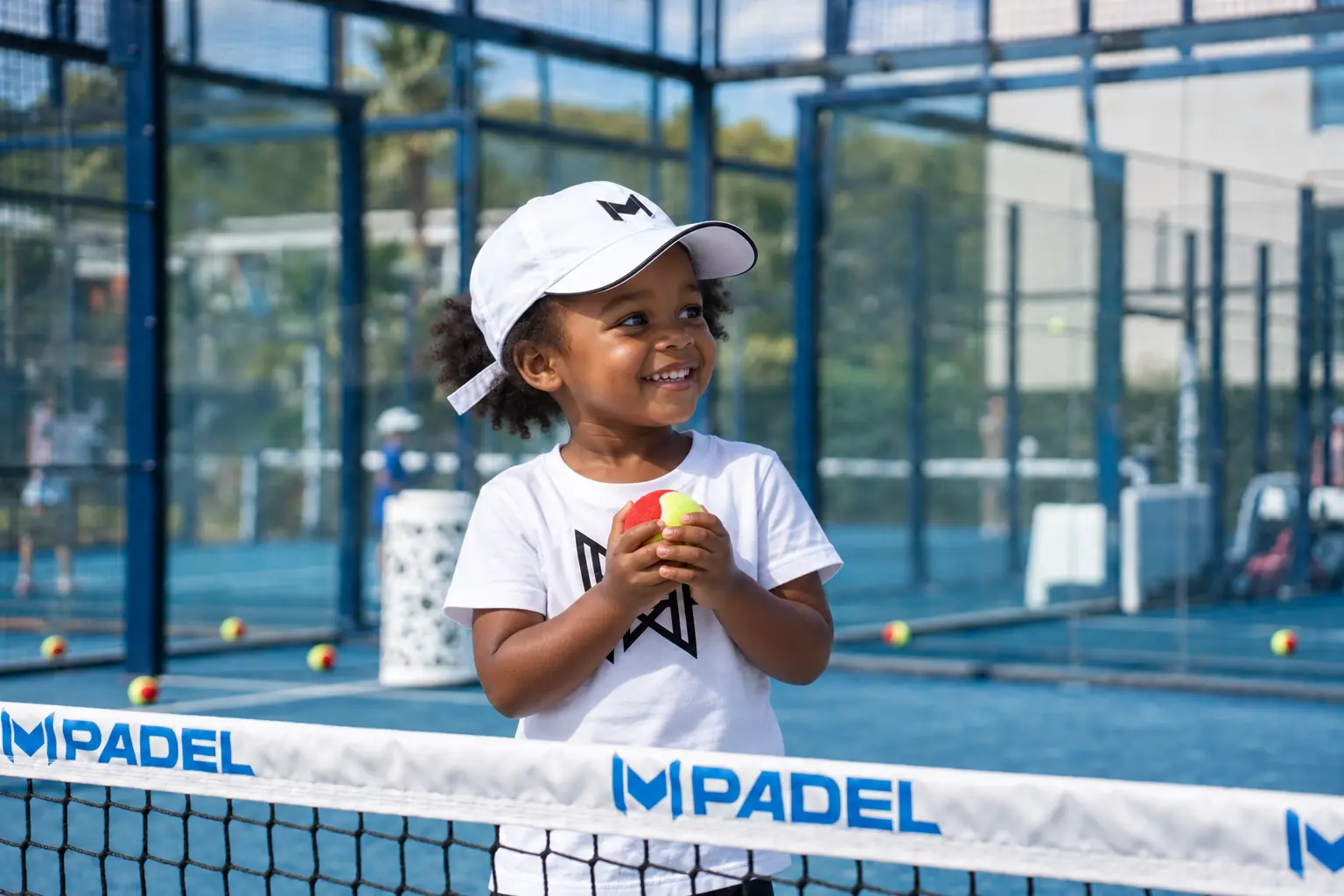 Ages 3–5MorningsSummer and holidaysBaby Tennis CampFirst steps on a court, with adapted equipment and plenty of play.DISCOVER
 Frequently asked questions
What age can a child start tennis?
From age 3 for discovery (baby tennis), with foam balls and a small racquet. Learning the strokes usually starts around 5–7.
What racquet size for a child?
It depends on the child’s height: about 19 inches at 4–5, 21 at 6–7, 23 at 7–8, 25 at 9–10, then 26 before moving to an adult racquet.
How many sessions a week for a child?
One or two sessions a week are enough up to 8–10, ideally alongside another sport to develop general motor skills.
How do I keep a child motivated in tennis?
Focus on play, success and challenges, surround them with children their age and praise their effort rather than their results.
Is a tennis camp suitable for a beginner child?
Yes. Groups are organised by age and level, and the camp format lets children play a lot in a fun, supervised setting.