Equipment · Racquets
Kids’ tennis racquet: how to choose the right size
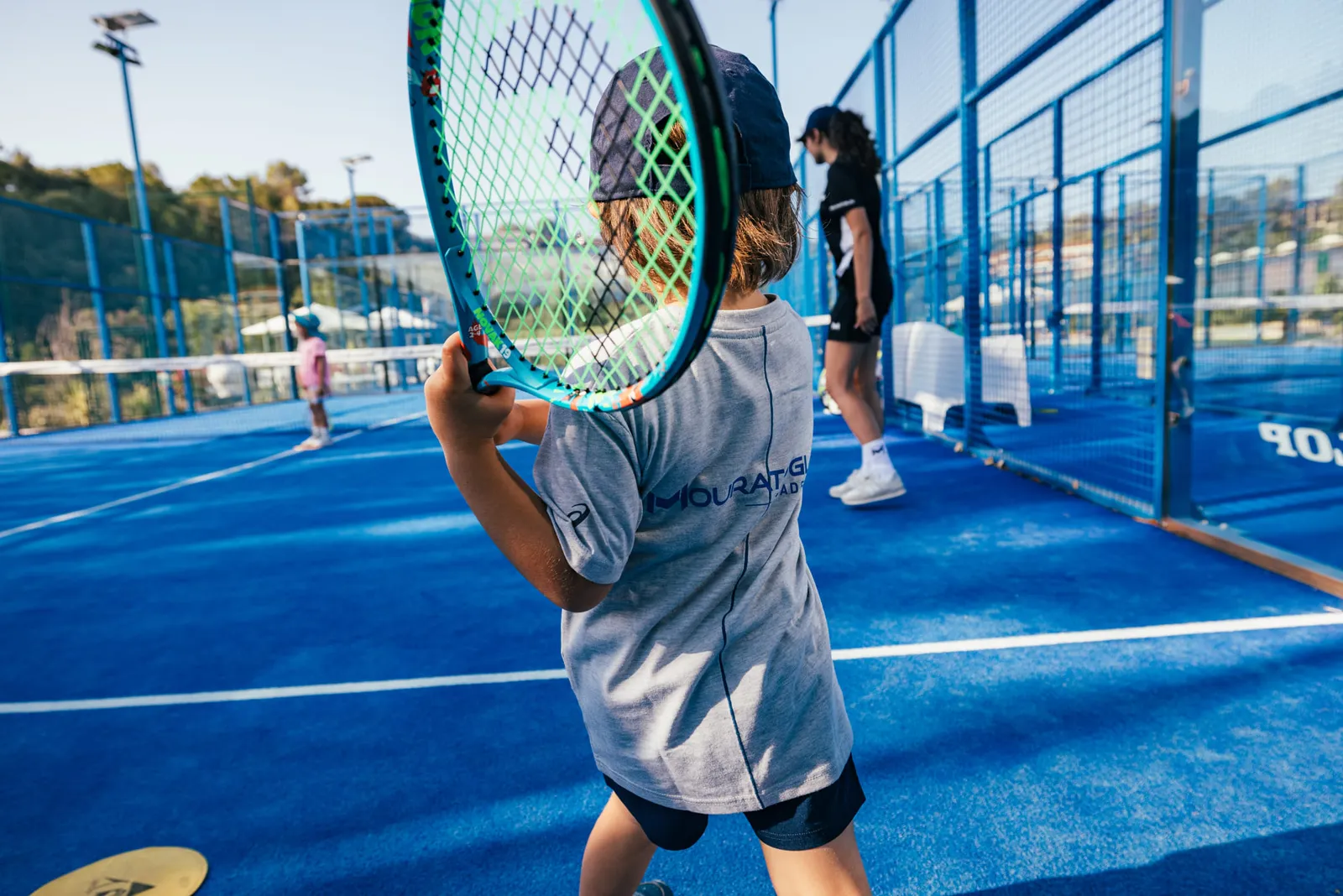
A kids’ tennis racquet is chosen first by the child’s height, then by age and level: from 17 inches (43 cm) around age 2–4 to 25–26 inches (63–66 cm) from age 10. Standing up with the arm by the side, the head of the racquet should just reach the ground. An adult racquet is too long and too heavy for a child: it slows progress and can cause injury.

Key takeaways
- Criterion no. 1, length: holding the handle with the arm straight down by the side, the head should just touch the ground.
- Age guide: 17–19 in (2–4 years), 19–21 in (4–6), 21–23 in (6–8), 23–25 in (8–10), 25–26 in (10 and over).
- Weight: junior racquets of the same length weigh almost the same; weight is not a deciding factor before about age 12.
- Material: aluminium to get started, graphite (or composite) from 25 inches for a child who plays regularly.
- Grip: slim and suited to a small hand; if in doubt, take the smaller size and add an overgrip.
What size tennis racquet does a child need?
Length is the most important criterion. A racquet that is too long forces the child to choke up on the handle, unbalances their strokes and can cause wrist or elbow pain. One that is too short is easy to handle, but makes them crowd the ball and lose power.
How to measure
- Have your child stand up straight, wearing trainers.
- Hold the racquet next to them by the end of the handle, arm straight and relaxed by their side.
- Check the head: it should just reach the ground, without pressing into it or hovering several centimetres above.
- Alternative: measure from fingertips to floor with the arm relaxed; that distance roughly matches the ideal racquet length.
The size chart
| Age (guide) | Child’s height | Racquet length | Recommended ball |
|---|---|---|---|
| 2 to 4 | Under 1 m | 17 to 19 in (43–48 cm) | Foam |
| 4 to 6 | 1 m to 1.10 m | 19 to 21 in (48–53 cm) | Foam or red |
| 6 to 8 | 1.10 m to 1.25 m | 21 to 23 in (53–58 cm) | Red or orange |
| 8 to 10 | 1.25 m to 1.40 m | 23 to 25 in (58–63 cm) | Orange or green |
| 10 and over | Over 1.40 m | 25 to 26 in (63–66 cm) | Green then yellow |
Age is only a guide: a child who is tall for their age should go up a size. Racquet length also goes hand in hand with the ball used; for the colours and stages, read our guide to mini tennis balls.
Material and weight: what really matters
Small racquets (up to about 23 inches) are usually aluminium: light, tough and affordable, perfect for discovering the game. From 25 inches (around age 9) you will find graphite or composite racquets: true scaled-down versions of adult frames, more comfortable and more responsive, worth it for a child who plays several times a week or starts competing.
Weight does not really separate junior racquets: at the same length, models weigh almost the same. It becomes a question around age 12, when a good young player moves up to an adult racquet: choose a light model, around 230 to 260 g, to avoid injury. If the child needs a little more mass later, thin strips of lead tape stuck to the frame add weight gram by gram without changing racquet.
What grip size does a child need?
Junior racquets have a slim handle for small hands, often marked L0, or even L00 or L000 on the smallest models. The test is the same as for an adult: with the hand closed around the handle, there should be room for one finger between fingertips and palm. A handle that is too big tires the forearm; one that is too small makes the child squeeze.
Head size and balance: do they matter?
For the small sizes, choice is limited and this is not a priority. From 25 inches, several head sizes exist, usually 645 to 690 cm². A larger head gives more power and forgiveness, a smaller one more control: for a young player, favour forgiveness.
Balance is measured in centimetres from the butt of the handle. On an adult racquet, a balance point around 32 cm is considered even; above 32.5 cm it is head-heavy (more power, less manoeuvrability), below 32 cm head-light (more control and manoeuvrability). For a child moving up to an adult racquet, an even balance is a good starting point. The other adult criteria are covered in our guide on how to choose a tennis racquet.
 Ages 6–17MorningsAll levelsPlayer Camp JuniorFun and demanding tennis mornings to make progress during the holidays.DISCOVER
 Which racquet for a child who is just starting?
For a beginner, look above all for a racquet that is light, easy to handle and the right length. There is no need for a top-of-the-range model: children change size every one to two years. An aluminium racquet with a slim handle is plenty for the first seasons.
- Check the length with the measuring method, trainers on.
- Let them try it: they should be able to hold the racquet out at arm’s length for a few seconds without strain.
- Pair it with the right ball: foam or red ball to start, on a smaller court.
- Plan ahead: move up a size when the head no longer reaches the ground in the measuring test.
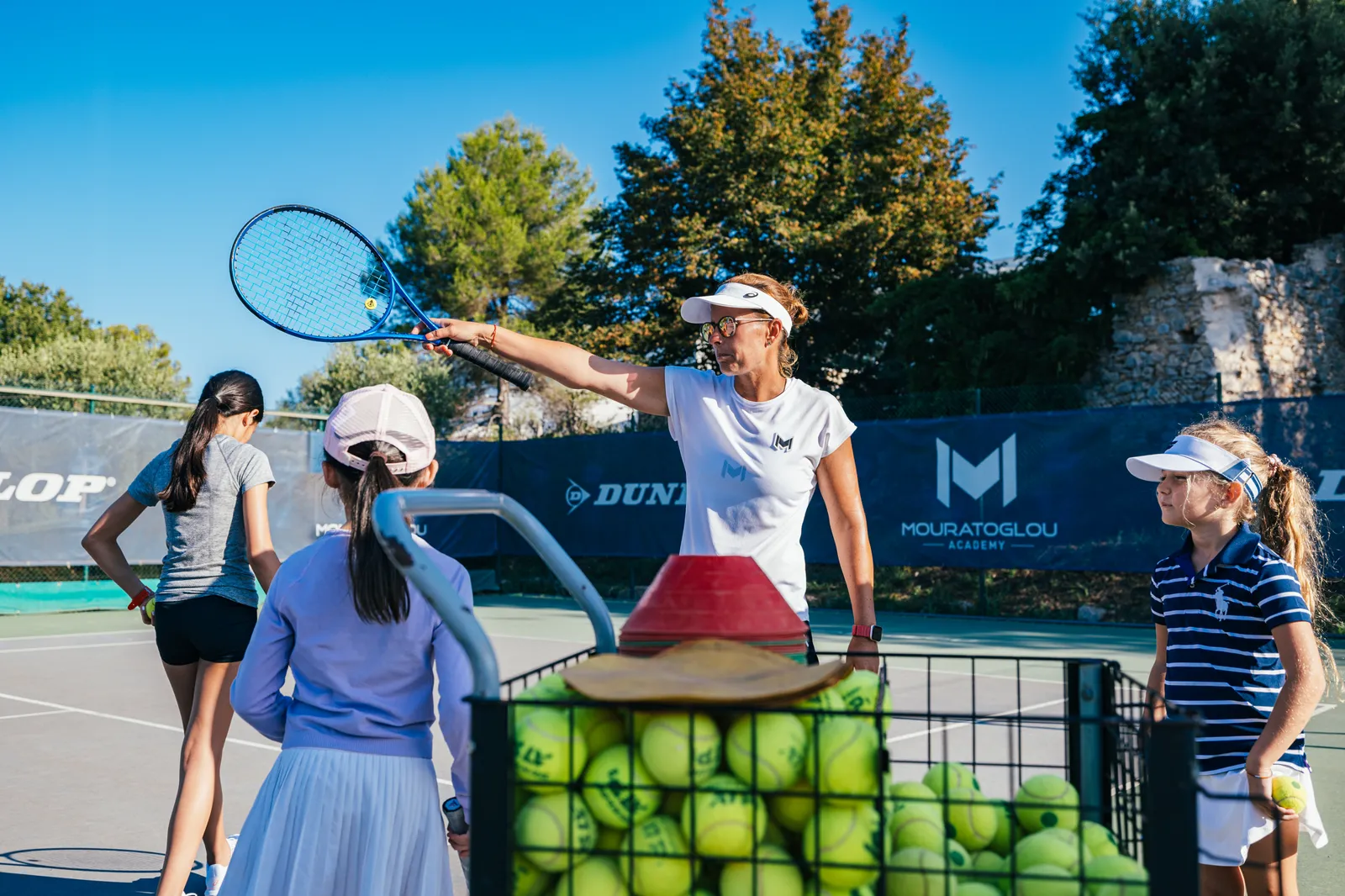
For the youngest, our coaches use adapted racquets and balls from the Baby Tennis Camp onwards, before moving on to orange and green courts in our junior camps. To support your child day to day, read our advice for parents too.
At the Mouratoglou Academy on the French Riviera (Biot, near Nice), our coaches adapt racquet, ball and court to each child’s age: individualisation is at the heart of the Mouratoglou Method. For practice, pressureless balls offer a consistent bounce. Discover our tennis camps for children.
Frequently asked questions
What tennis racquet for a 3-year-old?
A very short, light aluminium racquet of 17 to 19 inches (43 to 48 cm). At this age, children are discovering hand-eye coordination: pair it with a foam ball so they succeed with their first hits without tiring.
What size racquet for an 8-year-old?
Usually 23 inches (58 cm), or 25 inches for a child who is tall for their age. Check with the measuring method: holding the racquet with the arm straight down, the head should reach the ground.
When should a child move up to an adult racquet?
Usually around age 11–12, when the child is about 1.50 m tall and plays regularly with a yellow ball. Choose a light adult racquet (230 to 260 g) to protect the arm.
Can I buy a racquet that is slightly too big so it lasts longer?
It is not recommended. A racquet that is too long unbalances the stroke, tires the arm and can build bad technical habits. It is better to change racquet as your child grows.
Should my child bring their own racquet to a tennis camp?
Yes, bring the child’s usual racquet: they keep their bearings and the coach can check that it suits their height. If it is too long or too heavy, the coach will tell you. At the Player Camp Junior, age-appropriate balls are provided.