Preparation · Fitness
Maximal aerobic speed and tennis: test it and train it
Maximal aerobic speed (MAS) is the running speed at which your oxygen uptake reaches its maximum. In tennis, a good MAS helps you recover between points and keep your intensity until the end of the match. You measure it with a test (Léger shuttle run, Cooper) and train it once or twice a week with intervals.

Key takeaways
- Definition: MAS is the lowest running speed that draws on your maximal oxygen uptake; you can hold it for roughly 4 to 7 minutes.
- Why it matters in tennis: tennis strings together short, intense efforts; aerobic capacity is what lets you recover between them.
- Testing: the Léger shuttle run or beep test (20 m, one-minute stages) or the Cooper test (12 minutes).
- Training: 30/30s, long intervals, hill sprints; 1 to 2 sessions a week are enough.
- Caution: get medical advice before starting intense training, especially over 40 or after a break.
What is MAS, and why does it matter in tennis?
Maximal aerobic speed (MAS) is the running speed at which your body reaches its maximal oxygen uptake (VO2 max). Beyond it, energy comes increasingly from anaerobic systems and fatigue sets in quickly. The higher your MAS, the faster and longer you can run while staying “aerobic”.
Tennis is not a continuous running sport: it is a series of short, explosive efforts (a few seconds per point) separated by recovery. But it is aerobic capacity that lets you recover between those efforts. A good MAS helps you:
- Recover faster between points and at changeovers.
- Keep up the intensity of your movement and hitting until the last game.
- Delay fatigue, which clouds judgement and increases injury risk.
- Cope better with long rallies and tight matches.
MAS is only one part of a player’s fitness: speed, power and coordination matter just as much. See our coordination exercises for tennis.

How do you measure your MAS?
| Test | How it works | Result |
|---|---|---|
| Léger shuttle run (beep test) | 20 m shuttles to an audio signal, speed rising every one-minute stage | The last stage reached gives an estimate of MAS |
| Cooper | Run as far as possible in 12 minutes | Estimated MAS (km/h) ≈ distance in metres ÷ 200 |
| Track test with stages (VAMEVAL type) | Increasing speed on a marked track | Last speed held = MAS |
The Léger shuttle run is the closest to tennis, with its changes of direction. It starts at 8.5 km/h and rises by 0.5 km/h at each stage. The Cooper test is the easiest to organise on your own. In every case, warm up first and get supervision if you are returning to sport.
Which sessions improve your MAS?
MAS is trained with repeated efforts close to 100% of MAS, alternating with active recovery (walking, jogging). After a 15-minute progressive warm-up, here are 4 sample sessions:
1. The 30/30
30 seconds at 100% of MAS, 30 seconds of jogging recovery. 10 to 15 repetitions, in 1 or 2 sets. The core session: effective and easy to dose.
2. Short intervals (HIIT)
15 to 20 seconds very fast (100 to 110% of MAS), same recovery time. 10 to 12 repetitions. Very close to the rhythm of a tennis point.
3. Long intervals
3 minutes at about 90% of MAS, 1 to 2 minutes of active recovery. 4 to 5 repetitions. Builds the ability to sustain high intensity for several minutes, useful in long games.
4. Hill sprints
On a moderate slope, 20 to 30 seconds of fast uphill running, walk back down. 6 to 8 repetitions. Also builds leg power.
What about on court?
To get closer to tennis, turn these formats into tennis-specific movement: 30 seconds of lateral runs, side steps and recoveries, then 30 seconds of rest. The same principles apply.
How many MAS sessions a week?
1 to 2 sessions a week are enough, alongside tennis and the rest of your fitness work. More increases fatigue and injury risk. Avoid an MAS session the day before a match.
| Day | Sample week (player training 3 times) |
|---|---|
| Monday | Tennis |
| Tuesday | MAS session (30/30) + core |
| Wednesday | Tennis |
| Thursday | Rest or mobility |
| Friday | Tennis + short intervals on court |
| Weekend | Match or rest |
Tips for effective, injury-free sessions
- Warm up for 15 minutes (light jogging, mobility, running drills) and finish with a cool-down and gentle stretching.
- Progress step by step: start with 8 repetitions, then build week by week.
- Listen to your body: localised pain is not fatigue; stop and see a professional if it persists (see preventing tennis injuries).
- Hydrate and sleep well: progress happens during recovery.
- Get advice: a fitness coach adapts speeds and volumes to your age, level and schedule.

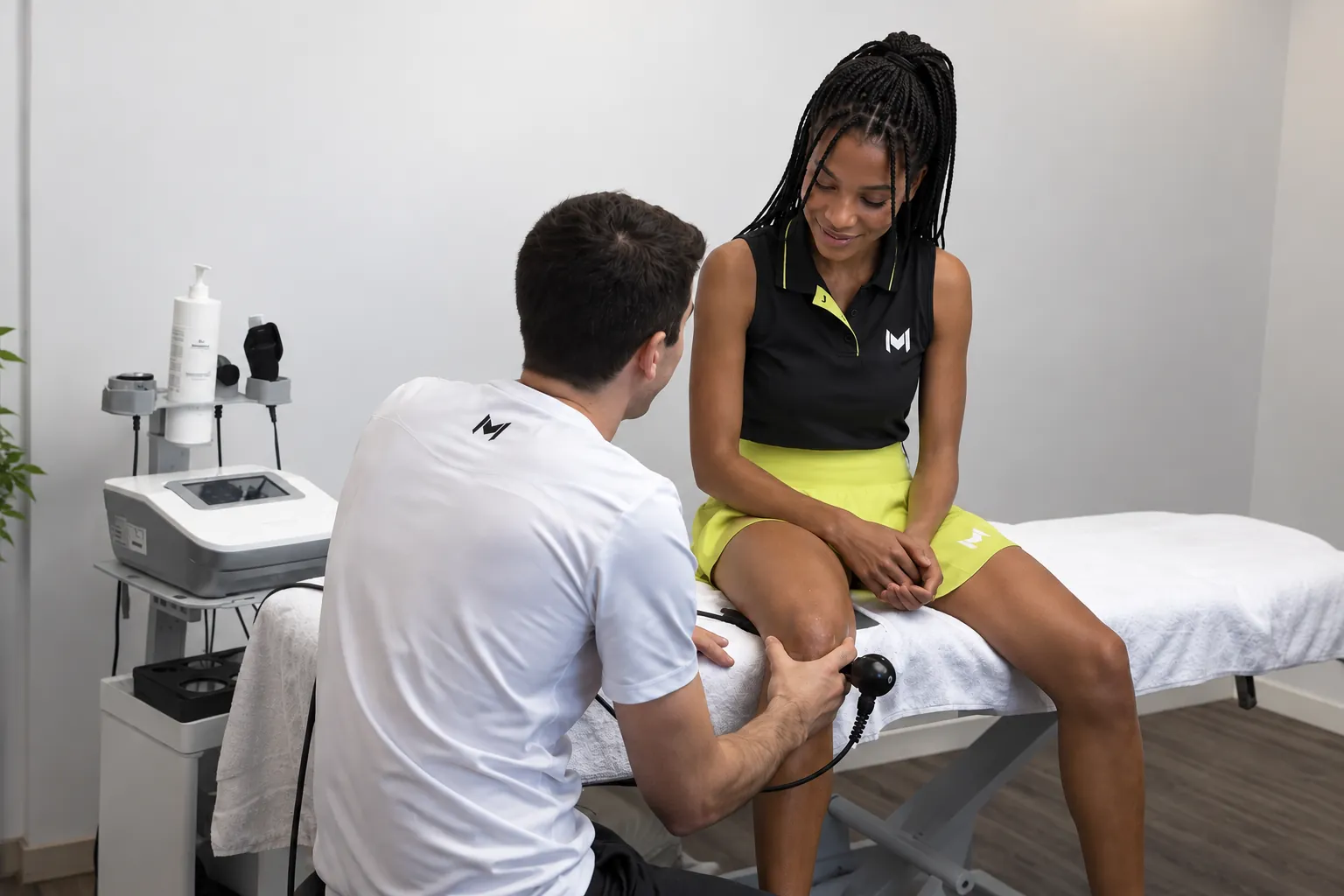
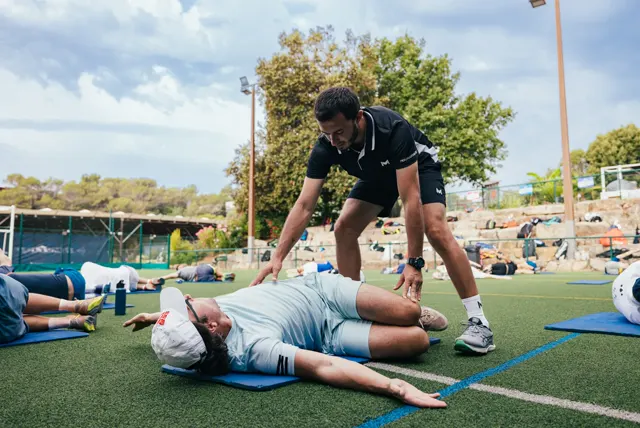
Good aerobic fitness also shows in how fresh you feel during the warm-up and first games: see our pre-match routine. At camp, fitness training is part of the daily programme, especially on the Performance Camp Junior, and the Academy’s Sports Medical Center can carry out an assessment before you start intense training.
Aerobic speed is only one part of physical training: add coordination, side steps and preparation for multi-set matches. At the Mouratoglou Academy on the French Riviera (Biot, near Nice), fitness is one of the Mouratoglou Method pillars.
 Ages 9–17Full daysBoarding optionPerformance Camp JuniorThe intensive camp for young players: technique, tactics, fitness and mindset, 4 players per coach.DISCOVER
 Frequently asked questions
How many times a week should you train your MAS?
Once or twice a week, alongside tennis and general fitness training. Beyond that, fatigue and injury risk rise without extra benefit.
How quickly can you improve your MAS?
It depends on your starting level. With regular work, progress is usually noticeable within a few weeks, especially for people returning to exercise. Retest every 2 to 3 months to measure it.
Is the beep test suitable for tennis players?
Yes, it is one of the most relevant tests: the 20 m shuttles involve changes of direction similar to on-court movement. It is exhausting, so get medical advice if you are returning to sport.
Is MAS useful for every type of player?
Yes. Baseliner or attacker, good aerobic capacity helps you recover between points and keep your intensity late in the match. It complements speed and power without replacing them.
Should I get assessed before training my aerobic speed?
It is recommended if you are returning to sport, are over 35 or have recurring pain: medical advice and a supervised exercise test make intense sessions safer. The assessment also sets precise training paces. The academy’s Sports Medical Center offers this kind of physical assessment for tennis players.