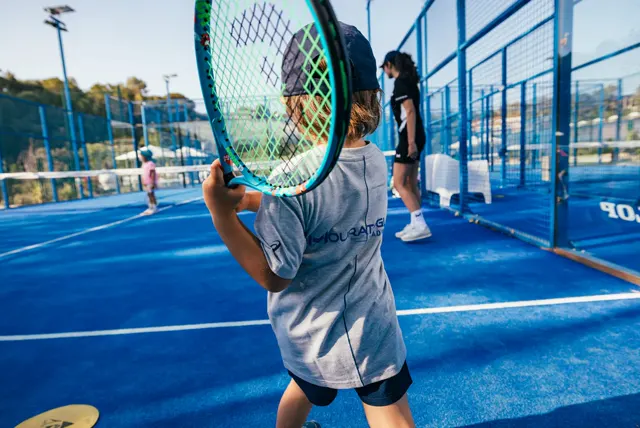
Equipment · Balls
Foam tennis balls: how to use them and how to choose
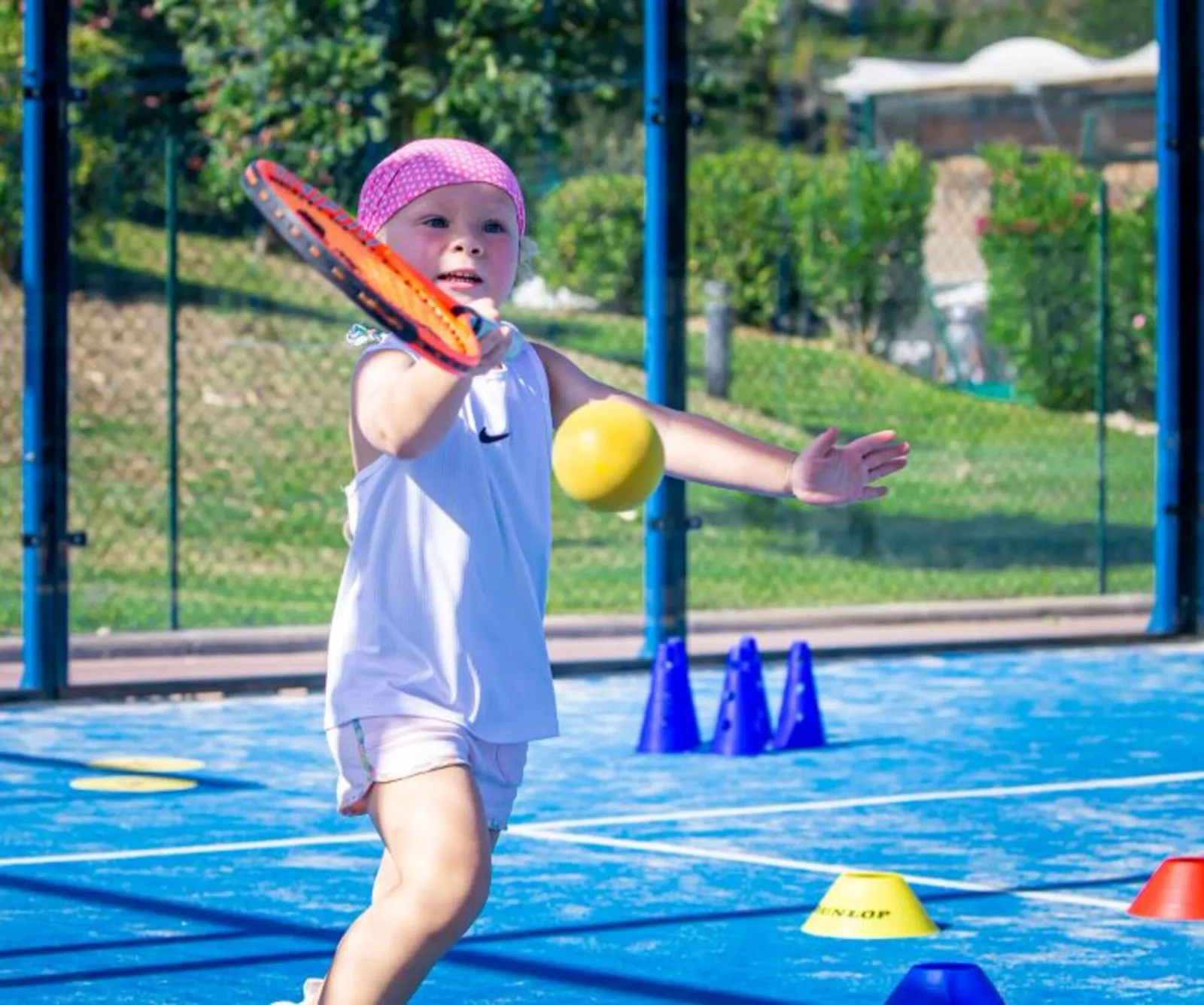
A foam tennis ball is a light, soft, slow ball designed for learning: it bounces low, flies slowly and does not hurt. It is the first ball for children aged roughly 3 to 6, but also a useful tool for adult beginners and for playing indoors. As soon as a child can keep a rally going, it is time to move on to the red ball.

Key takeaways
- Definition: a ball made of synthetic foam, standard size or larger, lighter and much slower than a regular ball.
- Who for: children aged about 3 to 6, adult beginners, indoor sessions or small spaces.
- Benefits: more time to get into position, no risk of getting hurt, rallies from the very first session.
- Choosing one: uncoated foam for toddlers, coated foam (smooth skin) for durability with regular use.
- Next step: the red ball, as soon as the child can sustain rallies of several shots.
What is a foam tennis ball?
A foam tennis ball is made of synthetic foam, with no felt and no pressure. It is light, soft and slow: it bounces lower and more slowly than a regular ball, giving the player time to get into position and hit.
There are two main types: uncoated foam, very soft and ideal for toddlers, and coated foam with a thin smooth skin, which is more durable and bounces a little more consistently. Some are larger than a standard ball, which makes them even easier to hit.
In the International Tennis Federation’s system of adapted balls, the foam ball is the very first step, before the red, orange and green balls. For what comes next, see our guide to mini tennis balls.
What are the benefits of a foam ball?
- Step-by-step learning: the slow ball gives time to read the flight, get into position and build a clean stroke without rushing.
- Instant success: children make contact and rally from their first session, which keeps them motivated.
- Safety: it does not hurt, even if it hits the body or face, which reassures children and parents alike.
- Confidence: with no fear of the ball, children dare to swing, move and play close to others.
- Versatility: it works on a small court, in a sports hall, a living room or a garden, with no danger to the windows.
How do you use a foam tennis ball?
Introducing children to tennis
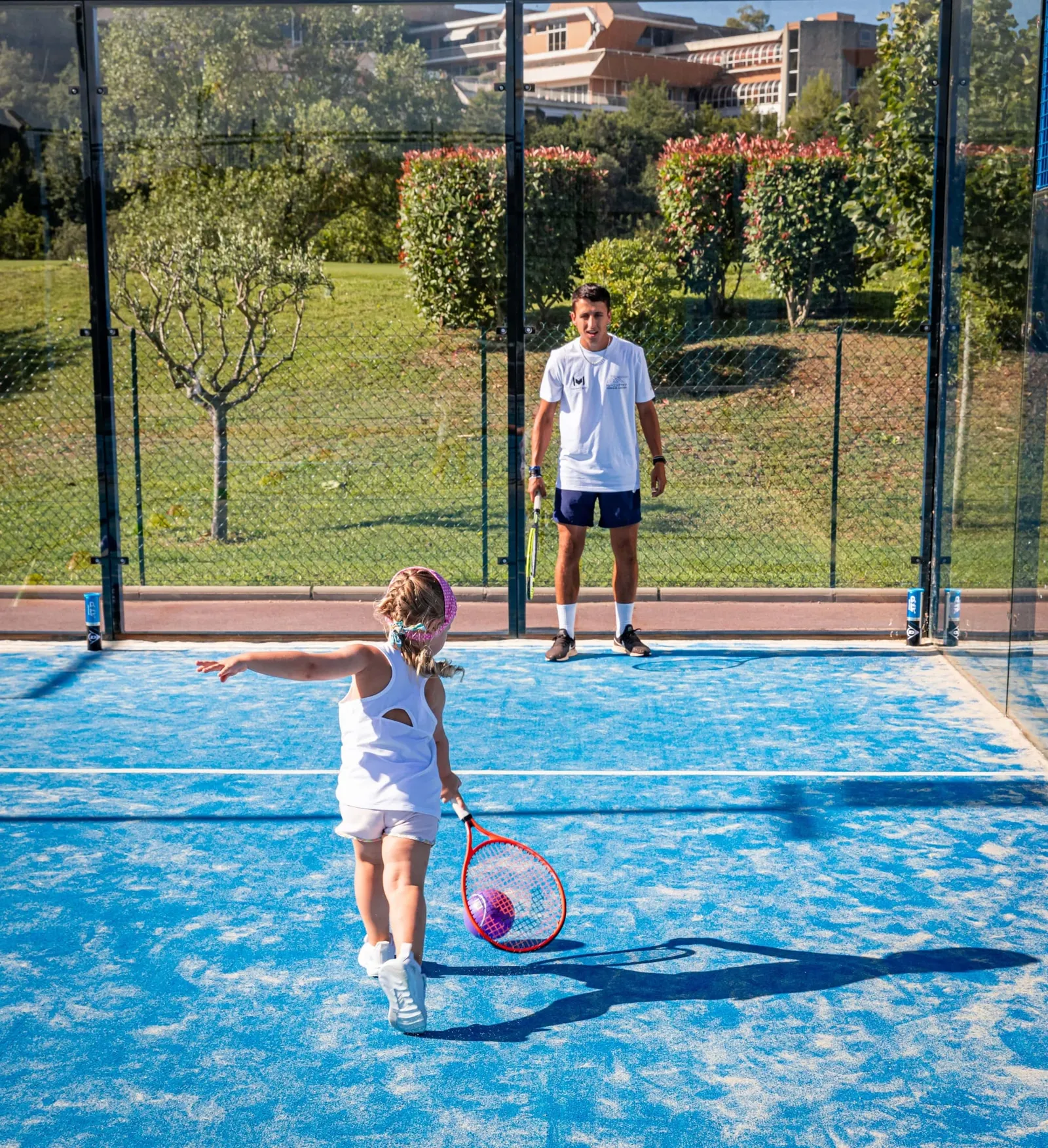
With toddlers, the foam ball is first used for movement games: throwing, catching, bouncing, aiming at a target. Then come the first hits, on a very small court, with a short racquet suited to the child’s height. To choose one, read our guide to kids’ tennis racquets.
- Ball games without a racquet: throw, catch and bounce to get used to the flight of the ball.
- Juggling and bouncing on the racquet to feel the strings.
- First hits after a bounce, with the coach feeding the ball by hand.
- First rallies with a partner on a very small court.
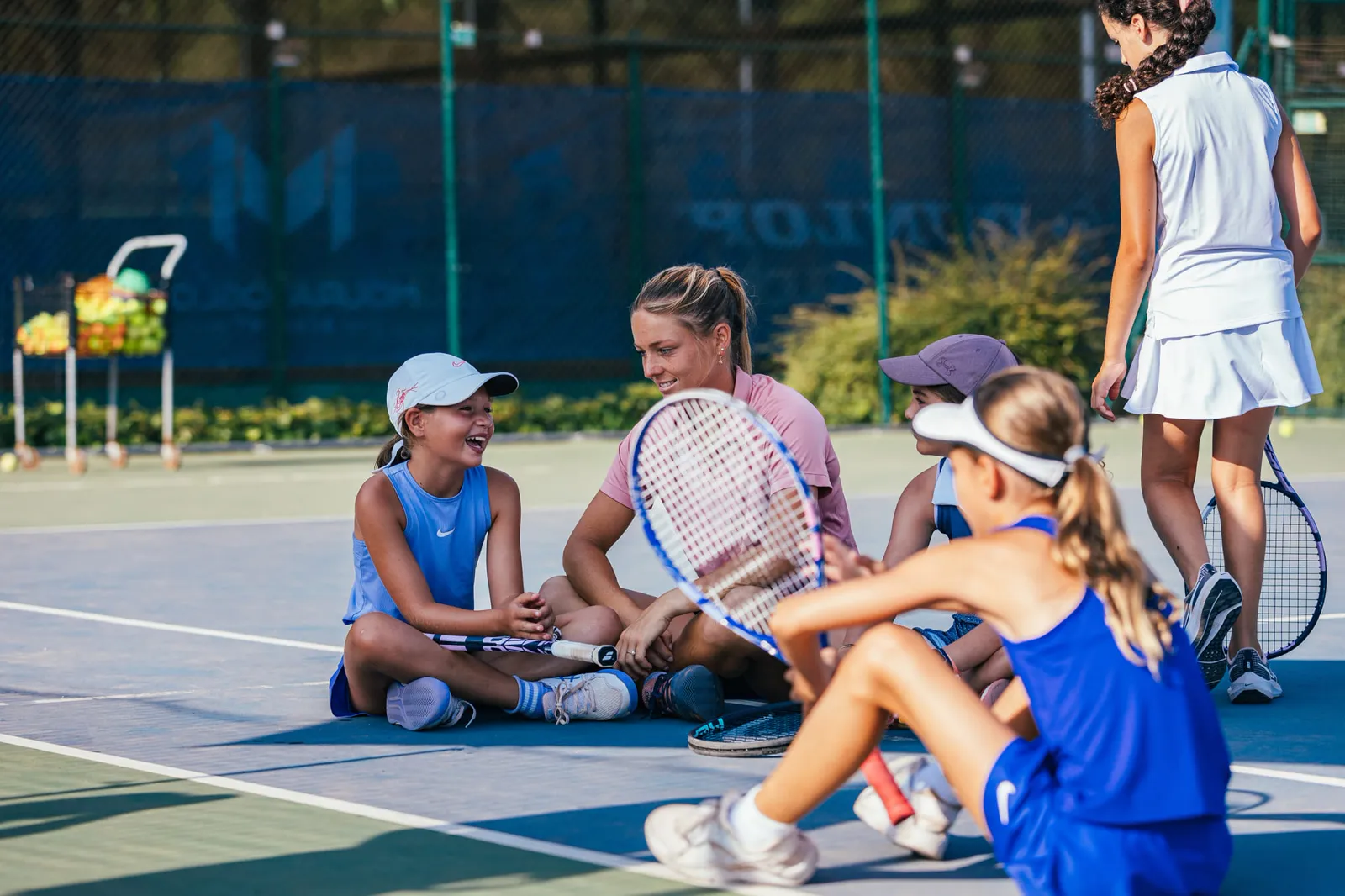
That is exactly the progression used at the Academy’s Baby Tennis Camp, where the youngest discover tennis through play.
For adult beginners and practice
Foam balls are not just for children. An adult beginner can use one to set up the basics of the forehand and backhand, work on consistency in long rallies or practise indoors. It is also handy for volley and reflex drills at the net, with no fear of being hit.
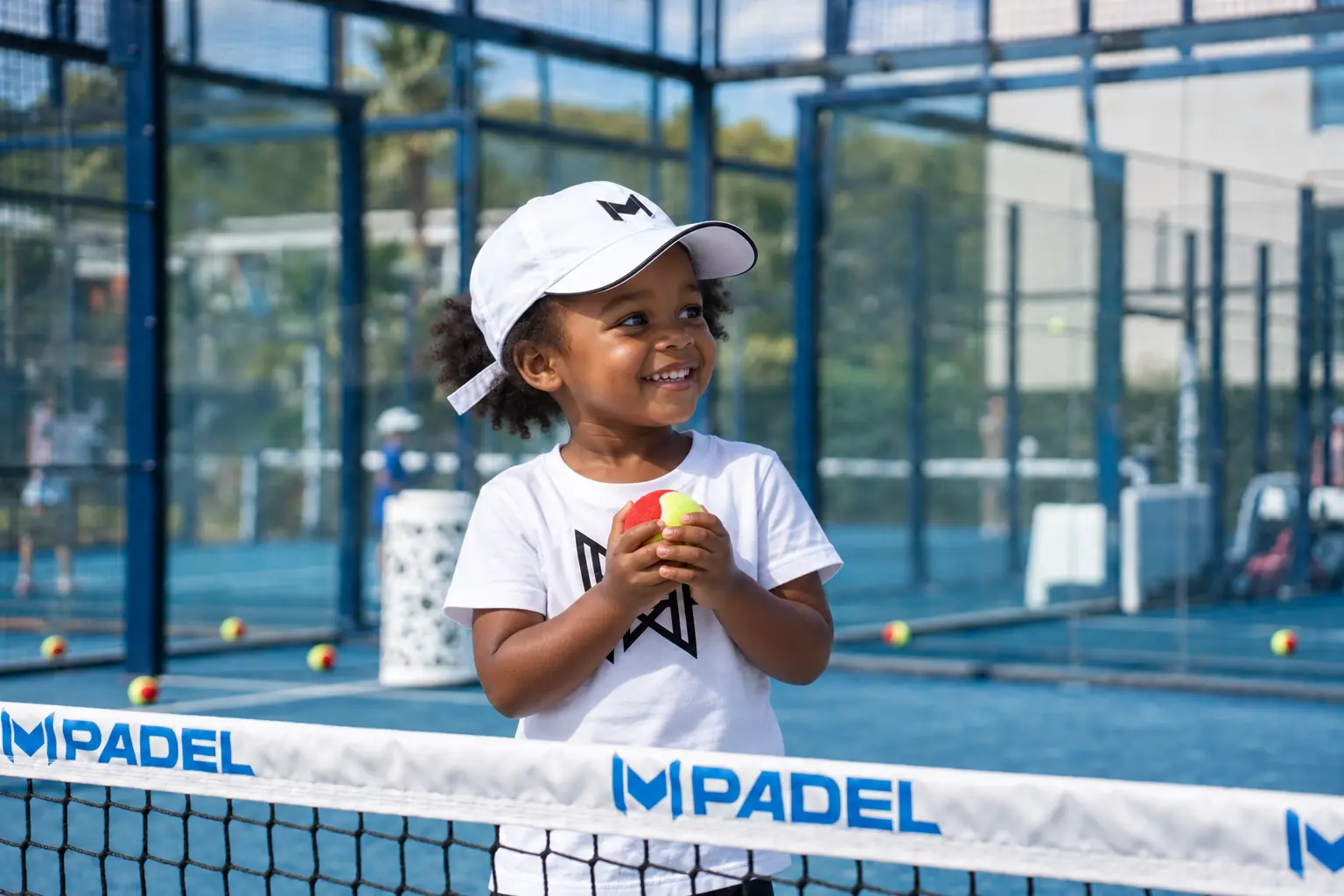 Ages 3–5MorningsSummer and holidaysBaby Tennis CampFirst steps on a court, with adapted equipment and plenty of play.DISCOVER
 How do you choose a foam tennis ball?
| Profile | Recommended ball | Why |
|---|---|---|
| Toddlers (3 to 5) | Large uncoated foam ball | Very soft, very slow, easy to hit |
| Young beginners (5 to 7) | Coated foam, standard size or slightly larger | More durable, more consistent bounce |
| Adult beginners, indoors | High-density coated foam | Livelier bounce, close to a red ball |
- Density: low-density foam is slower and softer; denser foam bounces more.
- Size: the bigger the ball, the slower and easier to hit it is.
- Durability: coated foam stands up better to repeated hitting and rough surfaces.
- Colour: choose a colour that stands out clearly against the floor you play on.
Mistakes to avoid with foam balls
- Playing on a rough surface: abrasive ground (raw concrete, gravel) quickly damages uncoated foam. Use a court, a wooden floor or a sports-hall floor.
- Playing outside in strong wind: the very light ball becomes unpredictable.
- Sticking with foam for too long: when the child can rally and wants more speed, move on to the red ball, then orange and green, before the yellow ball.
- Skipping steps: jumping straight from foam to a yellow ball discourages children and builds bad habits.
To compare with every other ball, from mini tennis to competition, read our full guide to choosing tennis balls.
The foam ball is just one piece of kit: browse all our tennis equipment guides, including the pressureless ball. At the Mouratoglou Academy on the French Riviera (Biot, near Nice), the youngest players discover tennis with adapted balls, following a progression built on the Mouratoglou Method.
Frequently asked questions
At what age should children use a foam tennis ball?
From about age 3, usually until 5 or 6. It also suits beginners of any age for their first sessions or for indoor play.
Can you use a foam ball on a tennis court?
Yes, on a reduced court: the ball is too slow for a full-size court. On clay or hard courts, choose a coated foam ball, which is more durable.
What is the difference between a foam ball and a red ball?
A foam ball is lighter, slower and has no felt; it is for first steps. A red ball, made of rubber and felt, is about 75% slower than a yellow ball: it is the next stage, for proper rallies on a small court.
Are foam balls useful for adults?
Yes, for adult beginners, for practising indoors or for safe volley and reflex drills. They let you focus on technique rather than speed.
When should a child move from a foam ball to a red ball?
Make the switch once the child can sustain regular rallies, positions well relative to the bounce and starts to control direction. Begin by alternating both balls within the same session, then keep the foam ball for new drills only. On the Baby Tennis Camp, coaches match the ball to each child rather than to age alone.