Tennis explained · Surfaces
Tennis court surfaces: the types of court and how they play
There are four main tennis court surfaces: clay (slow, high bounce), hard courts (medium pace, consistent bounce), grass (very fast, low bounce) and the synthetic surfaces found in clubs (sand-filled artificial grass, synthetic clay, carpet). Each one changes ball speed, bounce and footing, and therefore the tactics you should use.
Key takeaways
- Clay: the slowest surface, with a high bounce and long rallies; the surface of Roland-Garros.
- Hard courts: the most common surface on the ATP and WTA tours (Australian Open, US Open), with a consistent bounce and adjustable pace.
- Grass: the fastest surface, with a low bounce; Wimbledon is the only Grand Slam played on grass.
- Synthetics: sand-filled artificial grass, synthetic clay and carpet are common in clubs because they need little upkeep.
- Same dimensions on every surface: 23.77 m long, 8.23 m wide for singles and 10.97 m for doubles.
What are the different tennis court surfaces?
A tennis court surface is the material the court is covered with: it decides how much the ball slows down and how high it bounces, and how players move. The rules and court dimensions are the same everywhere, yet the same player does not win points in the same way on clay, hard courts or grass.
Two properties matter. Pace depends on friction between ball and court: the more the surface grips, the more speed the ball loses at the bounce. Bounce height depends on how hard or soft the base is. The ITF even classifies surfaces with a Court Pace Rating, from slow to fast.
| Surface | Pace | Bounce | Favours | Grand Slam |
|---|---|---|---|---|
| Clay | Slow | High | Patience, topspin, sliding, endurance | Roland-Garros |
| Hard (acrylic on concrete or asphalt) | Medium to fast, depending on the coating | Consistent, medium | All styles, aggressive baseline play | Australian Open, US Open |
| Natural grass | Very fast | Low, sometimes uneven | Serve, serve and volley, flat hitting | Wimbledon |
| Synthetics (sand-filled grass, synthetic clay, carpet) | Variable | Variable | Club play all year round | None |
Clay: the slow, tactical surface
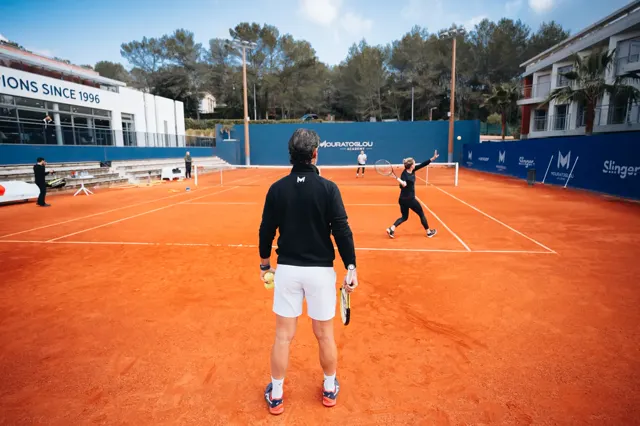
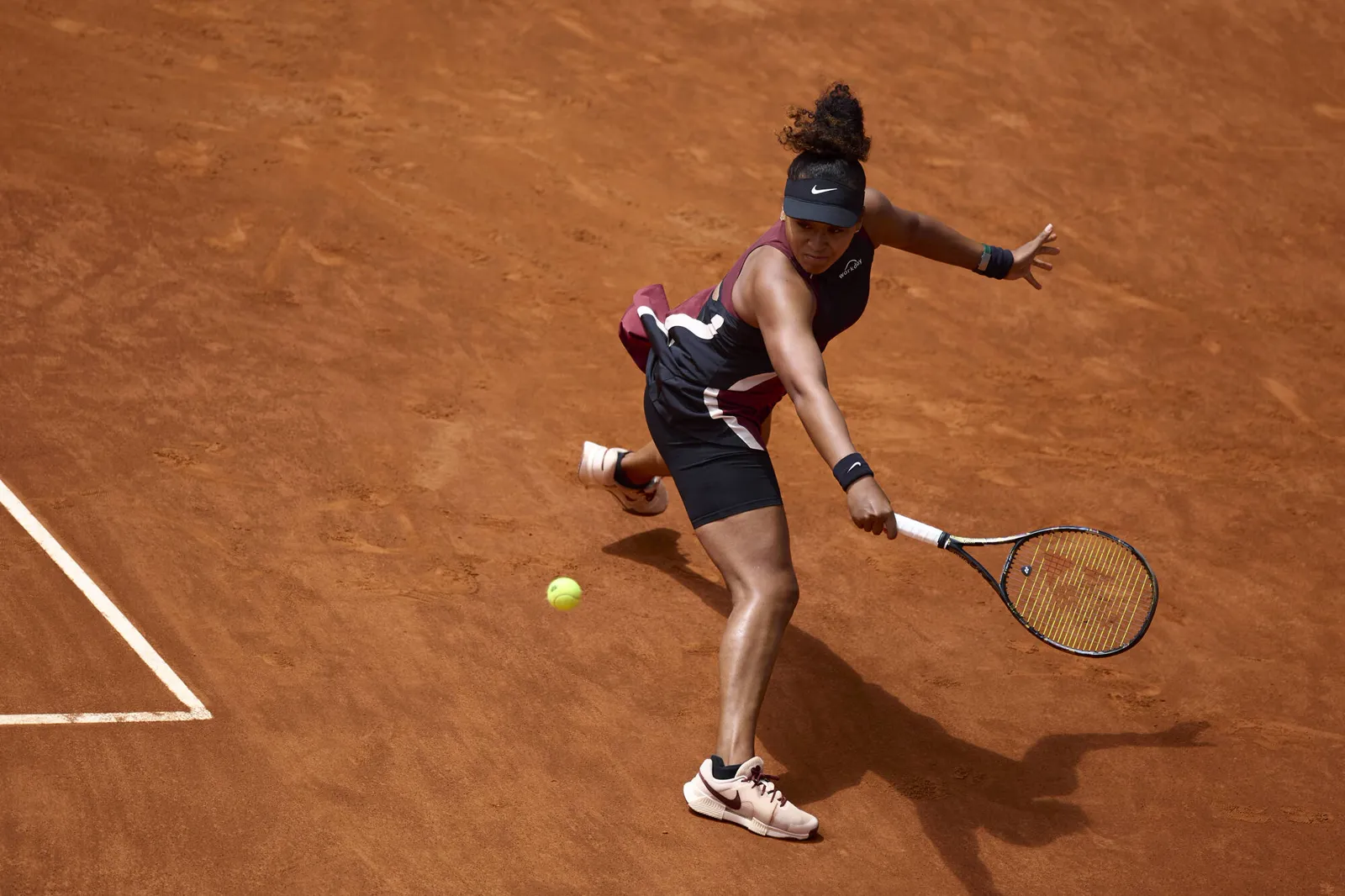
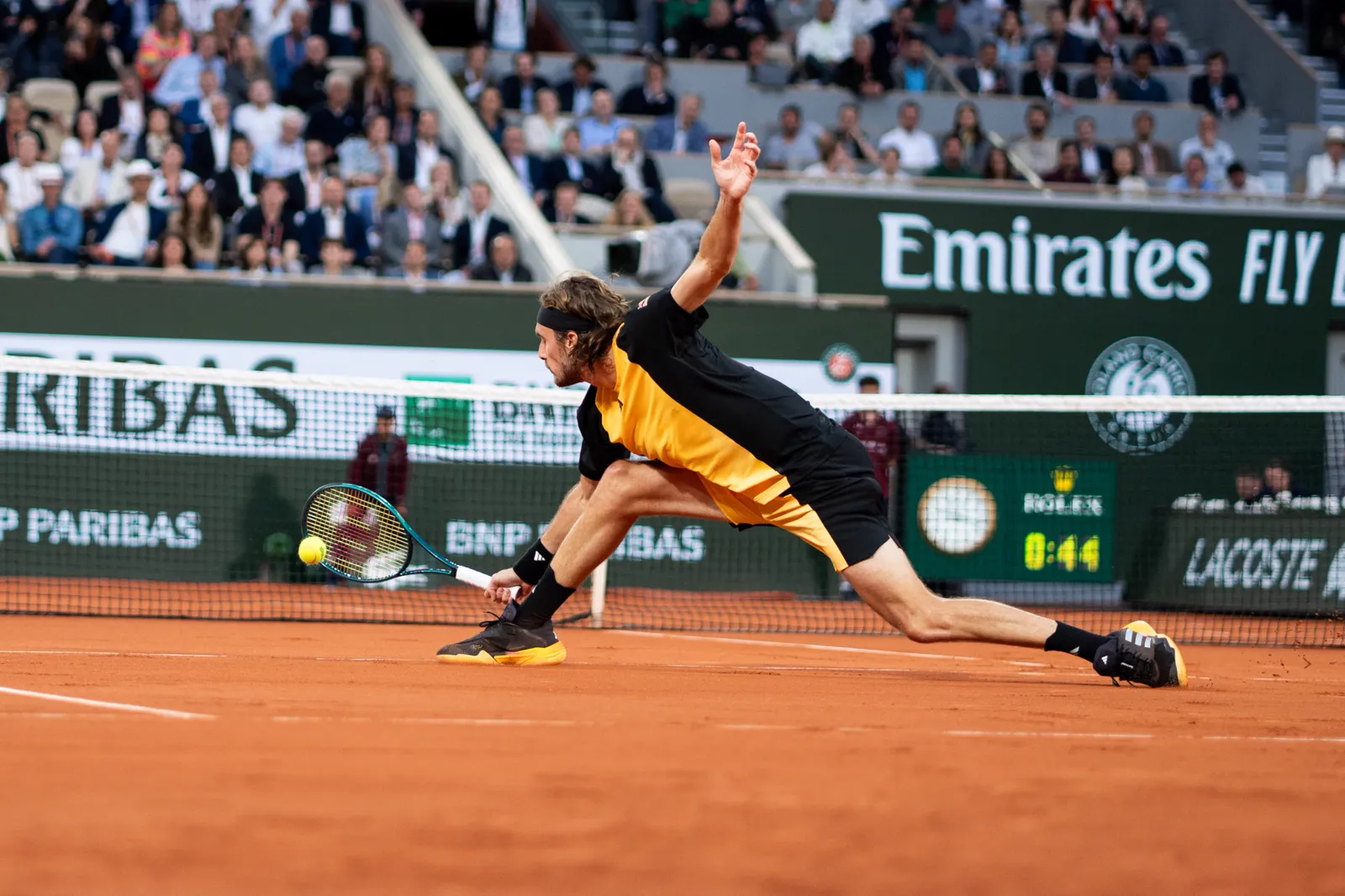
The emblem of tennis in France and southern Europe, clay is the surface of Roland-Garros and of many clubs and academies. Its top layer of crushed brick slows the ball and makes it kick up high: rallies last longer and outright winners are harder to come by.
Clay rewards patience, topspin, changes of height and placement, and it demands good endurance. Players learn to slide into their shots and recover. It is also kinder on the joints than hard courts. To understand how it is built in layers, and its variants (red, green, grey, synthetic), read our article on how a clay court is made.
There is also synthetic clay: artificial grass or carpet weighted with crushed brick granules. It dries quickly, needs almost no watering and can be used indoors or outdoors, with a feel close to natural clay but a slightly faster ball.
Hard courts: the most common surface on tour
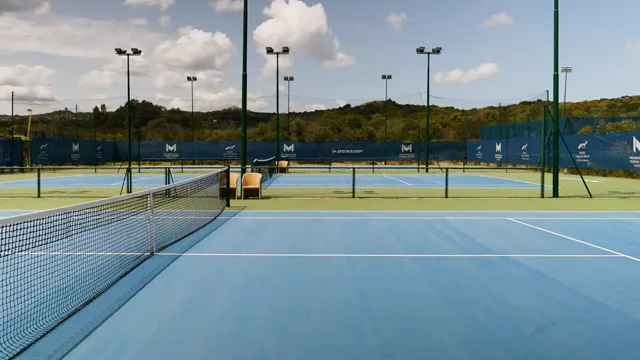
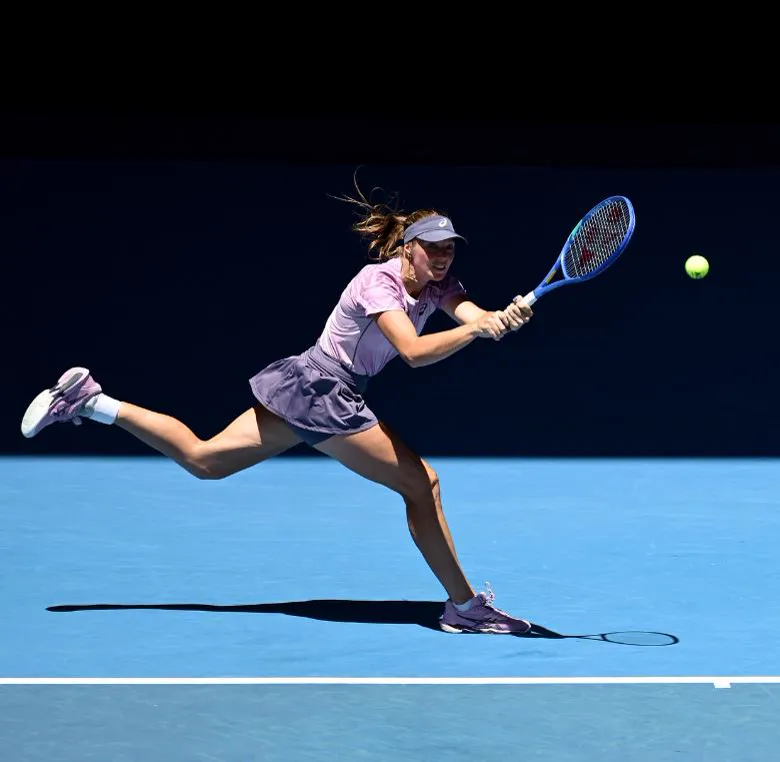
A hard court is a rigid base (concrete or asphalt) covered with layers of acrylic coating, or porous concrete in many clubs. It is the most widely used surface on the ATP and WTA tours: the Australian Open, the US Open and most Masters 1000 events are played on it, outdoors and indoors.
The bounce is consistent and predictable, and the pace is set by the amount of sand mixed into the coating. Hard courts suit every style and favour players who take the ball early and dictate. They are also the easiest to maintain, but they absorb little shock, which puts more strain on knees, ankles and back. Everything is covered in our guide to the hard tennis court.
Grass: the original and fastest surface
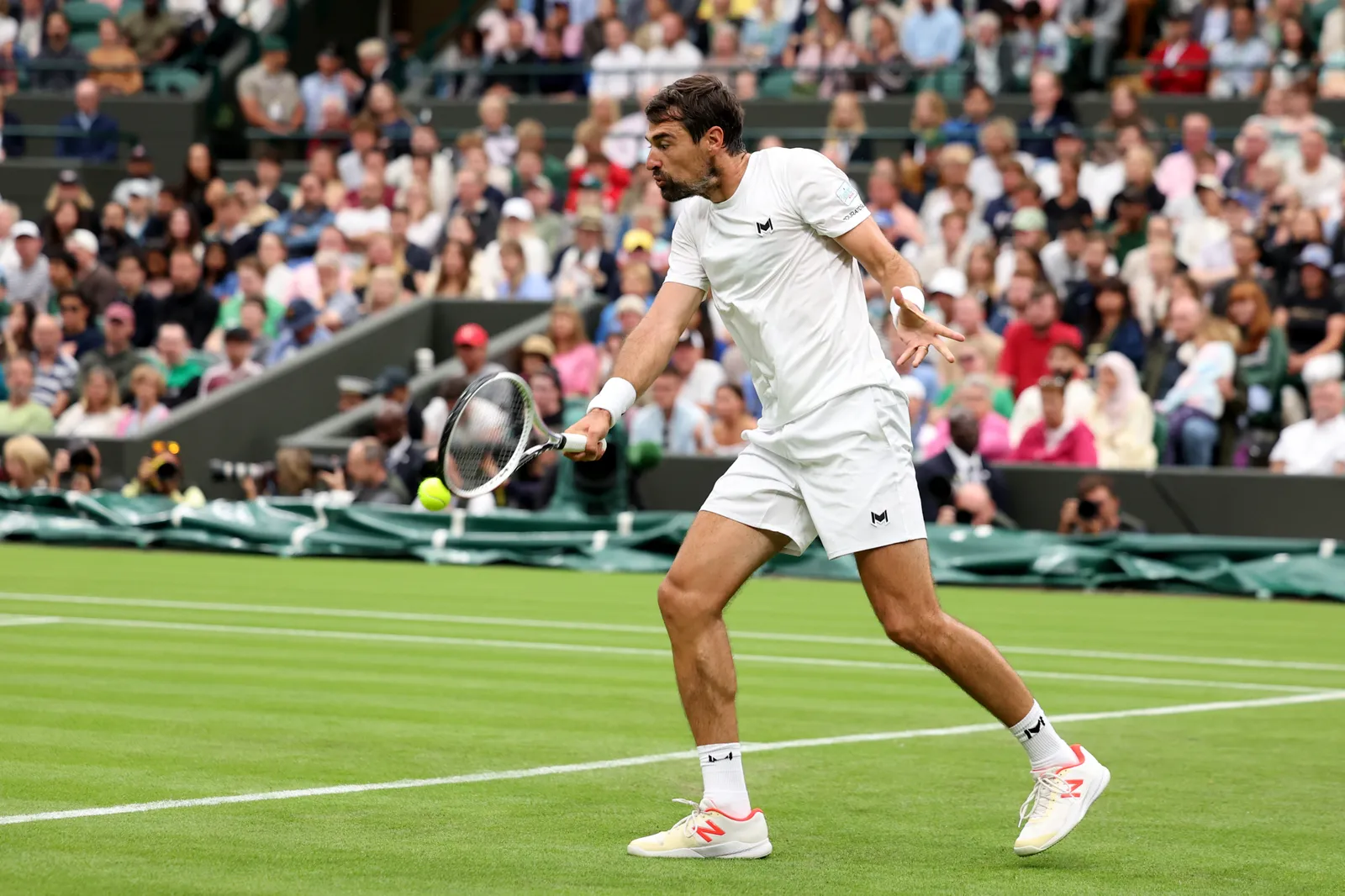
Grass is where tennis began: Wimbledon has been played on it since 1877 and remains the only Grand Slam on grass. The grass season is short, a few weeks around Wimbledon, and few clubs have grass courts because of the cost and the daily upkeep (mowing, watering, rolling).
The ball skids through and stays low, sometimes bouncing unevenly as the grass wears. Points are short: grass favours big servers, serve-and-volley players and flat hitters, and punishes those who need time to build. More in our article on the grass tennis court.
Synthetic surfaces in clubs
Clubs often play on surfaces designed to last and to be playable in any weather:
- Sand-filled artificial grass: synthetic fibres filled with sand; drains well, low upkeep, slower and lower bounce than a hard court.
- Synthetic clay: the look and some of the sliding of clay, without daily watering.
- Carpet and cushioned indoor surfaces: fast, very common in indoor clubs.
- Porous concrete: an affordable hard court that lets rainwater drain through.
Which surface suits which type of player?
Clay: patient, tactical players with stamina
Ideal for patient players who build their points, master topspin and defend by sliding. To make the most of it, read our tips to improve your clay-court tactics.
Hard courts: powerful, all-round players
The most neutral surface: it suits hitters who dictate from the first shots but still gives fast defenders a chance. It is also the surface played on for most of the year.
Grass: attackers
Good servers, volleyers and flat hitters feel at home. You need quick feet, a low base and excellent reading of the game.
To improve, the best approach is to mix surfaces: clay builds patience and fitness, hard courts sharpen your speed of execution. That is exactly what our adult tennis camps on the French Riviera offer.
Training on several surfaces at the Mouratoglou Academy
The Mouratoglou Academy on the French Riviera has 33 tennis courts, clay and hard, including semi-covered courts so training can go on when the weather turns. Players learn to adapt their footwork, timing and tactics to each surface, whether on a camp, in Tennis & School or preparing for tournaments. The Academy’s surfaces are presented in our article on its courts and their renovation.
On every surface, the Mouratoglou Method adapts the game patterns to the player’s profile. Discover the Academy and our tennis camps.
 Ages 9–17Full daysBoarding optionPerformance Camp JuniorThe intensive camp for young players: technique, tactics, fitness and mindset, 4 players per coach.DISCOVER
 Frequently asked questions
What is the hardest tennis surface to play on?
Clay is often named: rallies are long, and it demands excellent fitness, consistency and the art of sliding. But it depends on your style: a defensive topspin player will struggle more on grass, where the ball stays low and fast.
What is the fastest tennis surface?
Natural grass is the fastest surface: the ball skids through and stays low. Fast hard courts and some indoor carpets come next, with clay the slowest.
What are the dimensions of a tennis court?
A court is 23.77 m long, 8.23 m wide for singles and 10.97 m for doubles, whatever the surface. With the recommended run-off space around the lines, the total area is about 36.57 m by 18.29 m, close to 670 m².
Why does the surface change the game?
Because it changes the speed of the ball after the bounce, the height of that bounce and the grip under your feet. On a slow surface you have more time to defend; on a fast one, the serve and taking the initiative matter more.
Do you need different shoes for each surface?
Yes. Clay-court shoes have a herringbone sole that sheds clay and lets you slide; hard-court or all-court shoes have a sole built to resist abrasion. See our guide to shoes for clay courts.