Tactics · Clay court
Clay court tactics: how to adapt your game
On clay, tactics are about building the point rather than going for winners: the ball is slower and bounces higher, so depth, topspin, angles and changes of pace such as the drop shot make the difference. You also need to master the slide and stay strong physically and mentally through long rallies.
Key takeaways
- A slow surface: the ball slows down and bounces high, rallies last longer and winners are rarer.
- Build the point: depth to push your opponent back, then angles to open the court.
- Topspin is king: it makes the ball bounce above your opponent’s shoulder.
- The drop shot is especially effective against an opponent standing far behind the baseline.
- The slide comes at the end of your movement, just before the shot, never at the start of the run.
Why does clay need specific tactics?
Clay court tennis tactics differ from those on fast courts because the surface slows the ball down and produces a higher bounce. Winners are harder to hit, rallies are longer, and success depends more on consistency and point construction than on raw power.
Add to that the slippery footing: you move differently, and the quality of your positioning determines the quality of your shot. For the characteristics of each surface, see our guide to tennis court surfaces and our article on red clay courts.
| Characteristic | Effect on play | Tactical answer |
|---|---|---|
| Slower ball | Fewer winners, longer rallies | Build the point, be patient |
| High bounce | Topspin balls rise above the shoulder | Use topspin, play deep |
| Slippery surface | Footing and recovery are trickier | Controlled sliding, make your opponent run |
| Long effort | Physical and mental fatigue | Stamina, managing effort over the whole match |
How do you build points on clay?
The key is to take your time. Rather than trying to finish quickly, string together accurate, deep shots to push your opponent back, then open up the angles step by step. The point is often won on the third or fourth ball of a well-built sequence.
- Establish depth: two or three topspin balls bouncing near your opponent’s baseline.
- Open the court: a shorter, sharper cross-court ball pulls your opponent wide.
- Change the pace: a drop shot or a low slice when they are far behind the baseline.
- Finish into the open court, stepping in to take the ball earlier.
Vary your shots and break the rhythm
Topspin is especially effective on clay: the ball kicks up high and pushes your opponent back. The drop shot and the slice break the tempo and force them out of their comfort zone. A good drop shot after a series of deep balls is one of the most rewarding patterns on this surface; for the technique, see our guide to the perfect drop shot.
How do you move and slide on clay?
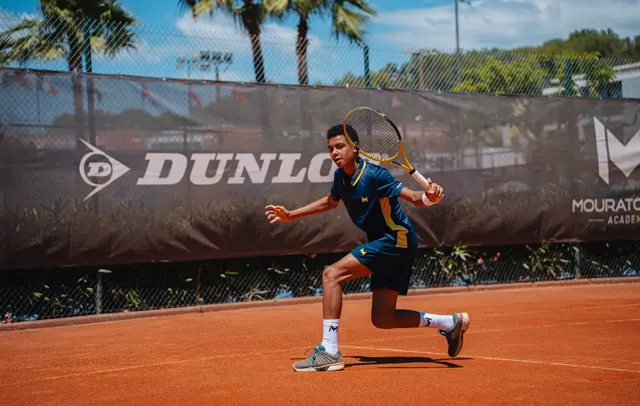
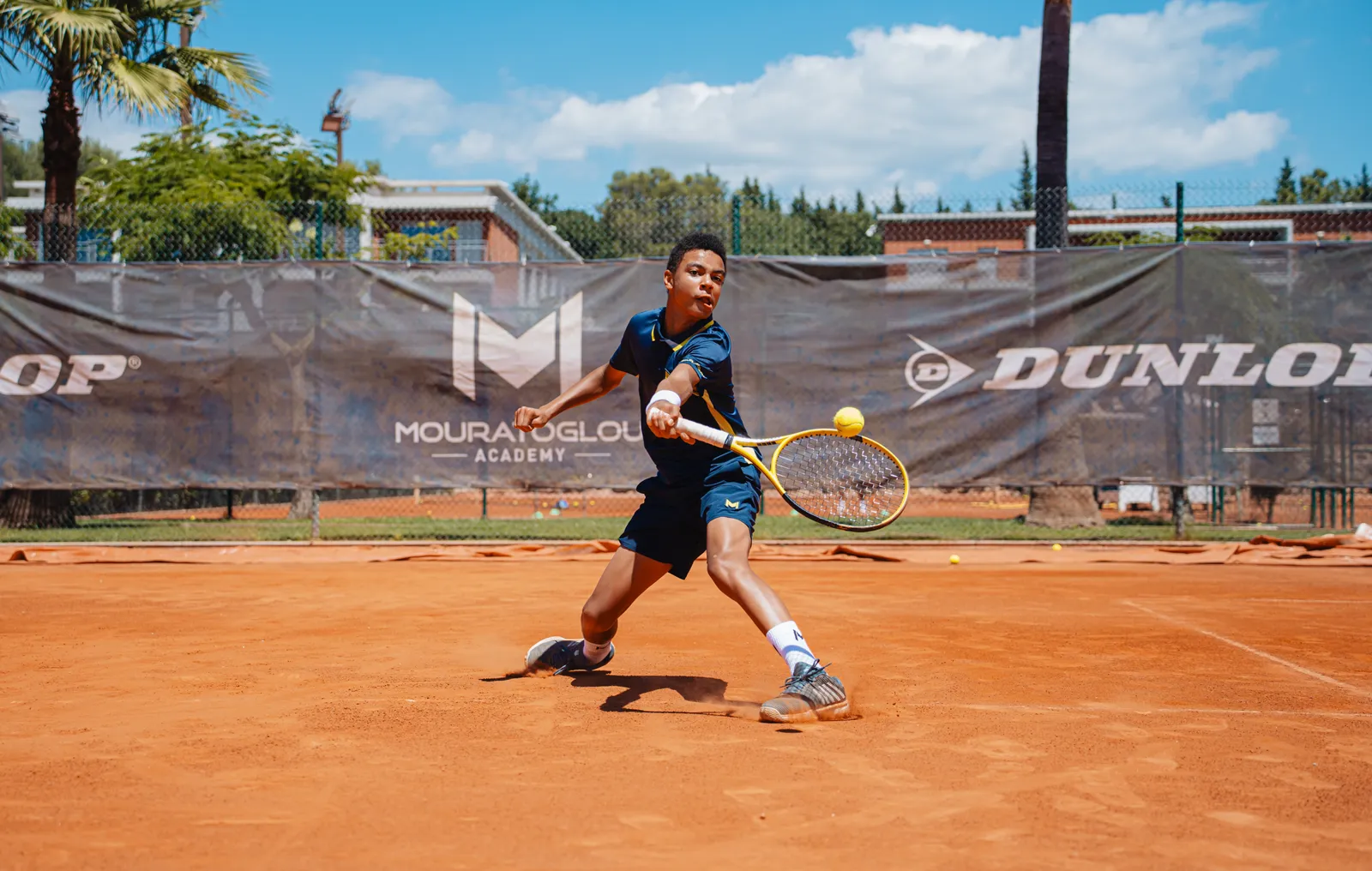
On clay, sliding is part of the game, but it is all about timing and control. Don’t slide at the start of the run: you would lose your acceleration. The slide comes at the end of your movement, just before the shot, to stabilise your body and stay with the ball.
- Start with short, dynamic steps, without sliding.
- Lower your centre of gravity as you approach the ball.
- Slide on the outside foot for the last few metres, knees bent.
- Hit at the end of the slide, with a stable upper body.
- Push off hard on your planted leg to recover towards the centre.
Suitable shoes with a herringbone sole make sliding easier: see our guide to tennis shoes for clay courts.
How do you adapt to your opponent on clay?
On clay, even more than elsewhere, you need to observe and adapt. Attacking is not just about power, but about precision and tactical construction.
- Against a defensive player: take the initiative without rushing, play deep, vary the pace and bring them forward with drop shots. The full plan is in how to beat a pusher.
- Against a power player: high, deep topspin to keep them back, and make them hit on the move; the slow surface gives you time to defend.
- Against a net player: low balls at their feet and lobs, which work even better on a slow bounce.
For the general principles that apply on every surface, see our guide to tennis tactics.
How do you work on clay court tactics at the Mouratoglou Academy?
At the Mouratoglou Academy on the French Riviera, clay court tactics are part of training from the very first sessions. The aim: give every player a clear vision of the game, tailored to their profile.
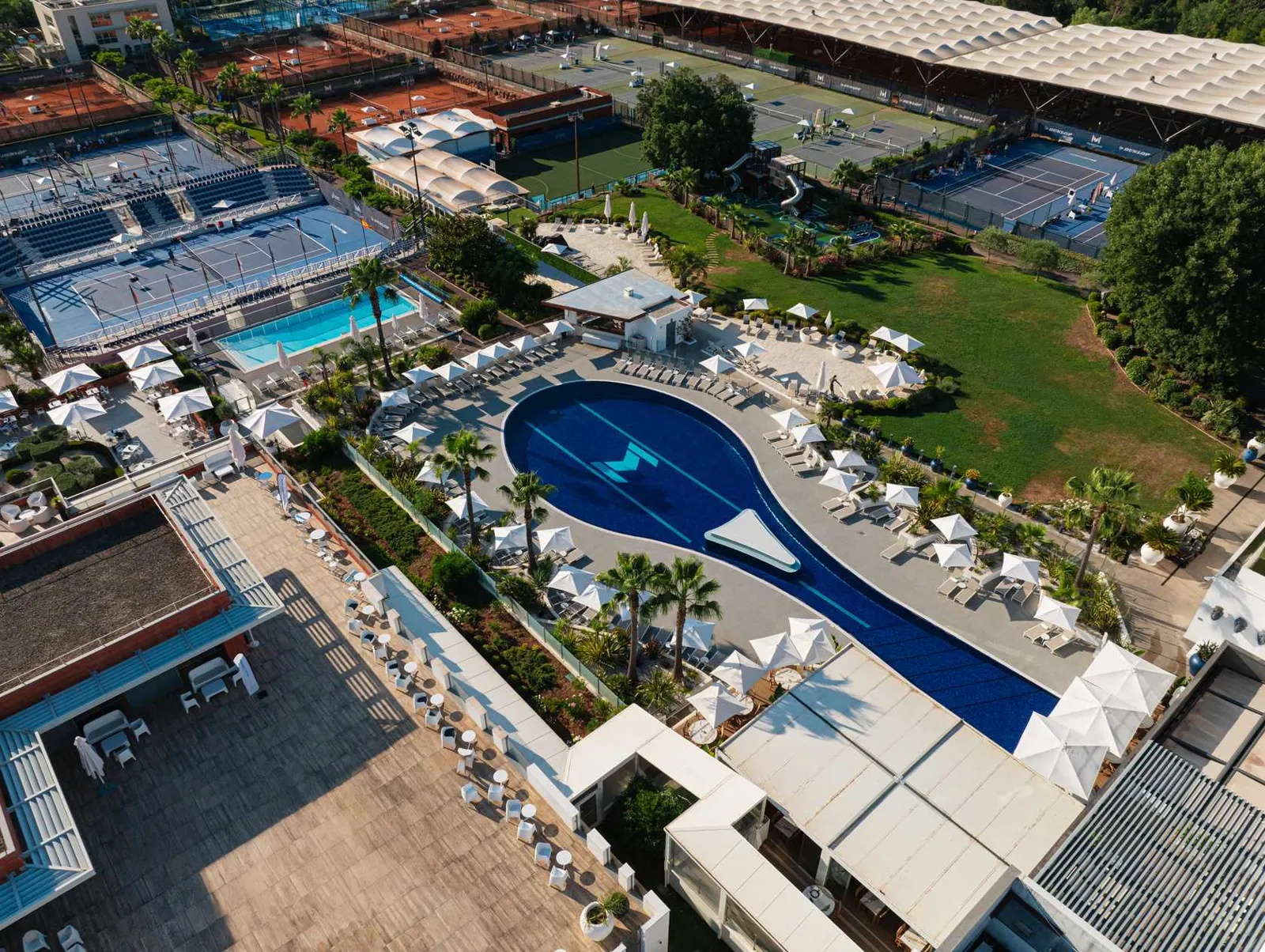
- Match situations: themed points to make construction patterns automatic.
- Video analysis of strokes and decision-making.
- Clay-specific movement: sliding, recovering balance, getting back into position.
- Managing effort over the length of a match.
Adults, juniors or competitors, everyone can improve on this surface at a camp: the Performance Camp Adult offers an intensive week with 4 players per coach, and for young players aiming at competition, the Tennis & School programme builds tactics into an all-round programme of technique, fitness and mental training throughout the school year.
This work follows the Mouratoglou Method: every player gets a tactical plan built from their own game, not a one-size-fits-all pattern. Sessions take place on the clay courts of the Mouratoglou Academy, and our tennis camps let you live this approach over a full week. To brush up on the fundamentals before you come, have a look at the Coaching Corner too.
 Ages 9–17Full daysBoarding optionPerformance Camp JuniorThe intensive camp for young players: technique, tactics, fitness and mindset, 4 players per coach.DISCOVER
Frequently asked questions
What is the hardest surface in tennis?
Clay is often considered the most demanding: it requires solid fitness, good tactical sense and excellent movement. Rallies are longer and winners are rarer.
Which tactics work against a defensive player on clay?
Take the initiative without rushing: play deep to push them back, vary height and spin, then bring them forward with a drop shot or a short ball. Attack the open court once they are out of position.
How do you avoid slipping on clay?
Don’t slide at the start of the run: push off with short, dynamic steps. Save the slide for the end of your movement, just before the shot, with a low centre of gravity. Shoes with a herringbone sole help you control grip.
Why is clay harder to play on?
Clay slows the ball and produces high bounces, which makes rallies longer and more physical. You have to keep adapting, vary your shots and stay mentally strong over a long match.
How long does it take to adapt to clay?
It depends on the surface you usually play on. A hard-court player needs several sessions to accept longer rallies, rebuild their footwork and dare to slide. A full week on clay, such as the Performance Camp Adult at the Mouratoglou Academy on the French Riviera (Biot, near Nice), gives you time to build those reflexes by playing on the surface every day.