Tactics · Against a defender
How do you beat a pusher in tennis?
To beat a pusher, accept long rallies without falling into their trap: build the point with deep balls, bring them forward with drop shots and short balls, then attack only when they are out of position. Patience and controlling frustration matter as much as technique.
Key takeaways
- A pusher is a defender who gets everything back, often high and through the middle, and waits for your error.
- Don’t force it: trying to finish too early is exactly what they want.
- Draw them out of the back court: drop shots and short balls make them come forward, where they are less comfortable.
- Attack in stages: depth, then an angle or short ball, then a shot into the open court.
- Manage frustration: losing a long point changes nothing about the plan.
What is a pusher in tennis?
In tennis, a pusher (French players call them a “rameur”, a rower) is a defensive player who returns almost every ball, often high, slow and through the middle, without taking risks. Their plan is simple: extend the rally until you make the mistake. They are usually quick, fit and very consistent, but generally lack the weapons to finish points themselves.
Don’t confuse them with the baseline striker, who tries to take the initiative: for that opponent, see how to beat a baseline striker. To beat a pusher, the aim is to change the nature of the rally without rushing.
Why do you need patience against a pusher?
The first mistake is trying to finish too quickly. A pusher is comfortable in long rallies; if you go for a winner on the third shot, you are doing exactly what they want. Accept playing 10 or 15 balls, but build the point rather than just surviving the rally.
- Play with margin: higher over the net, a metre inside the lines.
- Use the slice: a low ball with no pace forces them to generate their own.
- Mix in high, looping balls, which push them back and bounce above their shoulder.
- Set yourself a rally target: for example, no errors before the fifth shot.
How do you get a pusher out of their comfort zone?
Pushers thrive on predictable rallies from the back of the court. Your main weapon is variety: angles, spin, depth and above all bringing them forward.
Bring them forward
A well-placed drop shot or a short cross-court ball forces them to leave the baseline, where they feel safe. Many defenders are less at ease near the net: they volley less well and leave the lob or the pass open. For the technique, see our guide to the perfect drop shot.
Target their weaker side
Most players have a weaker side, often the backhand. Concentrate the pressure there, cross-court and down the line, to get the shorter ball that lets you attack.
Impose your game
Don’t get dragged into their rhythm. If you are an attacking player, keep your identity: attack more, but on the right balls. Come to the net behind a deep ball or a low approach slice: against a defender, the volley saves you time.
How do you build the attack in stages?
Rather than trying to finish from the start of the rally, prepare the attack in several steps. Here is a simple, effective tactical pattern against a pusher.
- Push them back with two or three deep topspin balls to move them away from the baseline.
- Open the court with a short cross-court ball or a drop shot to make them run forward or wide.
- Attack the open space as soon as they are out of position, with an attacking forehand from inside the court.
- Follow it to the net if the reply is weak, and finish with a volley.

Timing is everything: attack when they are out of position, not when you are impatient. For the technique of the attacking shot, see our article on the attacking forehand, and for the basic patterns, our guide to baseline tactics.
 Ages 9–17Full daysBoarding optionPerformance Camp JuniorThe intensive camp for young players: technique, tactics, fitness and mindset, 4 players per coach.DISCOVER
 How do you handle frustration against a player who returns everything?
Pushers often win on the mental side: they get everything back, and it is your impatience that ends up beating you. The key is to judge your points on the quality of your decisions, not on how long they last.
- Don’t try to finish the point at all costs: build it methodically.
- Breathe between points and return to your plan after every point you lose.
- Make the most of the points you win: show your commitment after a big point; it puts pressure on your opponent.
- Stay fit: good conditioning keeps you clear-headed in long rallies.
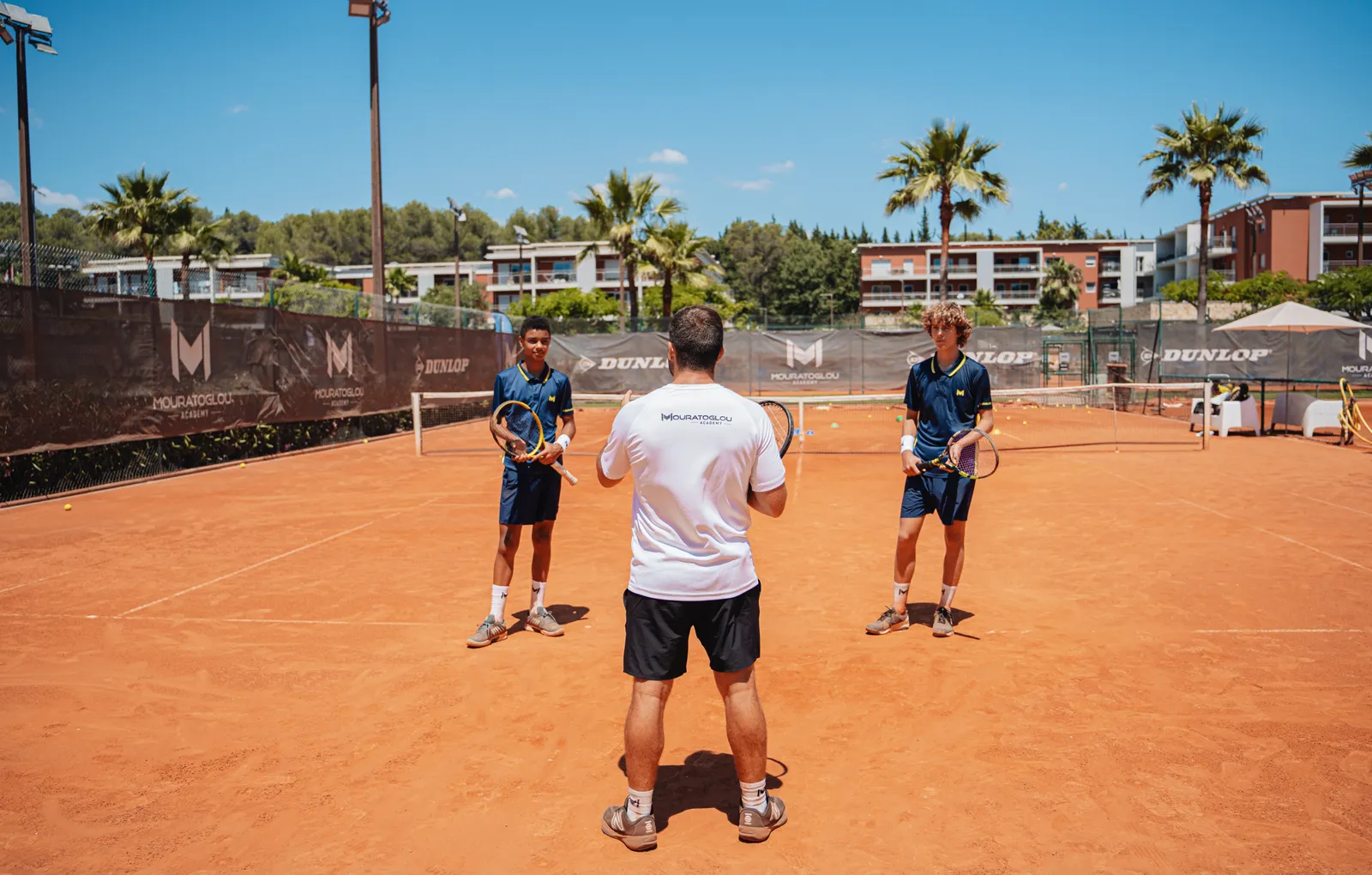
For tools to manage emotions in a match, see our guide to the mental game in tennis. And to see how this plan fits with other opponent profiles, read our pillar guide to tennis tactics.
At the Mouratoglou Academy on the French Riviera (Biot, near Nice), we simulate matches against defensive players to learn patience and point construction, at the heart of the Mouratoglou Method. Watch how Daniil Medvedev defends far behind the baseline: a model of consistency. To prepare, nothing beats our tennis camps.
Frequently asked questions
Why is a player called a pusher in tennis?
Because they “push” the ball back over the net, high and without pace, rather than hitting through it. Their aim is to prolong the rally until their opponent misses; in French, the same player is called a “rameur”, a rower.
What is the best tactic against a pusher?
Build the point with deep balls, bring them forward with drop shots or short balls, then attack the open court once they are out of position. All without trying to finish too early.
Should you come to the net against a pusher?
Yes, behind a ball that troubles them: a deep ball, a low approach slice or a ball that pulls them wide. At the net, you shorten the rally and take away their main weapon, consistency.
How do you stay calm against a pusher?
Set performance goals rather than outcome goals, such as playing deep or waiting for the short ball. Breathe between points, accept that some rallies will be long and return to your plan after every point lost.
How should I train to beat a pusher in a tournament?
Play long rally sets with one rule: no attacking before the fourth shot, then accelerate on the first short ball. Add drop shots and net approaches. At the Tournament Camp Junior, coached matches against defensive players are reviewed with the coach.