Tactics · Baseline
Baseline tactics: control the rally from the back of the court
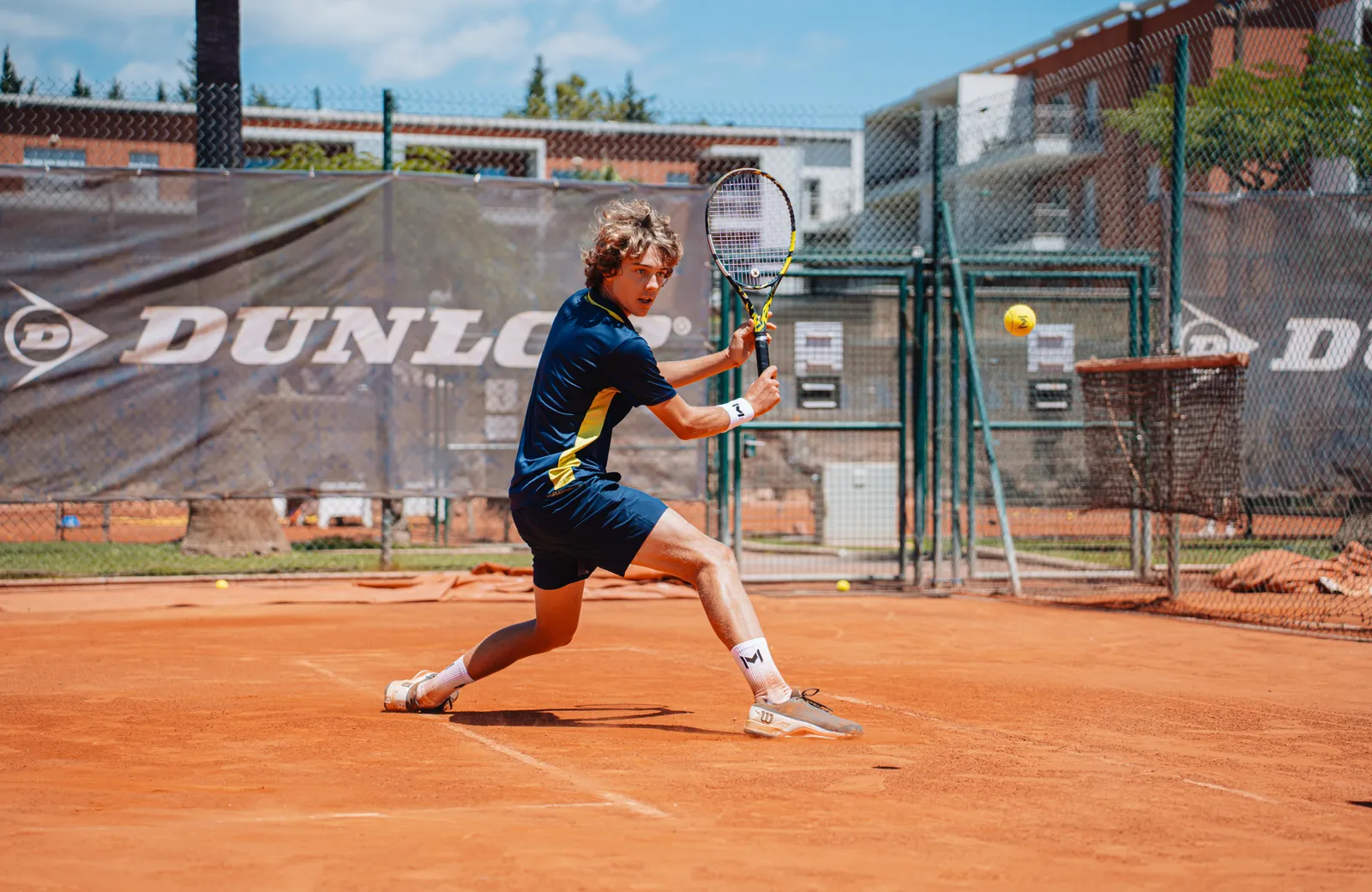
Baseline tactics mean controlling the rally from the back of the court through consistency, depth and variety, until you get a short ball or force an error. The fundamentals: play cross-court, use topspin for margin and depth, vary length and pace, and attack at the right moment.
Key takeaways
- Definition: a game built from the baseline, wearing the opponent down with consistency and depth before finishing the point.
- Cross-court first: the net is lower and the court longer, so the cross-court shot gives you more margin.
- Topspin gives a high trajectory and a deep ball with a high bounce, hard to attack.
- Changing direction (down the line) is an attacking shot: play it on a comfortable ball, not in defence.
- Attack the short ball: an effective baseliner moves forward as soon as the opportunity comes.
What are baseline tactics in tennis?
Baseline tactics are the way you build points from the back of the court, without systematically coming to the net. They rely on consistency, control of long rallies and the ability to dictate the pace by placing the ball where your opponent is uncomfortable.
From behind the baseline you have more time to read the ball and respond to attacks. In return, this game demands good stamina, active footwork and steady concentration to avoid errors over rallies of 10, 15 or 20 shots. It is one of the pillars of tennis tactics as a whole.
What are the fundamentals of baseline play?
1. Play cross-court
The cross-court shot is the backbone of the rally. The net is lower in the middle (0.914 m against 1.07 m at the posts) and the diagonal is longer than the line, so you have more margin. Going cross-court also limits the angles available to your opponent and makes it easier to recover.
2. Use topspin
Topspin lets you hit high over the net while bringing the ball down into the court. The result: fewer errors, a deep ball and a high bounce that forces your opponent to hit at shoulder height or step back.
3. Vary length and angles
Don’t always play to the same spot. Mix deep balls with shorter, angled cross-court balls to move your opponent: depth pushes them back, angles open the court. This variety stops them settling into a comfortable routine.
4. Work on your footwork
Being well placed behind every ball determines the quality of your shot. Small adjustment steps and a quick recovery towards the centre after each shot are essential: find drills in our article on baseline footwork.
5. Patience and timing
Baseline play is not about forcing the finish but waiting for the right ball. Patience lets you profit from your opponent’s error or from the short ball that hands you the initiative.
Which tactical patterns work from the baseline?
A tactical pattern is a sequence of shots planned in advance that you repeat whenever the situation allows. Here are the four most useful from the baseline.
- Cross, cross, then down the line: settle the rally cross-court, then change direction on a comfortable ball inside the court. Down the line is riskier (higher net, shorter court): it is an attacking shot.
- Deep, then short angle: push your opponent back with one or two deep topspin balls, then open the court with a short cross-court angle that drags them wide.
- Deep, then drop shot: against an opponent who stands well behind the baseline, a drop shot after a series of deep balls breaks the rhythm and makes them sprint forward.
- Short ball, attack, net: as soon as a ball lands near the service line, move in, hit hard or deep and follow it to the net to finish.

| Situation | Recommended direction | Why |
|---|---|---|
| Stretched, on the run | Cross-court and high | More margin, time to recover |
| Neutral rally | Cross-court and deep | Safety and control of the rally |
| Comfortable ball inside the court | Down the line or angle | Change direction and take the initiative |
| Short ball | Attack and come in | Finish before your opponent recovers |
For the attack itself, see our article on the attacking forehand, and to master the touch shot, our guide to the perfect drop shot.
How do you change the pace of the rally?
Mixing fast shots with slower balls stops your opponent from finding their timing. The slice slows the game and stays low; a sudden acceleration after two slower balls catches them out. High, looping balls force them to step back or hit above the shoulder.
 AdultsFull daysAll levelsPerformance Camp AdultA week of intensive tennis, 4 players per coach: technique, match play, physical and mental training.DISCOVER
 Which mistakes should you avoid at the baseline?
- Not anticipating: if you misread the ball and arrive late, you lose control of the rally.
- Changing direction too early: going down the line from a defensive position is the most common baseline error.
- Landing short by accident: a ball dropping near the service line hands your opponent the attack.
- Staying stuck behind the baseline: not moving in on a short ball means letting the chance go.
- Running out of patience: going for a winner on the third shot multiplies unforced errors.
Against an opponent who is also very solid from the back, the question becomes how to dislodge them: that is the subject of our article on how to beat a baseline striker.
At the Mouratoglou Academy on the French Riviera (Biot, near Nice), we drill these baseline patterns on clay and hard courts, following the Mouratoglou Method. Watch Daniil Medvedev: his consistency and depth perfectly illustrate baseline patience. Discover our tennis camps.
Frequently asked questions
How can I improve my baseline game?
Start with consistency: long cross-court rallies aiming beyond the service line. Then add control of depth and angles, followed by drills where you change direction on an easy ball.
Why is topspin so important from the baseline?
Topspin lets you clear the net comfortably while keeping the ball in the court, which cuts down errors. It also produces a high, heavy bounce that forces your opponent to hit above the shoulder or move back.
Should I play cross-court or down the line?
Cross-court by default: the net is lower in the middle and the diagonal is longer, so it is safer. Go down the line on a comfortable ball, as an attacking shot or to change the direction of the rally.
How do you surprise an opponent from the baseline?
With variety: a drop shot after several deep balls, a low slice after topspin, a sudden change of direction or an acceleration after two slower balls.
What drill improves my baseline game?
Play cross-court rallies to a deep target beyond the service line and count consecutive balls in the zone. Then add a rule: on a short ball, you accelerate down the line. At the Performance Camp Adult, these drills progress step by step and come with video analysis.