Tennis knowledge · Analysis
Alcaraz vs Sinner: a tactical breakdown of the rivalry
Carlos Alcaraz and Jannik Sinner have ruled men’s tennis since 2024 and shared the biggest finals, from Roland-Garros to Wimbledon in 2025. Their rivalry pits two visions against each other: Alcaraz’s variety and explosiveness against Sinner’s baseline pressure and precision. Patrick Mouratoglou regularly breaks down their matches on his channel. Here are the main tactical lines, and what you can take from them.
Key takeaways
- Sinner: takes the ball early, hits flat and deep off both wings, applies constant pressure from the baseline.
- Alcaraz: variety (drop shots, net rushes, slice), explosiveness and a devastating forehand.
- The key to the matchup: who sets the tempo. Sinner wants fast, linear rallies; Alcaraz wants to break the rhythm.
- The serve has been a work in progress for both, and a deciding factor in their recent wins.
- For club players: depth, taking the ball early and variety are three lessons you can apply straight away.
Why the Alcaraz–Sinner rivalry is so compelling
After the Federer–Nadal–Djokovic era, men’s tennis has found a new duel at the top. Carlos Alcaraz, born in Spain in 2003, and Jannik Sinner, born in Italy in 2001, have established themselves as the two best players in the world. In 2025, Alcaraz won an epic Roland-Garros final against Sinner, before the Italian took his revenge in the Wimbledon final a few weeks later.
What makes their matches so gripping is the clash of styles. Each poses a different problem for the other, and every meeting looks like a game of chess played at full speed.
Jannik Sinner’s game: relentless baseline pressure
Sinner stands very close to the baseline and takes the ball early, often on the rise. He takes time away from his opponent. His strokes are fairly flat and very deep, off the forehand as well as the two-handed backhand, which lets him change direction without warning, especially down the line.
In his breakdown of Sinner’s Wimbledon semi-final, Patrick Mouratoglou highlights this ability to keep the intensity constant: few “neutral” balls, consistent depth and placement that pushes the opponent back. Sinner has also improved his serve and lateral movement a great deal, which makes him very hard to outmanoeuvre.
Carlos Alcaraz’s game: explosive variety
Alcaraz owns one of the fastest forehands on tour, capable of producing winners from anywhere. But his main strength is variety: disguised drop shots, net approaches, slices, lobs and changes of height. He can defend far behind the baseline and switch to attack in a single shot thanks to his explosiveness.
That range lets him break the rhythm of consistent hitters. Against a player who wants linear rallies, Alcaraz introduces chaos: a high ball, a drop shot, a surprise rush to the net. That is often what tips tight matches his way.
The tactical keys of their matches
| Area | Sinner | Alcaraz |
|---|---|---|
| Court position | Hugging the baseline | Mobile, from deep defence to the net |
| Main weapon | Depth and backhand down the line | Forehand and variety |
| Preferred tempo | Fast and linear | Changes of rhythm |
| Foundation | Consistency under pressure | Explosiveness and creativity |
The matchup often comes down to the backhand diagonal: Sinner tries to settle the rally there and then fire down the line, while Alcaraz tries to run around to hit his forehand. Whoever gets the first short ball takes control. For more on this, see our principles of baseline tactics.
What club players can learn from them
- Play deep before you play hard: Sinner’s depth hurts more than his raw pace.
- Step into the court: dropping two metres back gives your opponent time. Try to take neutral balls earlier.
- Vary height and spin: like Alcaraz, a drop shot or a high ball can break the rhythm of a more consistent opponent.
- Have a plan A and a plan B: both players adjust their tactics during a match. Prepare an alternative for when your first plan is not working.
- Work on your weakness: both have improved their serve year after year.
Build your game plan at camp on the French Riviera
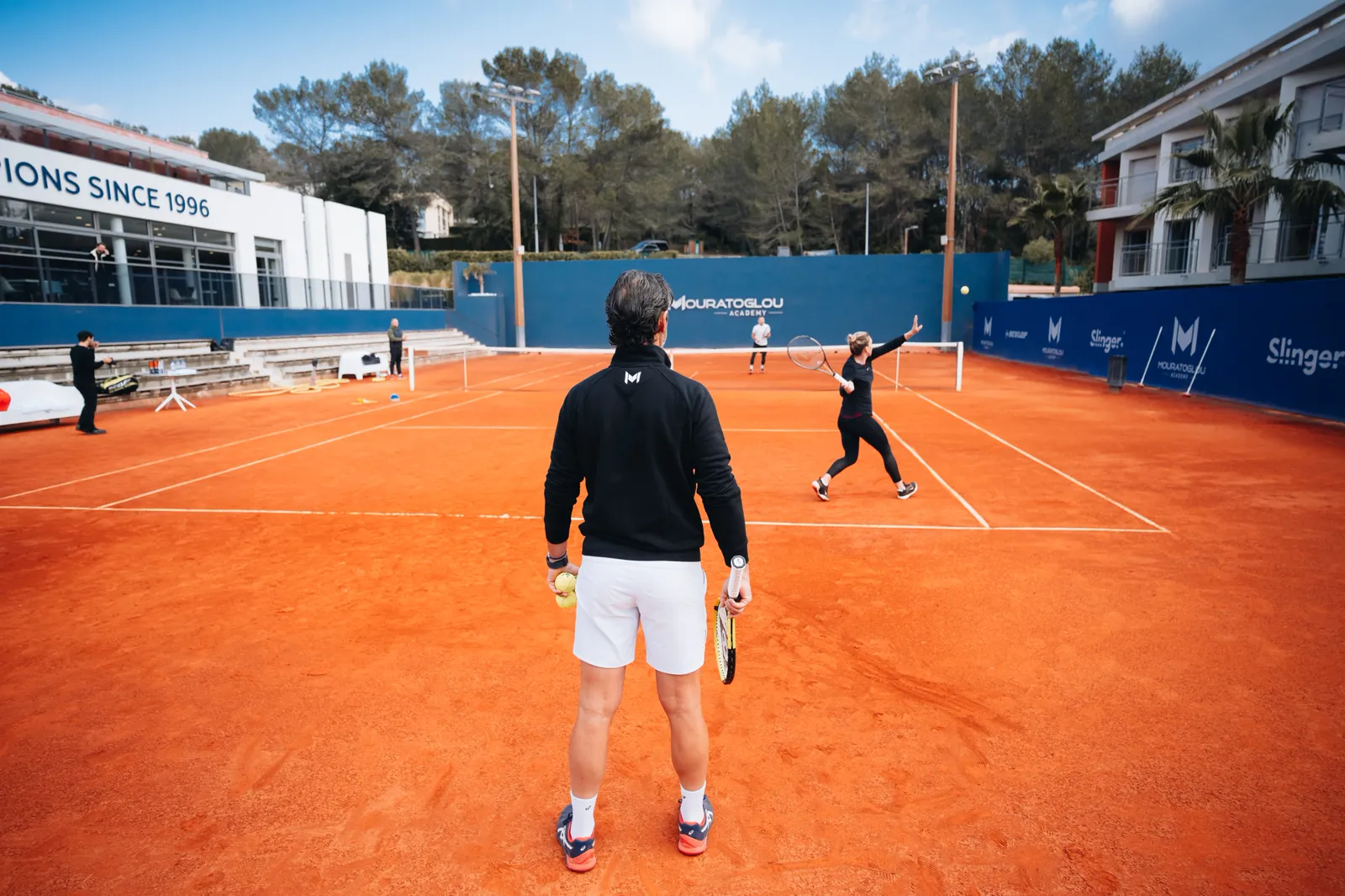
The Mouratoglou Method starts from your player profile to build a game plan, just as the coaches of the world’s best players do. At the Mouratoglou Academy in Biot, on the French Riviera, young competitors work on tactics, match play and video analysis during the Tournament Camp Junior, and adults during the Performance Camp Adult. Discover players who have trained at the Academy, such as Holger Rune or Coco Gauff, then compare our tennis camps and book yours.
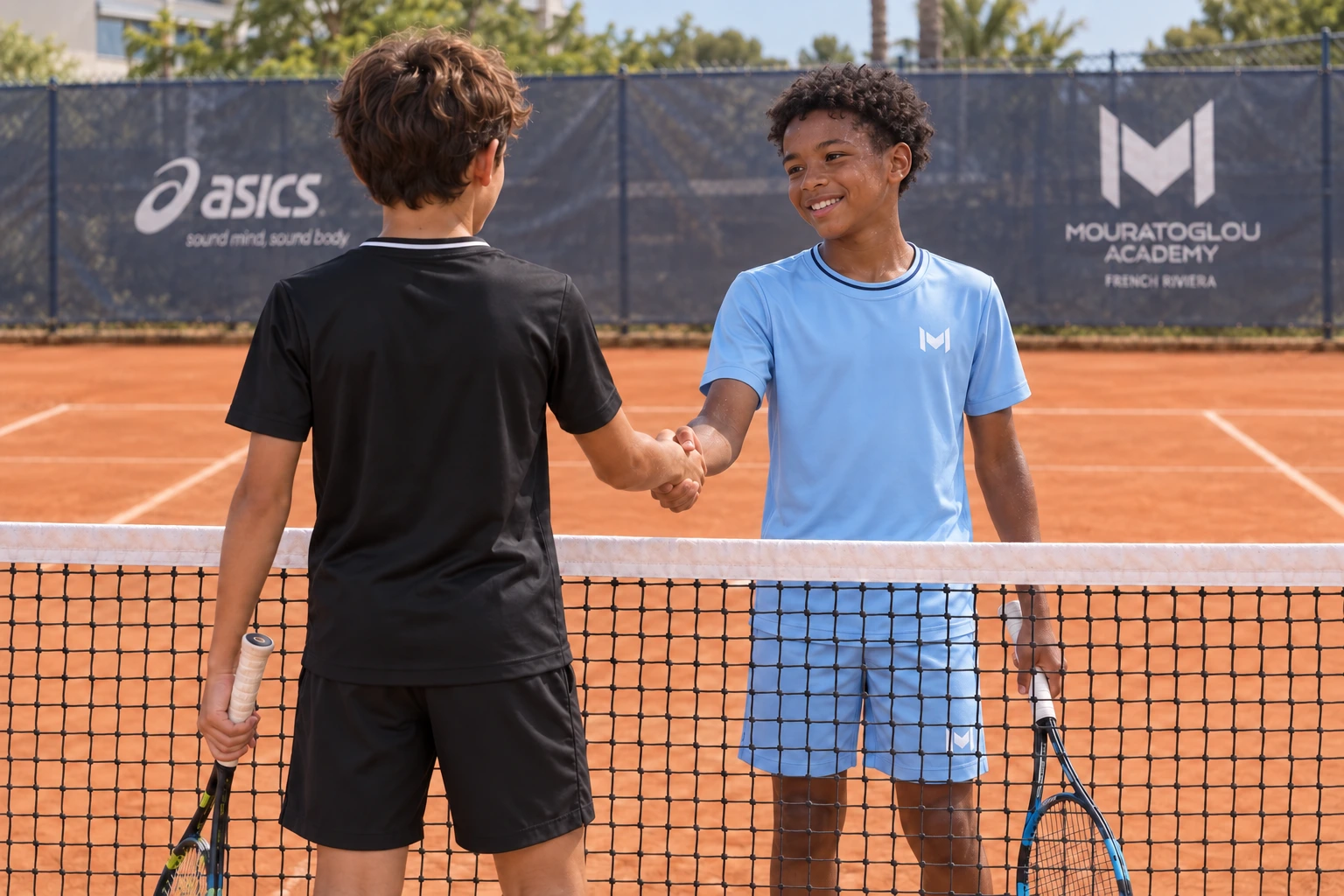 Ages 9–172 weeksCoached tournamentsTournament Camp JuniorTwo weeks of training and tournaments, with a coach by your side during matches.DISCOVER
 Frequently asked questions
Who is better, Alcaraz or Sinner?
They have shared the recent major titles and their head-to-head matches remain very close. The outcome often depends on the surface, the form on the day and who manages to impose their tempo.
What is Sinner’s biggest strength?
His ability to take the ball early and hit deep off both wings with great consistency, which keeps his opponent under constant pressure.
What is Alcaraz’s biggest strength?
His variety combined with exceptional explosiveness: he switches from defence to attack very quickly and uses drop shots, net rushes and changes of pace.
Can a club player copy Sinner’s or Alcaraz’s game?
You can borrow principles: play deep, take the ball earlier, vary. But your game plan should start from your own strengths, not a champion’s.
Where can I watch Patrick Mouratoglou’s analyses?
On his YouTube channel, where he regularly breaks down the big matches on tour. The video in this article analyses Sinner’s Wimbledon semi-final.