Equipment · Shoes
Tennis shoes: how to choose the right pair
To choose tennis shoes, start with the court surface (herringbone outsole for clay, a tough cushioned outsole for hard courts, small pimples for grass), then check size, width and lateral support. A tennis shoe is not a running shoe: it has to cope with side-to-side movement, sudden stops and explosive starts.

Key takeaways
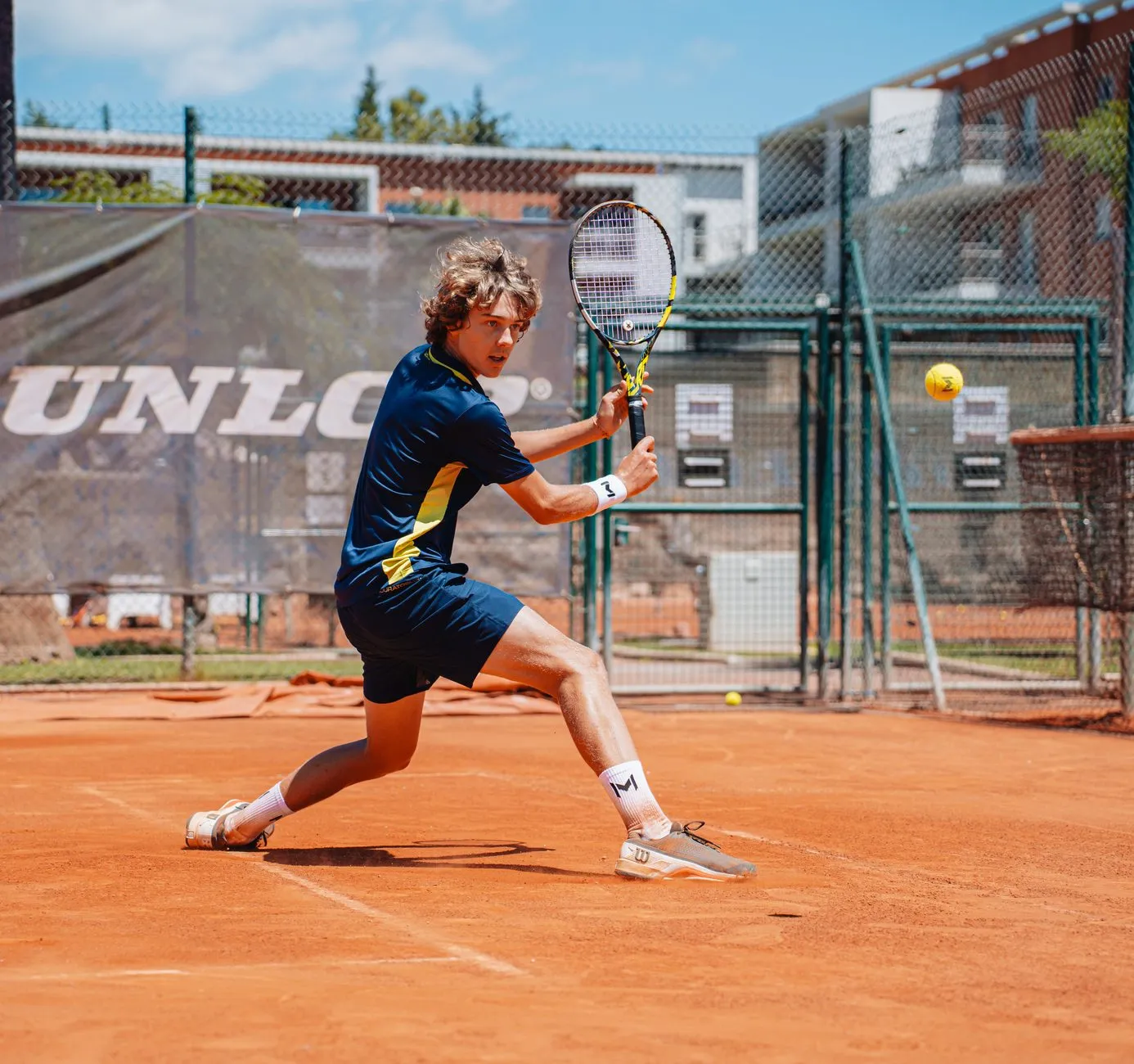
- Why tennis-specific shoes: tennis involves lateral movement and braking that running shoes are not designed for.
- Surface: herringbone for clay, a thick, durable outsole for hard courts, pimples for grass, an all-court outsole for versatility.
- Size: about half a centimetre in front of the big toe, a heel that does not slip, and try them on at the end of the day with your tennis socks.
- Playing style: cushioning and support for powerful players, lightness for fast movers.
- Replacement: every 6 to 12 months for a regular player, or as soon as the sole is smooth or the support has gone.
Why choose proper tennis shoes?
Tennis shoes are built for a sport of lateral movement, sudden stops and explosive starts. They offer reinforced side support, a flatter, more stable sole and cushioning designed for repeated impact. A running shoe, made for forward motion, is too high and too soft at the sides: your foot rolls more easily when you push off sideways, raising the risk of a sprained ankle.
The wrong pair costs you quickly: sore ankles, knees or back, blisters, slips and less efficient movement. Shoes are the piece of kit that protects your body most, even more than the racquet.
Which tennis shoes for which court surface?
Surface is the first criterion: each type of court needs a different outsole for grip, stability and durability.
| Surface | Recommended outsole | What to look for |
|---|---|---|
| Clay | Full herringbone (zigzag) pattern | Grip, controlled slides, clay that clears out |
| Hard (concrete, acrylic) | Thick sole, abrasion-resistant rubber | Cushioning, durability, toe reinforcement |
| Grass | Small pimples | Grip on a slippery surface without damaging the turf |
| Carpet, synthetic, indoor | Smoother or all-court sole | Lightness, grip without locking the foot |
| Several surfaces | All-court outsole | A versatile compromise |
Clay
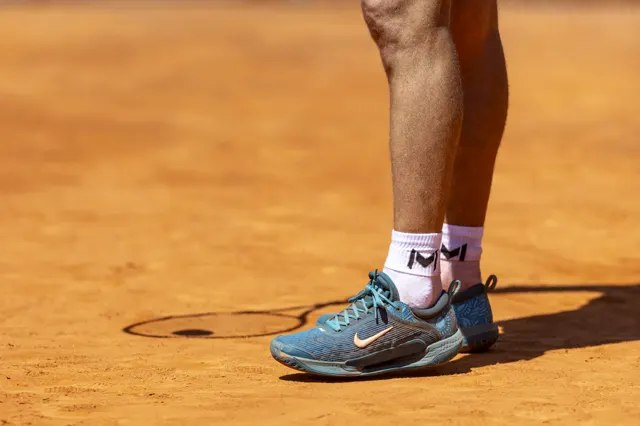
On clay, a herringbone outsole grips the surface while still allowing controlled slides, and it sheds clay instead of clogging. Lateral support is essential. Everything you need is in our guide to clay court tennis shoes.
Hard courts
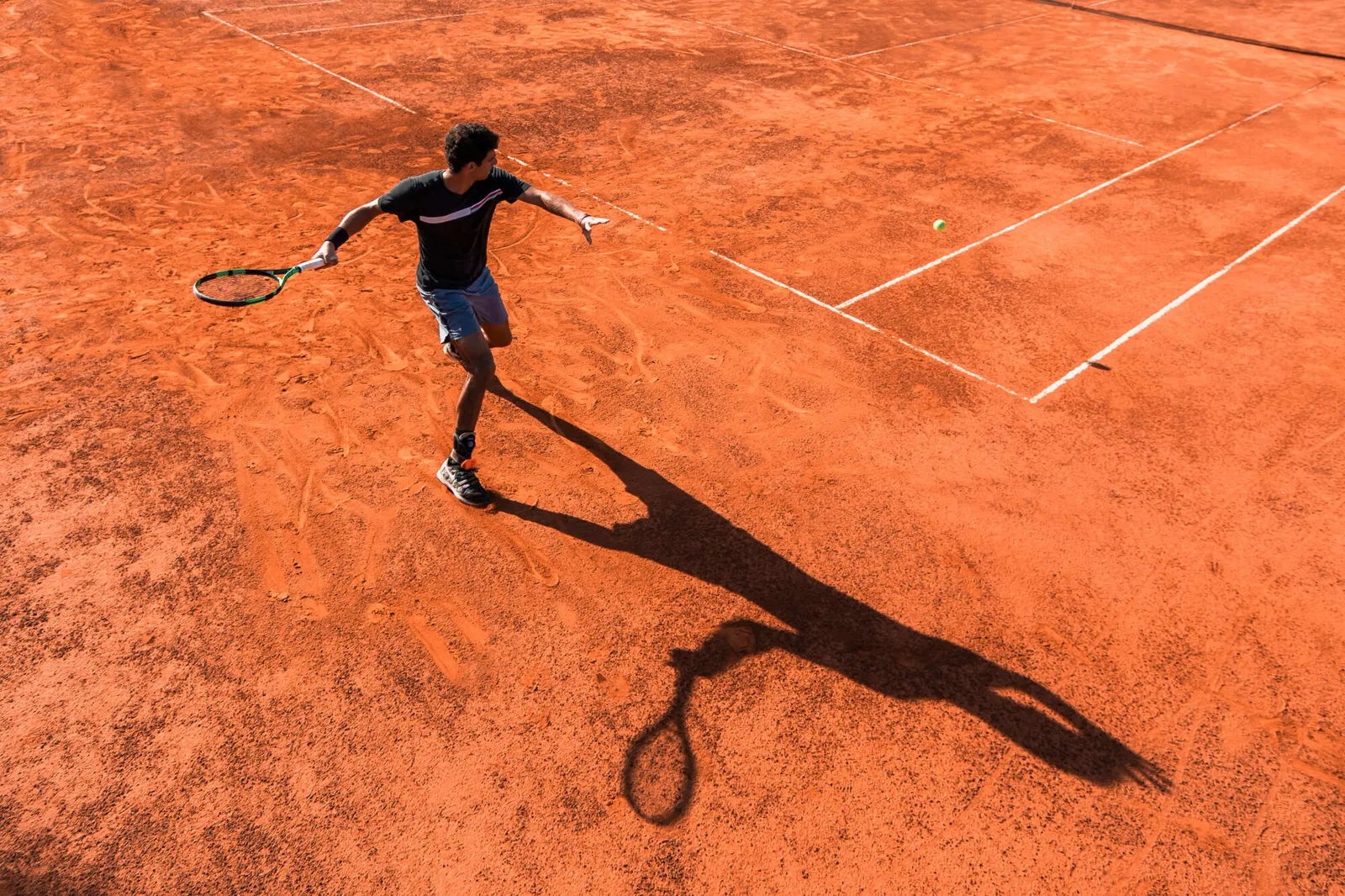
Concrete and acrylic are highly abrasive and hard on the joints. Choose a thick, tough outsole, often sold with a durability guarantee, with good cushioning at the heel and forefoot, and reinforcement at the toe, where the foot drags when braking.
Grass and carpet
On grass, small pimples improve grip on a slippery surface without damaging the turf. On indoor carpet or synthetic courts, go for a light shoe with a smoother sole: a sole that grips too much locks the foot and strains the knees. To understand what makes each court different, see our guide to tennis court surfaces.
How do you choose the right size of tennis shoe?
- Try them on at the end of the day, when your feet are slightly swollen, as they are after an hour of play.
- Wear your tennis socks, which are thicker than everyday socks.
- Leave about half a centimetre (a thumb’s width) between your big toe and the end of the shoe: your foot slides forward when you brake.
- Check the heel: it should not slip when you walk or side-step.
- Test the width: your foot should neither spill over nor be squeezed at the sides. Players with wide feet will find models in wider fittings.
- Move around in the shop: side-steps, small jumps and quick starts to feel the support.
Which shoe suits your playing style?
- Powerful, physical players: prioritise cushioning and support, with a reinforced sole and good shock absorption to protect your joints.
- Fast movers: choose a light shoe that helps explosive starts, with reinforcement at the heel and forefoot to stay stable.
- All-rounders: a shoe that balances comfort, durability and stability is the best choice, especially if you play on several surfaces.
If you have recurring pain in your feet, knees or back, ask a podiatrist: custom insoles suited to your foot can complement a good shoe.
 AdultsMorningsAll levelsPlayer Camp AdultCoached tennis mornings to progress at your own pace, with afternoons free on the French Riviera.DISCOVER
 When should you replace your tennis shoes?
How long a pair lasts depends on how often and how hard you play, and on the surface (hard courts wear shoes out far faster than clay). The tell-tale signs:
- Smooth outsole: the tread has gone, especially under the forefoot, and you slip more.
- Flattened cushioning: you feel impact more in your heels, knees or back.
- Loose support: the upper has stretched and your foot moves inside the shoe on lateral pushes.
- Visible damage: cracks, deep creases, a sole coming unstuck.
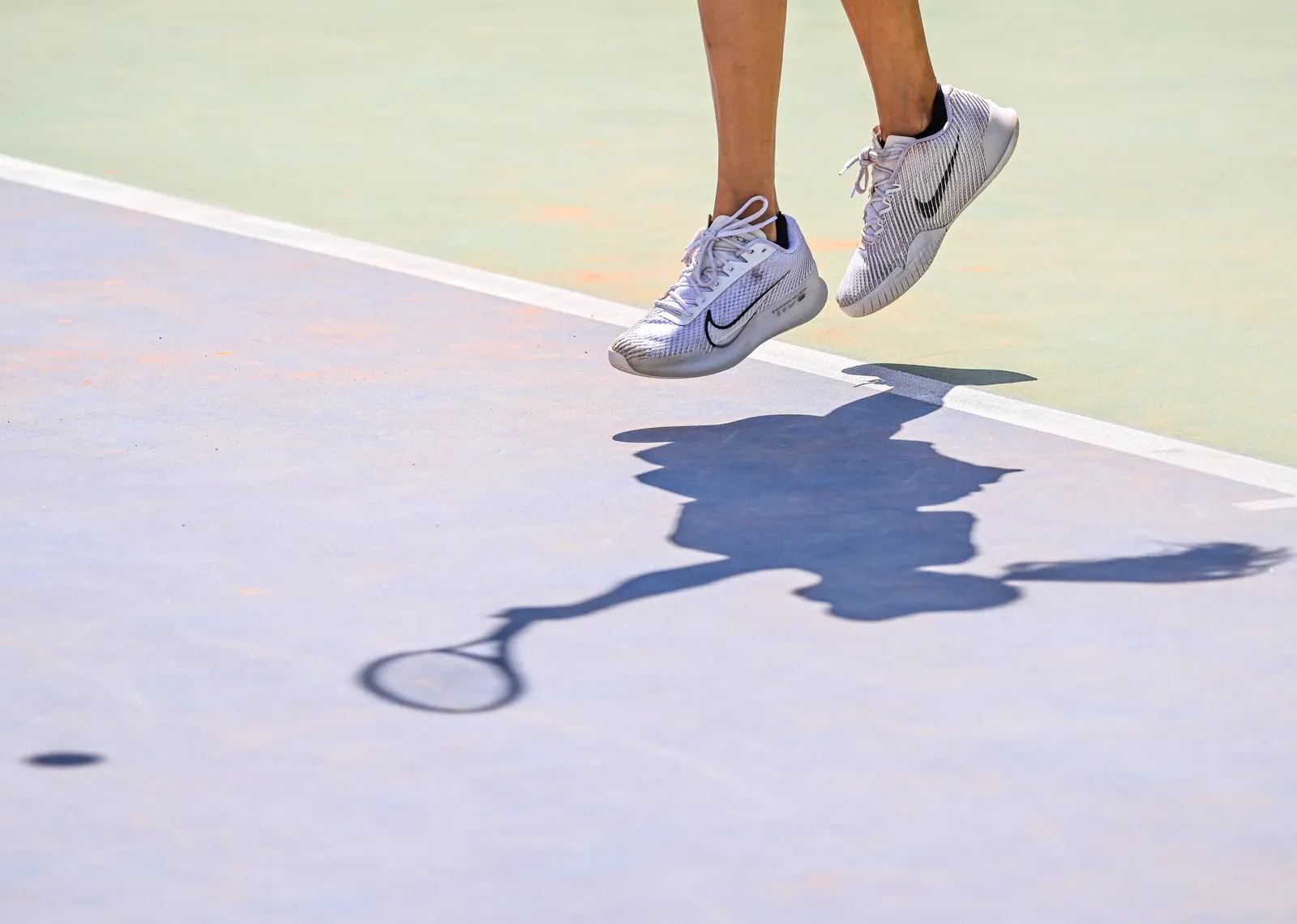
On average, a regular player replaces their shoes every 6 to 12 months, more often when playing several times a week on hard courts.
Making your shoes last longer
- Keep them for the court: do not wear them on the street, where tarmac wears down the sole.
- Let them air-dry after every session, away from radiators.
- Rotate two pairs if you play often: the cushioning recovers between sessions.
- Clean the outsole, especially after clay, to keep its grip.
At camp you play several hours a day, so it is the time to have a pair in good condition. Our coaches also advise on the rest of your kit, including the racquet: see our guide on how to choose a tennis racquet.
At the Mouratoglou Academy on the French Riviera (Biot, near Nice), players train on both clay and hard courts, and the wrong shoe shows immediately in their crossover steps. The Mouratoglou Method treats footwork as a pillar, and the right equipment is part of it. See our guide to hard courts and discover the Academy.
Frequently asked questions
Can you play tennis in running shoes?
It is not recommended. Running shoes are designed for straight-line forward motion: they lack lateral support and have a higher, softer sole, which increases the risk of a sprained ankle during tennis’s side-to-side movement.
Which tennis shoe should I choose if I play on several surfaces?
An all-court shoe is a good compromise. If you mostly play on clay, a dedicated herringbone pair is still better for grip and sliding.
Should I go up a size for tennis shoes?
Not necessarily a full size, but leave about half a centimetre in front of your big toe and try shoes on at the end of the day with your tennis socks. The heel should not slip.
How long does a pair of tennis shoes last?
About 6 to 12 months for a regular player, less if you play several times a week on hard courts. Replace them as soon as the sole is smooth, the cushioning is flat or the support has gone.
Which shoes should I bring to a tennis camp?
Ideally bring two pairs: a clay sole (herringbone) and a hard-court or all-court sole, as camps often switch surfaces. Avoid brand-new shoes you have never worn, which cause blisters over long days. For a Player Camp Adult, broken-in shoes plus a spare pair are plenty.