Technique · Footwork
The crossover step in tennis: mastering this essential technique
The crossover step is a lateral movement in which one leg crosses in front of the other, covering much more ground than a side step. In tennis it is used mainly to recover after being pulled wide and to reach a wide ball. It almost always ends with small side steps that fine-tune the final position.

Key takeaways
- Definition: to go right, the left leg crosses in front of the right (and vice versa), with the shoulders still turned towards the play.
- Use: recovering after a stretched shot, wide balls, a return of serve when pulled out of court.
- Faster but less stable than the side step: it covers distance, the side step adjusts.
- Key technique: stay low, firm and quick footing, eyes on the ball.
- Muscles: quads, hamstrings, calves, glutes and core muscles.
What is the crossover step in tennis?
The crossover step is a lateral movement in which you cross your legs: to move right, the left leg passes in front of the right, then the right leg steps clear, and so on. Unlike the side step, where the feet stay parallel and never cross, it lets you cover more distance in less time.
You use it to reach a wide ball or to get back to the middle after a shot on the run. It is an important part of baseline footwork, to be combined with other types of step.
How do you do a crossover step?
- Starting position: ready position, feet shoulder-width apart, knees bent, racquet in front.
- Turn the hip and foot towards where you are going: to go right, the right foot pivots slightly to the right.
- Cross over: the left leg passes in front of the right and pushes hard into the ground. To go left, the right leg crosses in front.
- Keep your shoulders and racquet turned towards the play so you can hit or react at any moment.
- Firm, quick footing: the step is smooth but powerful, without standing up.
- Finish with side steps or small adjustment steps, then plant your feet to hit or push back the other way.
When should you use the crossover step?
- To recover after being pulled out of court: this is its main use.
- On a wide ball at the baseline, when a few side steps are no longer enough.
- On the return of serve, against a wide serve that pulls you out of court: a crossover step gets you to the ball and extends your reach. See our article on return of serve technique.
- At the net, on a volley out of reach: a final crossover step towards the ball extends your reach.
- Backwards, on a lob: a crossover step going back is faster than backpedalling.
| Situation | Recommended step |
|---|---|
| Adjusting your distance from the ball | Side steps, small steps |
| Shifting 1 to 3 m | Side steps |
| Getting back to the middle after being stretched | Crossover step then side steps |
| Reaching a very wide ball | Sprint, then a final crossover step |
| Moving back for a lob | Crossover steps backwards |
Which muscles does the crossover step work?
- Quads: they extend the leg and provide the push.
- Hamstrings: at the back of the thigh, they help extend the leg and protect the knee when braking.
- Calves: essential for quick re-plants and agility.
- Glutes: they generate the power of the lateral movement.
- Abdominals and back muscles: they stabilise the body as the hips rotate.
More broadly, the lower-body muscles do the most work in tennis (quads, calves, glutes), with the core stabilising every shot and every change of direction. Strength and endurance can also be trained off court: see our advice on improving your maximal aerobic speed.
How can you improve your movement with the crossover step?
- Shadow without a ball: from the middle, two crossover steps to a cone at the edge of the tramlines, shadow swing, then back with a crossover step and side steps. 6 reps each side.
- Agility ladder: work through it sideways, crossing your feet (in front, then behind) to build coordination.
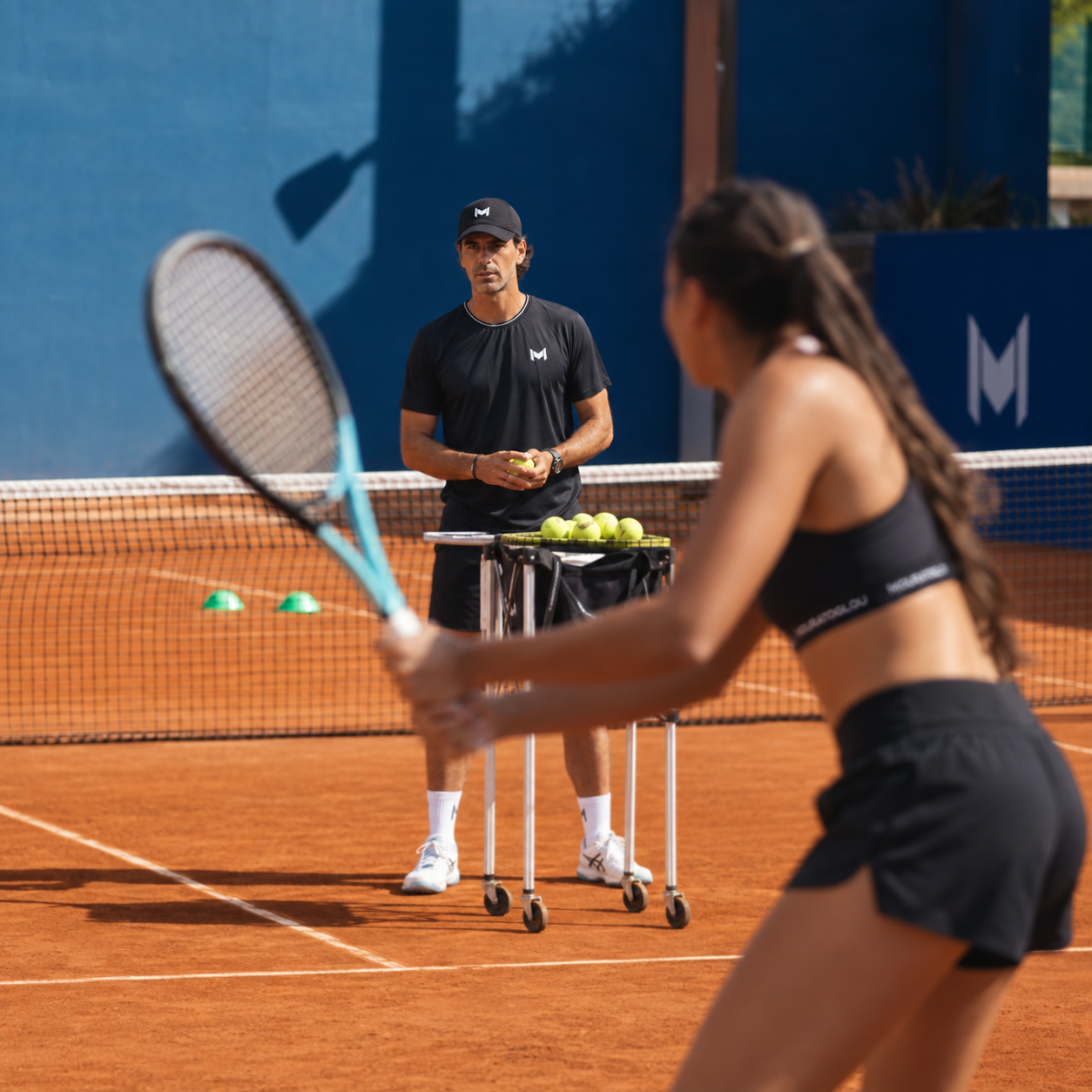
- Butterfly with balls: the coach alternates a very wide ball and a ball to the middle; use the crossover step to recover, then the side step to adjust.
- Lobs: the coach plays lobs while you are at the net; move back with crossover steps, shoulders side-on, before smashing.
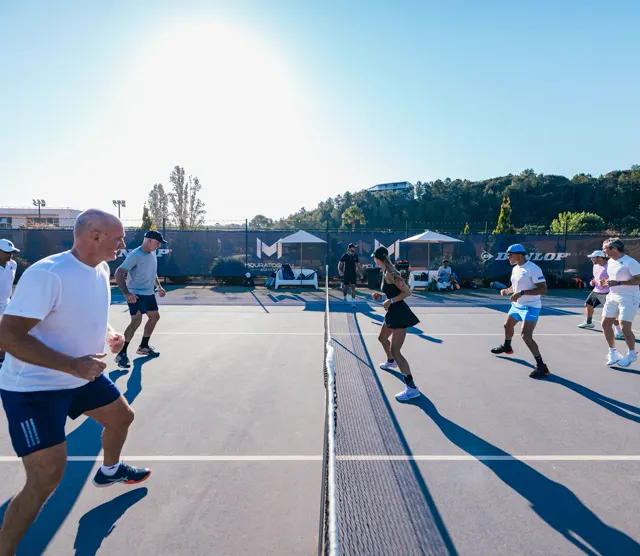
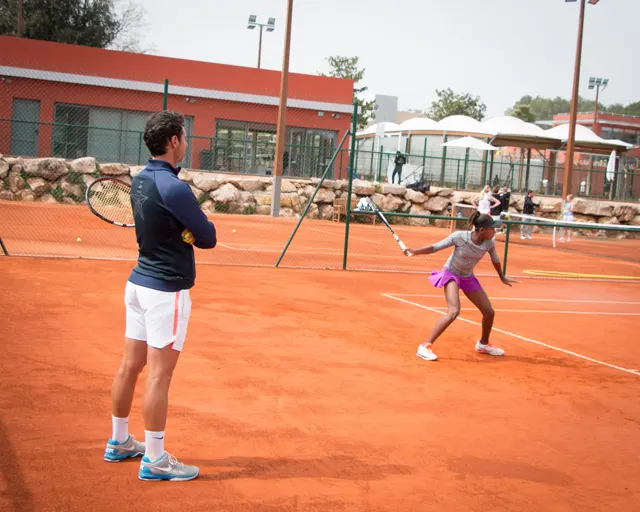
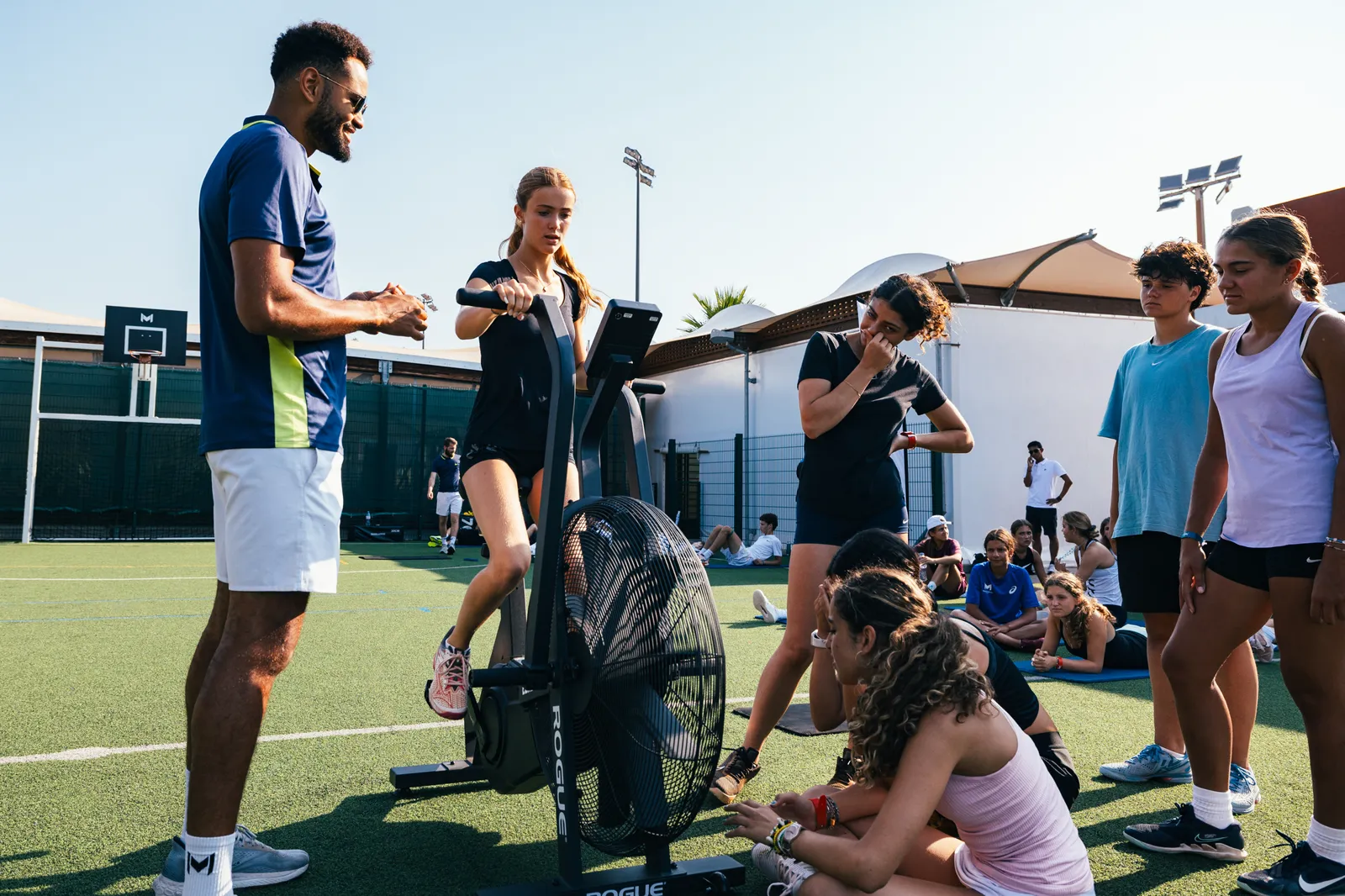
An outside eye greatly speeds up progress on movement. In our Performance camps, part of every day is devoted to footwork and physical training, for adults and juniors alike.
At the Mouratoglou Academy on the French Riviera (Biot, near Nice), footwork is part of every session: the Mouratoglou Method counts movement among its pillars. See also how to choose tennis shoes and discover our tennis camps.
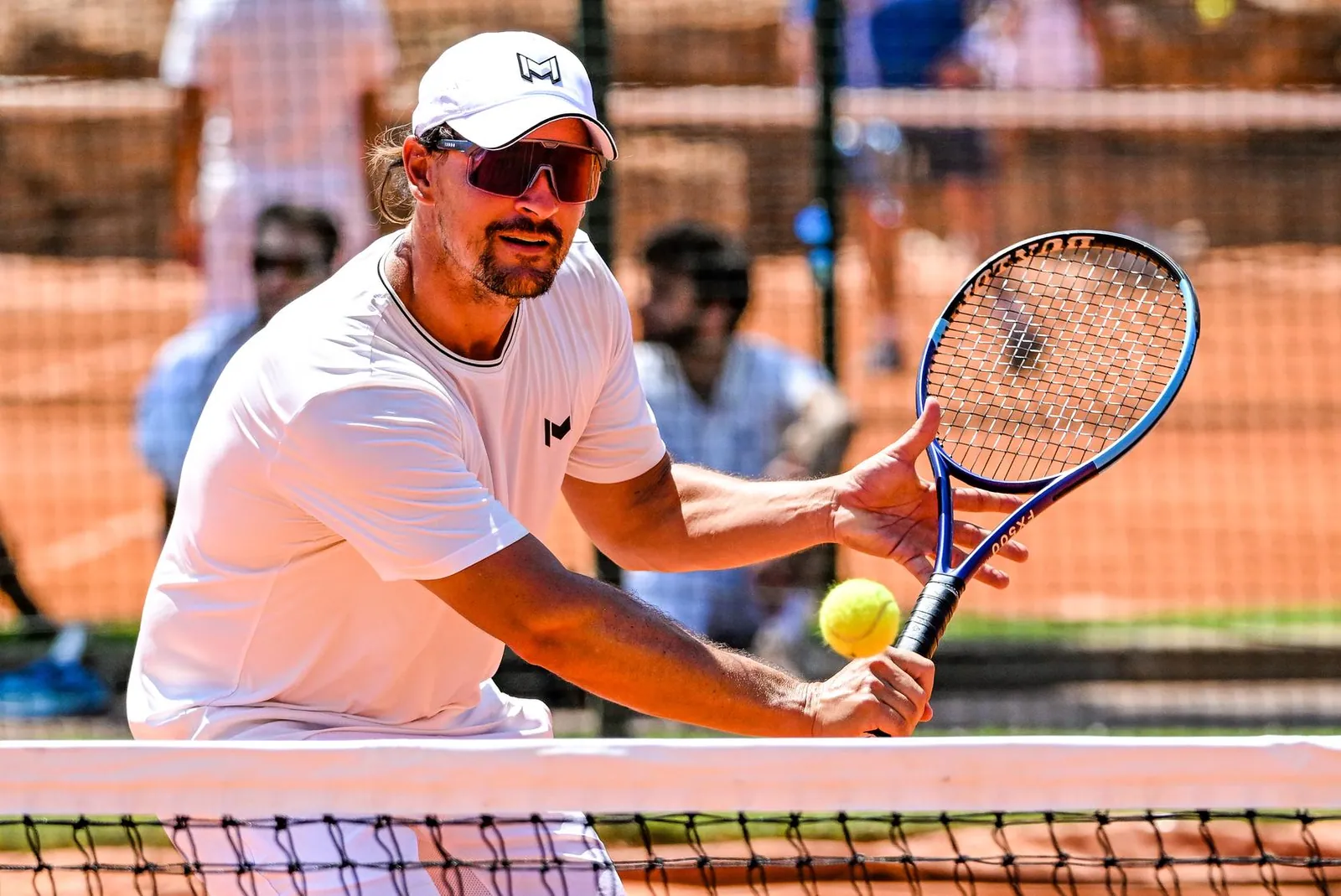 AdultsFull daysAll levelsPerformance Camp AdultA week of intensive tennis, 4 players per coach: technique, match play, physical and mental training.DISCOVER
 Frequently asked questions
What is the difference between a crossover step and a side step?
In a crossover step, one leg passes in front of (or behind) the other to cover more distance. In a side step, the feet come together without crossing, which gives more balance but less speed. The two are often combined: crossover for distance, side step to adjust.
Should you cross in front or behind?
When moving sideways, you usually cross in front, which keeps the shoulders turned towards the play. Crossing behind is mostly used in coordination drills and when moving backwards, for example for a lob.
Which muscles work hardest in tennis?
The lower-body muscles, especially the quads, calves and glutes, which work on every start, stop and change of direction. The abdominals and back muscles also play a key role, stabilising the body during shots and movement.
Which drills improve the crossover step?
Use an agility ladder or cones: link adjustment steps, a crossover step and a side-step recovery, first without a ball, then with a ball fed by the coach. Work both sides. At the Performance Camp Adult, this footwork is built into the baseline drills.
Is the crossover step useful in defence?
Yes, that is its main use: it covers a long distance to a wide ball quickly. At the end of the run, it also helps you recover towards the centre faster. Pair it with a solid forehand on the run to defend without losing balance.