Technique · Forehand
The forehand on the run: mastering the shot on the move
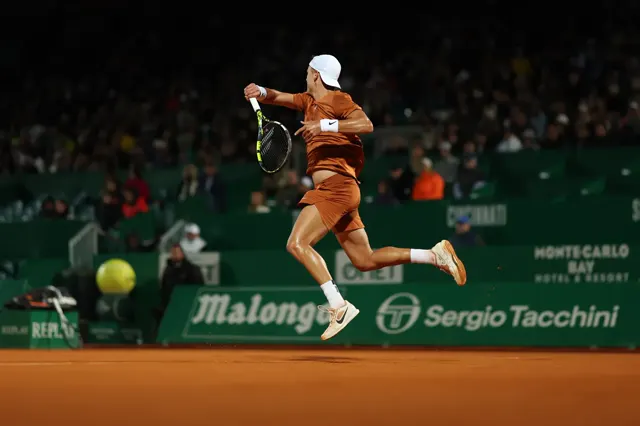
The forehand on the run is a shot played when your opponent has pushed you to the far side of the court, often outside the tramlines. The priority is to stay in the rally: send back a high, deep ball, preferably cross-court, that gives you time to recover. With good movement and anticipation, it can also become a counter-attack.
Key takeaways
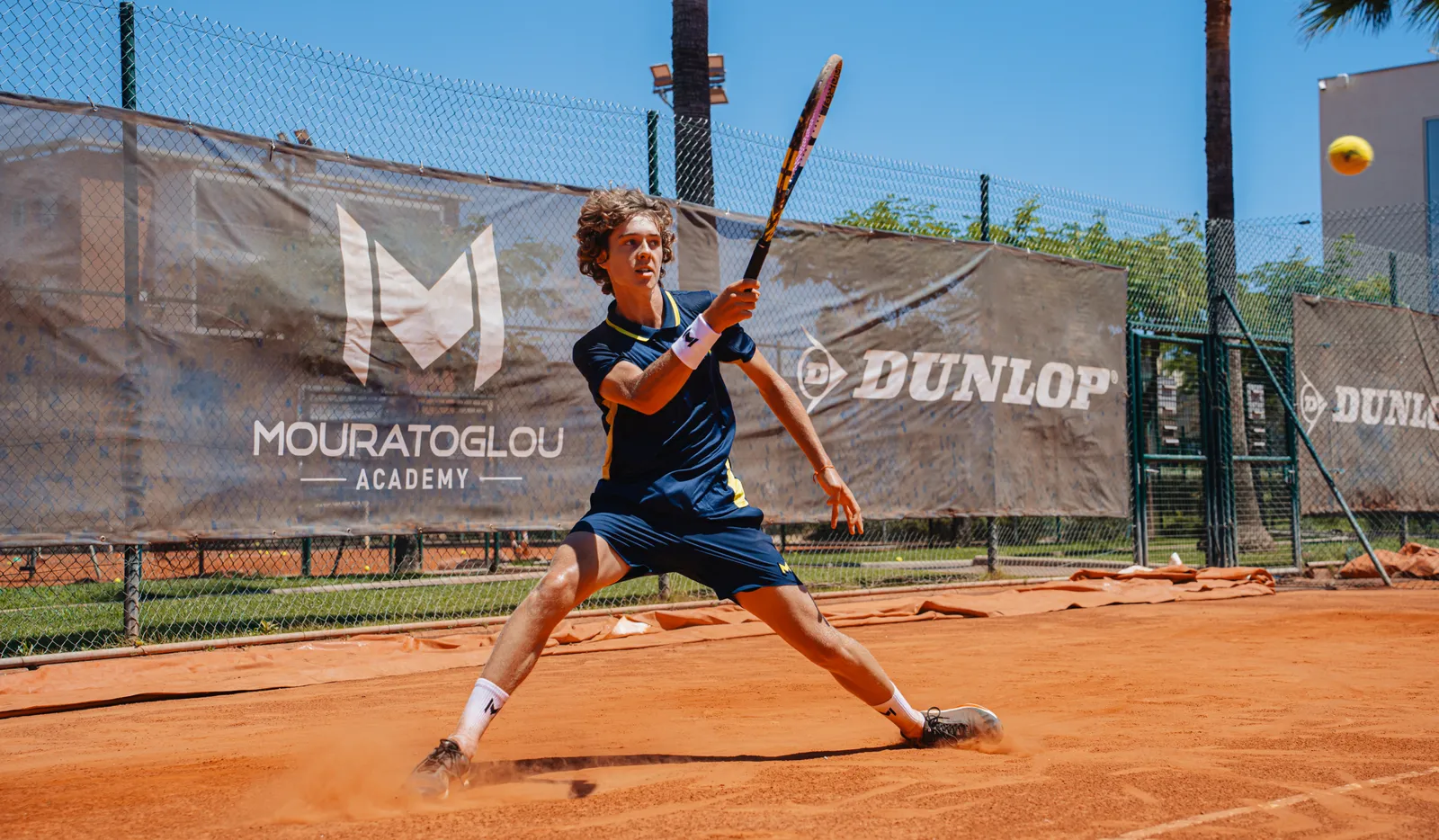
- Definition: a forehand played at full speed, at the edge of the court, after a cross-court shot or an attack from your opponent.
- Priority no. 1: safety, with a high, deep topspin ball, ideally cross-court.
- Movement: an explosive first step, crossover steps to cover the distance, small steps to adjust.
- The swing: compact preparation, open stance, trunk rotation to make up for the lack of a base.
- Alternatives: a slice to buy time, a lob, or a passing shot down the line if your opponent is out of position.
What is the forehand on the run?
The forehand on the run is a shot played when you have been pushed to the side of the court, often after a heavy cross-court ball or an attack from your opponent. You reach the ball at full speed, sometimes off balance, with little time to prepare.
It is one of the hardest shots in tennis: you cannot fully use your legs, and the court is wide open behind you. The aim is therefore not to hit hard but to stay in the rally and neutralise your opponent’s advantage.

Moving well to get there in time
The quality of a forehand on the run is decided before the shot. The earlier you arrive, the more options you have.
- Split-step as your opponent hits: a small balancing hop that lets you push off in any direction.
- Explosive first step: pivot on the outside foot towards the ball, shoulders already turning.
- Crossover steps to cover distance: faster than side steps on a long run. See our article on the crossover step.
- Small adjustment steps as you arrive, to set the distance to the ball.
- A solid outside foot: at contact, the outside foot brakes and acts as your base; on clay, the slide does the same job.
The swing: hitting on the move
- Compact preparation: time is short; turn your shoulders while running, with the racquet already back.
- Open stance: you often hit off the outside foot, body facing or almost facing the net.
- Trunk rotation: it creates the racquet speed when your legs cannot drive forward.
- A supple but stable wrist: it adjusts the racquet face at the last moment to steer the ball.
- A high follow-through: often over the head or across the body, for topspin and height.
The logic of the finish is covered in our article on the forehand follow-through.
Which shot should you play on the run?
The choice depends on your balance, the quality of the incoming ball and your opponent’s position.
| Situation | Preferred shot | Goal |
|---|---|---|
| Stretched, off balance | High, deep topspin cross-court | Buy time to recover |
| Very late, arm at full stretch | Forehand slice or defensive lob | Get the ball back, break the rhythm |
| Opponent at the net | Short cross-court pass or lob | Make them volley low, or pass them |
| Opponent out of position, you are balanced | Down-the-line counter-attack | Turn the rally around |
Why cross-court? The court is longer on the diagonal than down the line and the net is lower in the middle, so you have more margin. A cross-court ball also brings you naturally back towards the centre. Down the line remains a weapon, but only when you are balanced and your opponent is off-centre.
When your opponent is at the net, the lob is often the best answer: see our article on lob technique.
 Ages 9–172 weeksCoached tournamentsTournament Camp JuniorTwo weeks of training and tournaments, with a coach by your side during matches.DISCOVER
 Recovering after the shot
A forehand on the run only works if you have time to get back for the next ball. After contact:
- Brake on the outside foot and push back towards the centre.
- Recover with side steps facing the net over the last few metres, so you stay ready to move. See our article on side steps.
- Aim for the right recovery spot: not always the exact middle, but the centre of your opponent’s possible angles.
- Split-step as your opponent hits.
Common mistakes to avoid
- Going for a winner every time: the risk is huge and the ball often lands out.
- Too big a backswing: you hit late and the ball goes into the net or the tramlines.
- Hitting flat and low: without topspin or height, the ball lands short and your opponent finishes.
- A stiff wrist: you cannot adjust the face at the last moment.
- Admiring your shot: without immediate recovery, the court stays open.
For the full picture of the stroke, see our forehand guide. Defence and counter-attack situations are at the heart of the drills on the Performance Camp Adult.
The running forehand goes hand in hand with baseline footwork and a sound follow-through; when defence is no longer enough, think lob. These situations are at the core of the drills run at the Mouratoglou Academy on the French Riviera (Biot, near Nice), following the Mouratoglou Method.
Frequently asked questions
How can I improve my forehand on the run?
Work on your movement first: split-step, first step and crossover steps. Then practise hitting with a compact preparation and trunk rotation, aiming for a safe, deep cross-court target.
Should I always go cross-court when I am stretched?
Cross-court is the safest option: more court length, a lower net and a shorter recovery. But if your opponent is out of position and you are balanced, a shot down the line can win back the initiative.
Is topspin essential on the run?
It is very useful, because it gives height and depth with margin over the net. Depending on the situation, a slice to buy time or a lob against a net player may be better options.
Should you slide on clay when running wide?
Yes: on clay, sliding lets you brake while hitting, then push back towards the centre faster. Learn it gradually, starting with short slides at reduced speed.
How can I practise the running forehand without a high-level partner?
A ball machine or a coach feeding wide is enough: alternate a central ball with a very wide one, with a mandatory recovery to the middle. Set a simple target, such as ten high crosscourt shots landing beyond the service line. On the Performance Camp Junior, these sets are built into movement sessions.