Technique · Special shots
The lob in tennis: technique and tips to catch opponents out
The tennis lob is a ball hit high over your opponent, to pass them when they are at the net or to buy time when you are defending. There are two main types: the defensive lob, high and deep, often sliced; and the attacking topspin lob, flatter, which goes just out of reach and kicks away after the bounce. In both cases the keys are a low-to-high swing, the same preparation as a passing shot, and a ball that lands near the baseline.

Key takeaways
- Definition: a high ball that goes over your opponent and lands deep in the court.
- Defensive lob: very high and deep, to buy time and recover.
- Attacking (topspin) lob: flatter, just out of smash range, it speeds up after the bounce.
- The swing: prepare as for a normal shot, racquet below the ball, open face, follow through upwards.
- When to play it: opponent tight to the net, short or out of position, sun or wind behind them.
What is a lob in tennis and why use it?
A lob sends the ball high over your opponent so that it lands behind them, deep in the court. Being lobbed means watching the ball sail out of reach of your racquet. The lob can be played on the forehand or backhand, after the bounce or, more rarely, on the volley.
It is a versatile shot:
- Passing a net player who covers the angles well.
- Buying time when you are stretched, to get back to the centre.
- Breaking the rhythm of a fast rally.
- Pushing your opponent back: a player who fears the lob stands further from the net, which opens up passing shots.
Defensive lob or attacking lob: what is the difference?
| Defensive lob | Attacking (topspin) lob | |
|---|---|---|
| Situation | You are stretched or far behind your baseline | You are balanced, your opponent is close to the net |
| Trajectory | Very high, looping | Flatter, just over the opponent’s racquet |
| Spin | Slice or none | Topspin, the ball speeds up after the bounce |
| Goal | Buy time, recover | Win the point outright |
| Risk | Smash if too short | Long, or smashed if too low |
The defensive lob is often played with a backhand slice or an open-stance forehand, on a very high trajectory that gives you time to recover. The topspin lob is an attacking shot: the racquet brushes sharply up the back of the ball, so it drops quickly and kicks towards the back of the court after the bounce.
Lob technique, step by step
- Prepare as for a passing shot: same shoulder turn, same footwork. Your opponent must not read your intention.
- Drop the racquet below the ball: lower than for a normal shot, bending your knees.
- Open the face: slightly for a topspin lob, more for a defensive lob.
- Hit in front, low to high: soft but firm contact; for a topspin lob, accelerate upwards to brush the ball.
- Follow through to the sky: the racquet finishes high, above your head, to give height.
- Move in or recover: if the lob works, your opponent retreats; use that to take the net or get back to the centre.
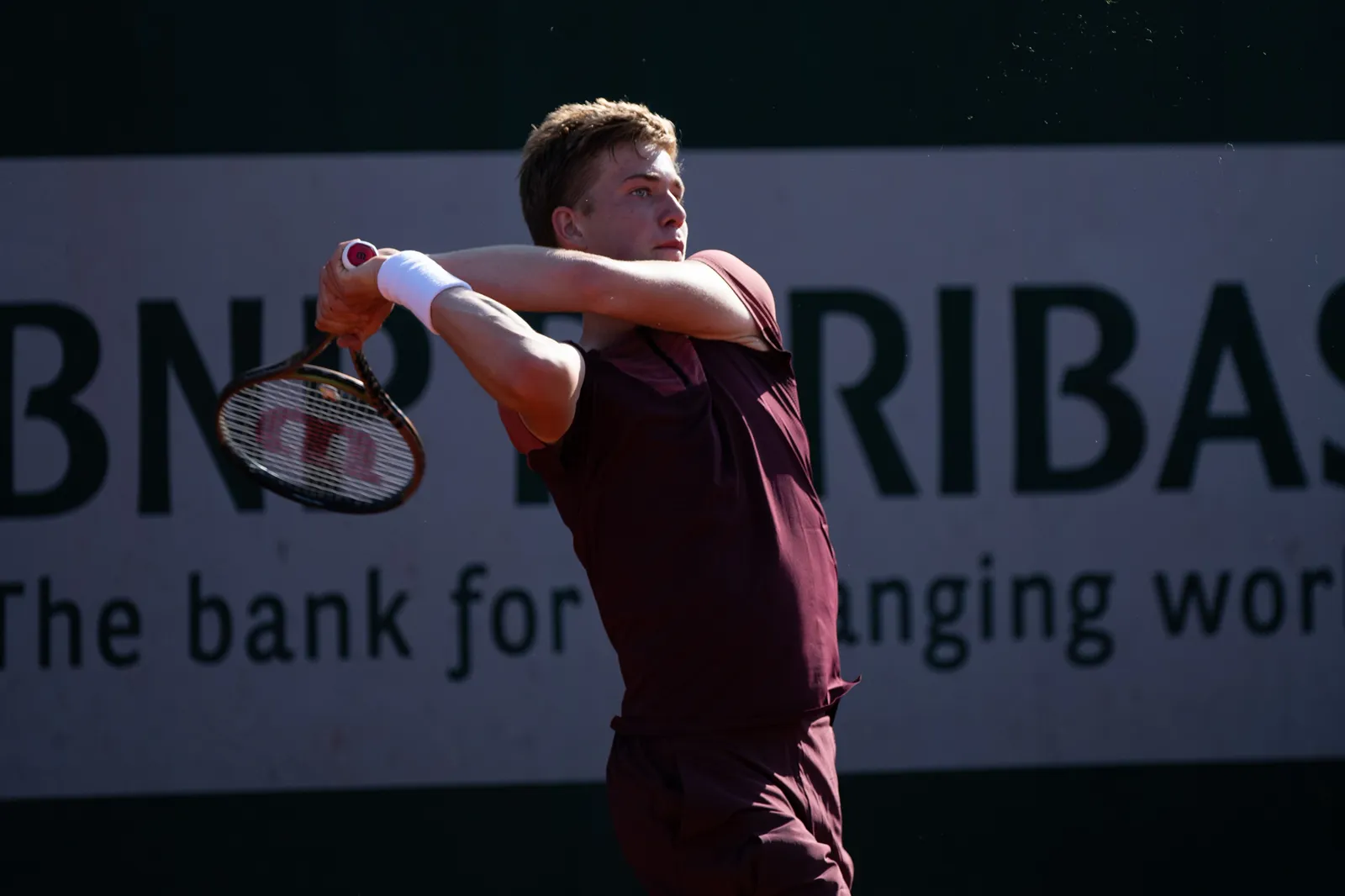
When should you play a lob?
- Your opponent is tight to the net: the closer they are, the better the lob works.
- They cover passing shots well: after two missed passes, a lob changes everything.
- They have a weak smash or are short: test it early in the match.
- Outdoor conditions: sun in your opponent’s eyes, or a wind that carries your ball without taking it out.
- After a retrieved drop shot: your opponent arrives at the net off balance, and a lob punishes them. See our article on the drop shot.
The lob is part of a wider plan against players who come forward: read our tips on beating a net player. And when you are stretched on the forehand side, the defensive lob is one of the options covered in our article on the forehand on the run.
 AdultsFull daysAll levelsPerformance Camp AdultA week of intensive tennis, 4 players per coach: technique, match play, physical and mental training.DISCOVER
 Common mistakes and how to fix them
| Mistake | Result | Fix |
|---|---|---|
| Lob too low or too short | Easy smash for your opponent | Higher follow-through, aim deeper |
| Lob too flat without spin | Ball flies long | Add topspin, or height if defending |
| Deciding too late | Rushed, badly judged lob | Watch your opponent come in and decide early |
| Different preparation | Your opponent backs off in time | Same preparation as a passing shot |
| Standing still after the lob | No advantage from your opponent’s retreat | Move in or recover straight away |
3 drills to improve your lob
Drill 1: deep target
Mark a target zone about two metres inside the baseline. The coach feeds balls; you play 10 forehand lobs and 10 backhand lobs. Goal: 7 out of 10 in the zone.
Drill 2: pass or lob
Your partner is at the net. You choose between a passing shot and a lob, with the same preparation. They have to guess. Goal: make the lob unreadable.

Drill 3: lob under pressure
The coach stretches you wide with fast balls; you reply with a high defensive lob, then recover. Goal: keep height and depth even on the run.
These situations are worked on at camp with the Academy coaches, especially on the Tournament Camp Junior. For the basic swing the forehand lob is built on, see our forehand guide.
The lob is trained alongside the running forehand and the drop shot; on the other side of the net, you need a sound overhead to answer it. These situations feature on our tennis camps on the French Riviera (Biot, near Nice), following the Mouratoglou Method.
Frequently asked questions
How do you hit a good lob in tennis?
Prepare it like a normal shot so you do not give it away, drop the racquet below the ball, open the face slightly and swing low to high with a follow-through that finishes above your head. Aim deep, close to the baseline, ideally on your opponent’s backhand side.
What is the difference between a topspin lob and a defensive lob?
The defensive lob is very high, often sliced, and buys you time. The topspin lob is flatter, with heavy forward rotation: it goes just over your opponent’s racquet, drops quickly and kicks away after the bounce, which makes it a winning shot.
What does it mean to be lobbed?
It means watching the ball go over your head, out of reach of your racquet, while you are at or near the net. The lobbed player then has to turn and run towards the back of the court to try to chase it down.
How do you defend against a lob?
Do not crowd the net, especially against a player who lobs well. Move back with side steps or crossover steps while watching the ball, and smash if you can; otherwise, let it bounce and play a high ball to recover.
Is the lob effective in doubles?
Yes, it is one of the most rewarding shots in doubles, where both opponents often stand close to the net. A topspin lob over the net player, ideally on the backhand side, forces the team back and opens the court. On the Player Camp Adult, these doubles patterns are practised in live situations.