Technique · Smash
Tennis smash technique
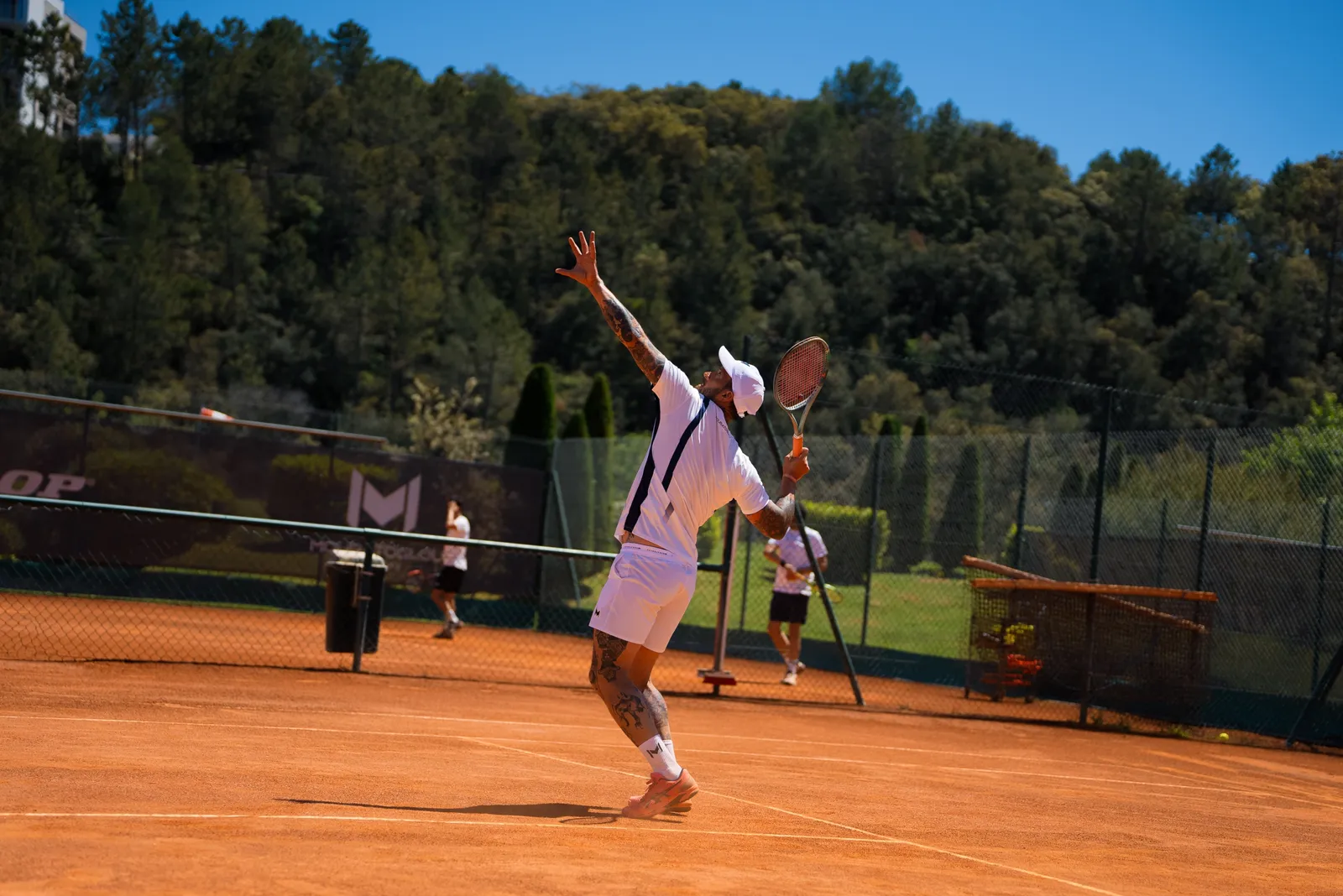
The tennis smash is an overhead shot, usually played in reply to a lob, with a motion close to a shortened serve. Success depends mostly on footwork: turn side-on as soon as the lob goes up, move back under the ball with side steps, point at it with your free arm, then hit at full stretch, in front of you.
Key takeaways
- Definition: the smash is an overhead shot, hit before or after the bounce, usually against a lob.
- Grip: the continental grip, as on the serve.
- The secret is in the feet: an immediate side-on turn, then moving under the ball; better to go back too far than not far enough.
- The free arm points at the ball to keep balance and judge distance.
- No need to jump or hit flat out: a well-placed smash is often enough to win the point.
Why is the tennis smash essential?
Every player needs a reliable smash to feel confident at the net. However good your volleys are, a shaky overhead undermines them: your opponent only has to lob to push you back. A solid smash, on the other hand, turns every short lob into a winner and makes your net game far more intimidating.
The smash is a simplified version of the serve, with added footwork. It naturally complements volley technique: the volley deals with balls at body height, the smash with those that go over your head.
How to hit a smash, step by step
- Continental grip: the same as on the serve. It lines the racquet head up with the wrist and allows pronation at contact. See our guide to the continental grip.
- Immediate turn: as soon as you spot the lob, drop the right foot back (for a right-hander) and turn your whole body side-on to the net.
- Shortened backswing: as you turn, take the racquet straight up behind your head, elbow high, as in the serve trophy position. Experienced players can add a small loop for more racquet speed.
- Free arm up towards the ball, as if to catch it: it acts as a sight and a counterbalance.
- Move under the ball with side steps backwards (diagonally if needed), staying side-on. Get slightly behind the ball, then adjust forward.
- Contact: arm fully extended, ball struck in front of you, at the highest point you can comfortably reach. The free arm comes down as the racquet swings up to the ball.
- Follow-through and recovery: finish as on a serve, then get straight back into position at the net for the next shot.
The three big smash traps
1. Trying to hit too hard
Many players think a smash must be hit at full pace. They tense up and often hit the ball too low. Like a groundstroke, the smash is played at varying speeds: in a match, a well-placed, deep smash keeps you at the net and makes the next shot easier. Once that pressure is gone, you track the ball better.
2. Hitting downwards
Even at the net, do not try to drive the ball into the ground. With a continental grip, the racquet naturally strikes the ball forward; the height of the contact point creates the downward angle. Players who think about hitting down drop their chin before contact, lose sight of the ball, fold in half and hit before reaching full extension. Keep your chin up, even after contact.
3. Freezing as the lob goes up
The most common mistake: watching the ball rise without moving. Turn immediately and move under the ball, as if you cannot wait to hit it. Once the footwork is done, the shot becomes easy.
Should you jump, or let the ball bounce?
| Situation | Recommended choice | Why |
|---|---|---|
| Short lob, close to the net | Smash on the volley, feet on the ground | More balance and accuracy |
| Deeper lob | Side steps back, jump smash if needed | Reach the ball without running backwards facing the net |
| Very high lob | Let it bounce, then smash | The ball comes down slower and more predictably |
| Sun in your eyes, beginner | Let it bounce | See the ball better and gain time |
You do not have to jump to smash: keeping both feet on the ground is often safer. Moving back is done with side steps, never by running backwards facing the net: see our articles on the side step and footwork at the net.
Your net position: being ready to smash
Most smashes are played close to the net. Between shots, keep an active ready position, racquet in front at chest height, ready to turn. Do not hug the net: one or two metres back, you are less exposed to the lob. Understanding the lob from your opponent’s side also helps you read the trajectory earlier.
The smash is a demanding stroke that asks you to think about several things at once, so do not be discouraged if you miss a few at first. Repetition, with a coach feeding lobs of different depths, is the fastest way to improve. It is one of the areas we work on in our adult camps.
The overhead is the natural follow-up to a good approach: also work on net footwork, serve and volley and how to read a lob. At the Mouratoglou Academy on the French Riviera (Biot, near Nice), these sequences are part of training sessions, in the spirit of the Mouratoglou Method.
 AdultsFull daysAll levelsPerformance Camp AdultA week of intensive tennis, 4 players per coach: technique, match play, physical and mental training.DISCOVER
 Frequently asked questions
Which grip should I use for the smash?
The continental grip, the same as on the serve. It allows forearm pronation at contact and naturally positions the racquet to strike the ball in front of you.
Do you have to jump to hit a smash?
No, it is not compulsory, and keeping your feet on the ground is often safer. Players mainly jump on a deep lob they cannot reach otherwise, with a scissor kick after moving back with side steps.
Why do I miss easy smashes?
Usually because your feet have not taken you under the ball, or because you drop your head before contact to hit downwards. Turn early, point at the ball with your free arm and keep your chin up.
When should you let a lob bounce before smashing?
When the lob is very high, when you need time, or when you cannot see the ball well (sun, beginner). The ball then comes down more slowly and the smash is safer.
How do I practise the overhead without being afraid of the ball?
Start close to the net with short lobs fed by hand, then move back gradually. Keep your free hand pointing at the ball and aim for the middle of the court before going for the lines. Confidence comes from successful repetition. On the Performance Camp Junior, coaches scale the difficulty so every player progresses without fear.