Technique · Serve
The tennis serve: the ‘armed’ trophy position
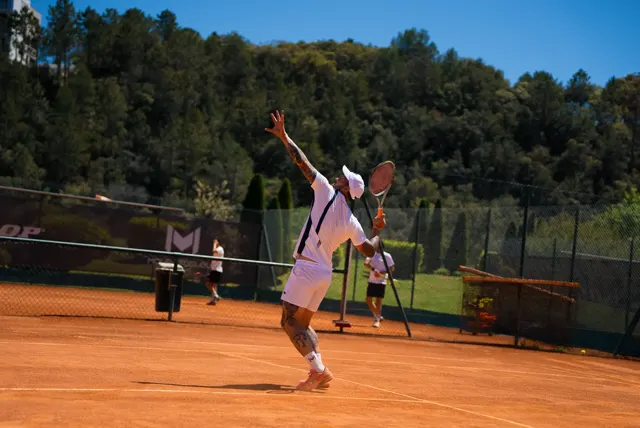
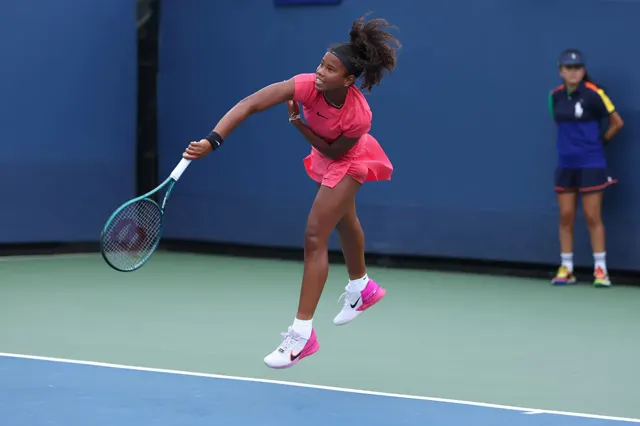
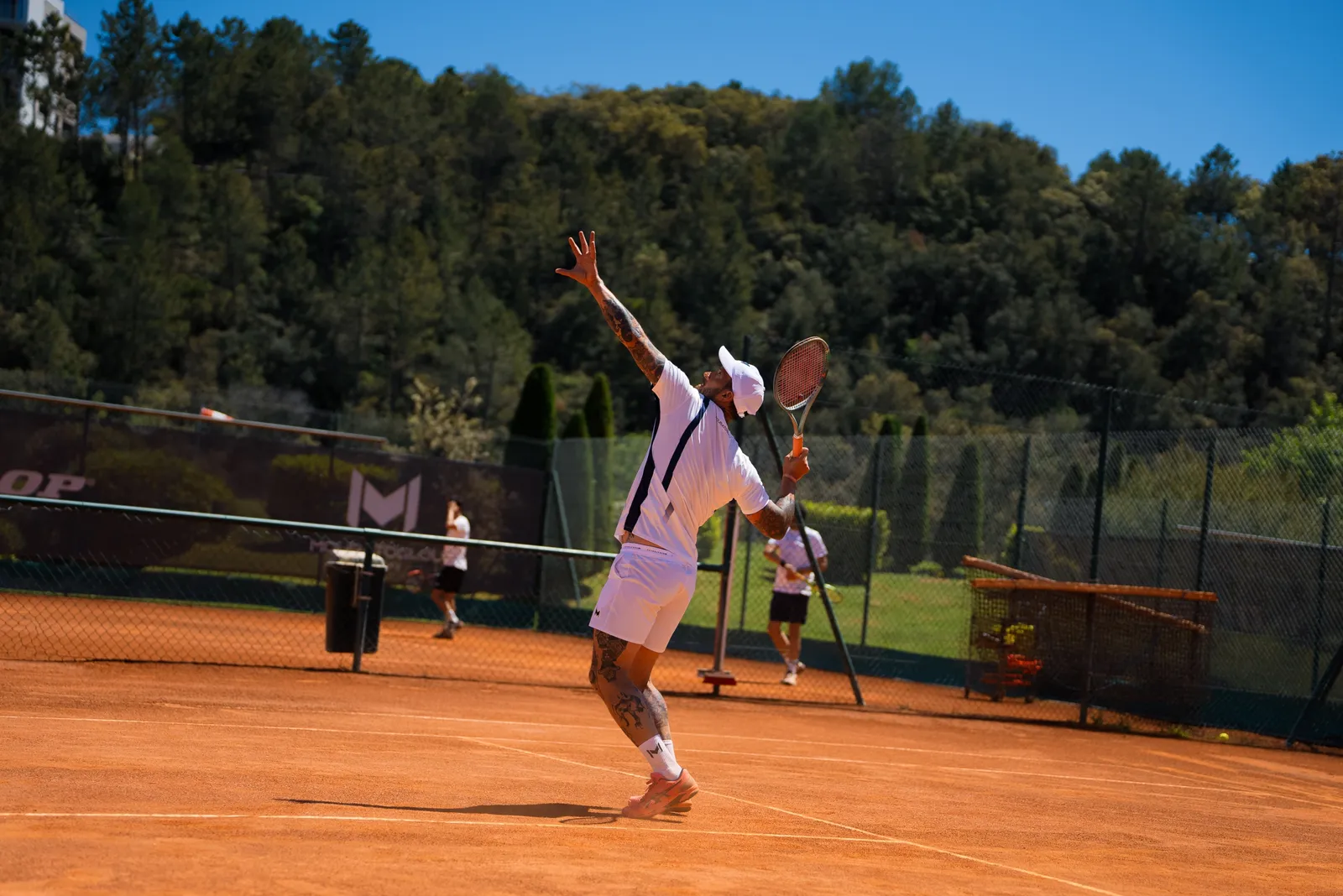
The trophy position, also called the armed or cocked position, is the moment the ball has been tossed and the body is ‘loaded’ before contact: tossing arm straight, hitting elbow level with the shoulders, shoulders tilted, racquet upright and knees starting to bend. It is the hinge of the serve: a good trophy position sets up powerful acceleration, a sloppy one forces the arm to compensate.
Key takeaways
- Definition: the trophy (armed) position is the end of the preparation phase, just before the racquet drops behind the back.
- Tossing arm straight, angled forwards and into the court to guide the toss.
- Hitting elbow in line with the shoulders, which are tilted at roughly 40 to 45° to the ground.
- Forearm and racquet upright, ready for the racquet drop.
- Legs: the knee bend has just started; it is what will drive the body up to the ball.
What is the trophy position on the serve?
The serve breaks down into phases: stance, toss, trophy position, acceleration, contact and follow-through. The trophy position marks the end of the preparation: the ball is rising, the tossing arm stays straight, the racquet is up behind the head and the body is under tension like a drawn bow. It owes its name to its resemblance to the figure on a tennis trophy; in French it is called the ‘armed’ position.
Everything that follows (racquet drop, leg drive, pronation) depends on the quality of this moment. To see where it fits in the whole motion, read our guide to serve technique. It also assumes a continental (hammer) grip, which leaves the wrist free for pronation.
The 6 checkpoints of a good trophy position
1. A straight tossing arm, angled forwards
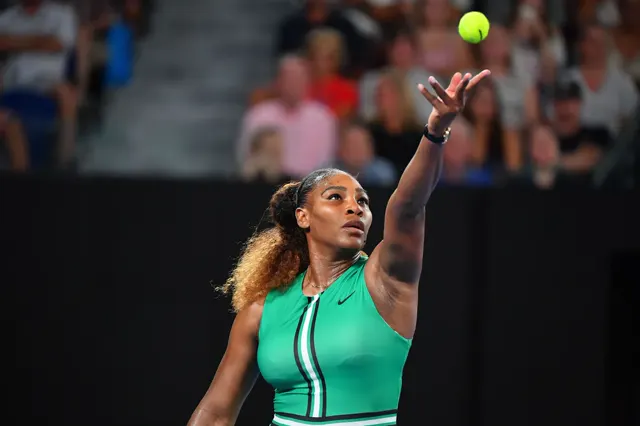
For a right-hander, the left arm stays straight to the fingertips after releasing the ball. It is angled forwards and into the court to give the toss some depth. That way, at contact, your body weight moves forwards and follows the ball.
2. Head turned towards the future contact point
As the arm rises, the head tilts back slightly and the eyes fix on where you are going to hit. It stays there until contact, then comes down as the shoulder rotates forwards, to watch the return.
3. Hitting elbow in line with the shoulders
As the tossing arm goes up, the shoulders tilt naturally, by roughly 40 to 45° to the ground. The hitting elbow sits in line with them. It can be drawn back slightly to open the chest: that stretch of the pectoral muscles creates a spring effect that makes the swing start faster.
4. Shoulders and hips aligned, then separated
In the trophy position, the hip line roughly follows the shoulder line. Depending on your flexibility, the shoulders can turn a little further than the hips: this separation adds momentum to the arm and racquet, and therefore speed.
5. Forearm and racquet upright
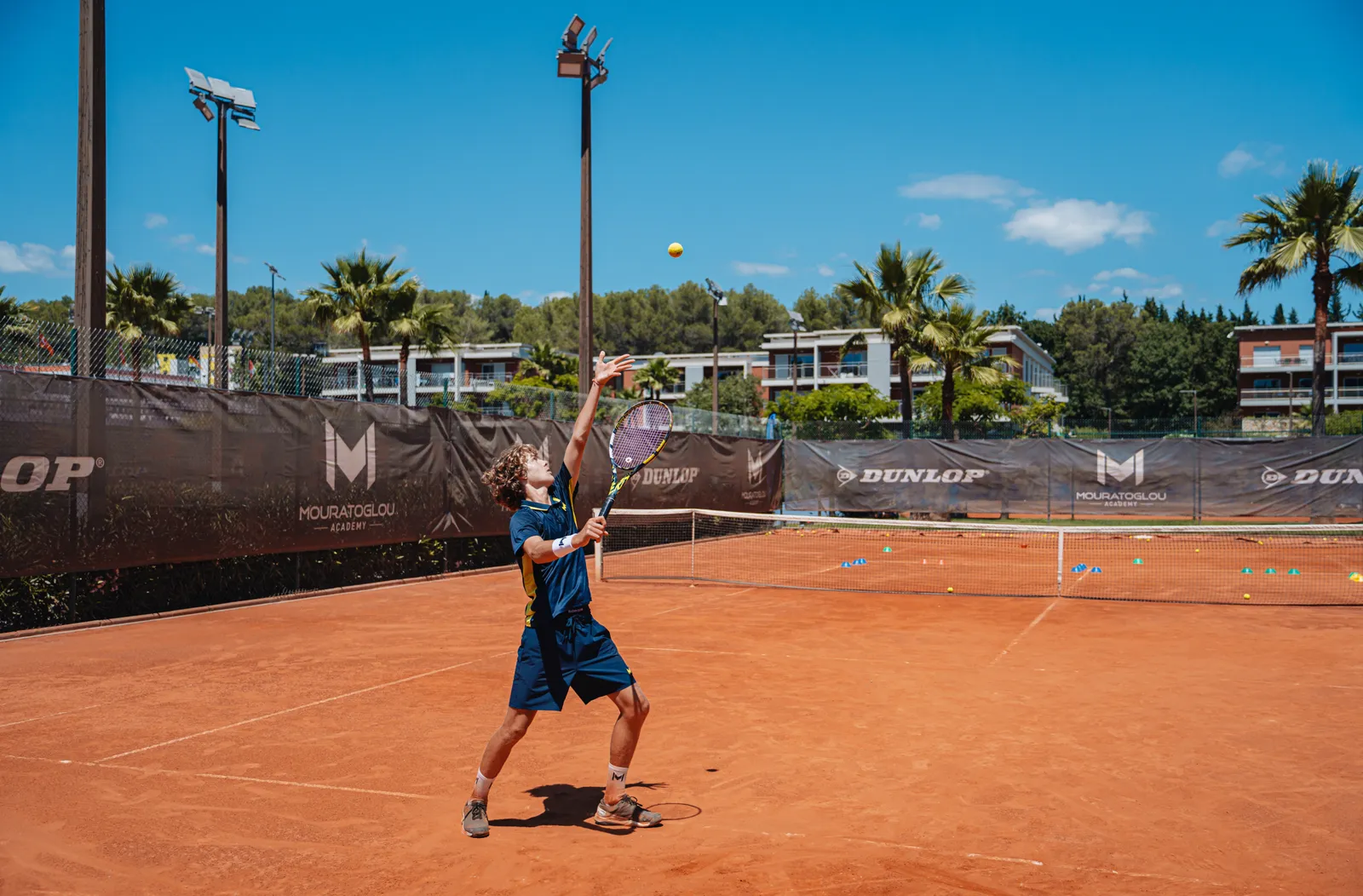
The end of the trophy position is the start of the racquet drop: the racquet falls behind the back under its own weight before swinging up to the ball. To make the most of that gravity effect, the forearm and racquet are upright, with the racquet possibly tilted slightly forwards.
6. The knee bend begins
In the trophy position the knees have just started to bend, tilting the body forwards. At contact, the leg drive will propel the body up and forwards: the racquet then reaches the ball at full speed, backed by your body weight. To help the knee bend, the back foot can slide up to the front foot and share the effort; that is a personal choice.
Summary: what to check in the trophy position
| Element | Correct position | Common mistake |
|---|---|---|
| Tossing arm | Straight, up and forwards | Drops too early, chest opens |
| Head | Turned to the contact point | Looking at the opponent’s box |
| Hitting elbow | In line with the shoulders | Too low: a ‘pushed’ serve |
| Shoulders | Tilted about 40–45° | Level, no upward drive |
| Racquet | Upright, ready for the drop | Pointing at the sky too early |
| Legs | Knee bend under way | Stiff legs, no drive |
How do you practise the trophy position?
- Static trophy: take the position without a ball and hold it for 3 seconds in front of a mirror, checking each point.
- Toss and freeze: toss the ball, stop in the trophy position and let it drop. It should land in front of you, inside the court.
- Trophy then hit: start directly from the trophy position, with no wind-up, and serve at 50% pace to feel the drop and the leg drive.
- Full motion: put the whole serve together, keeping just one cue at a time (elbow, then legs, then head).
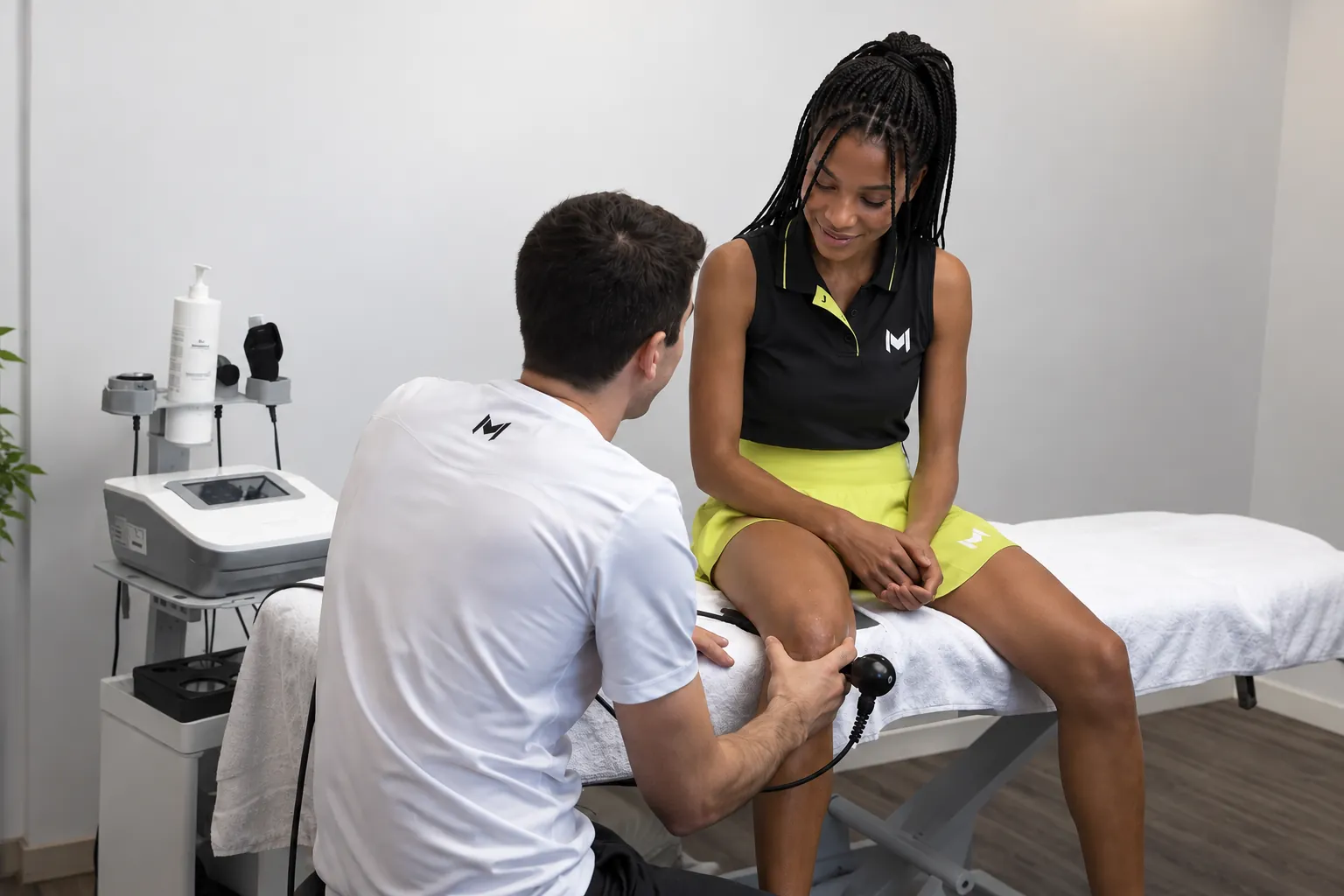
The trophy position is demanding on the shoulder. If the serve causes you pain, have your technique and fitness checked: our sports medical center supports players with prevention and rehabilitation.
These drills make most sense within the Mouratoglou Method, which adapts the serve to each player’s build and flexibility rather than imposing a model. At the Mouratoglou Academy on the French Riviera (Biot, near Nice), trophy position work is often done with video. A solid trophy position also helps you avoid double faults.
How should smaller players adapt the trophy position?
Shorter players, children in particular, have less angle to get the ball over the net and into the box. A few adjustments help:
- Toss slightly higher to give yourself time to drive hard with the legs.
- Look for spin (slice or kick) rather than flat pace: spin makes the ball dip into the box.
- Use the knee bend fully to hit as high as possible.
- For children, serving with balls and a court suited to their age makes learning a sound trophy position much easier.
At our camps, coaches rebuild every phase of the serve with video analysis, for adults and juniors alike: see the Performance Camp Adult. For the step before, read our article on the serve starting position.
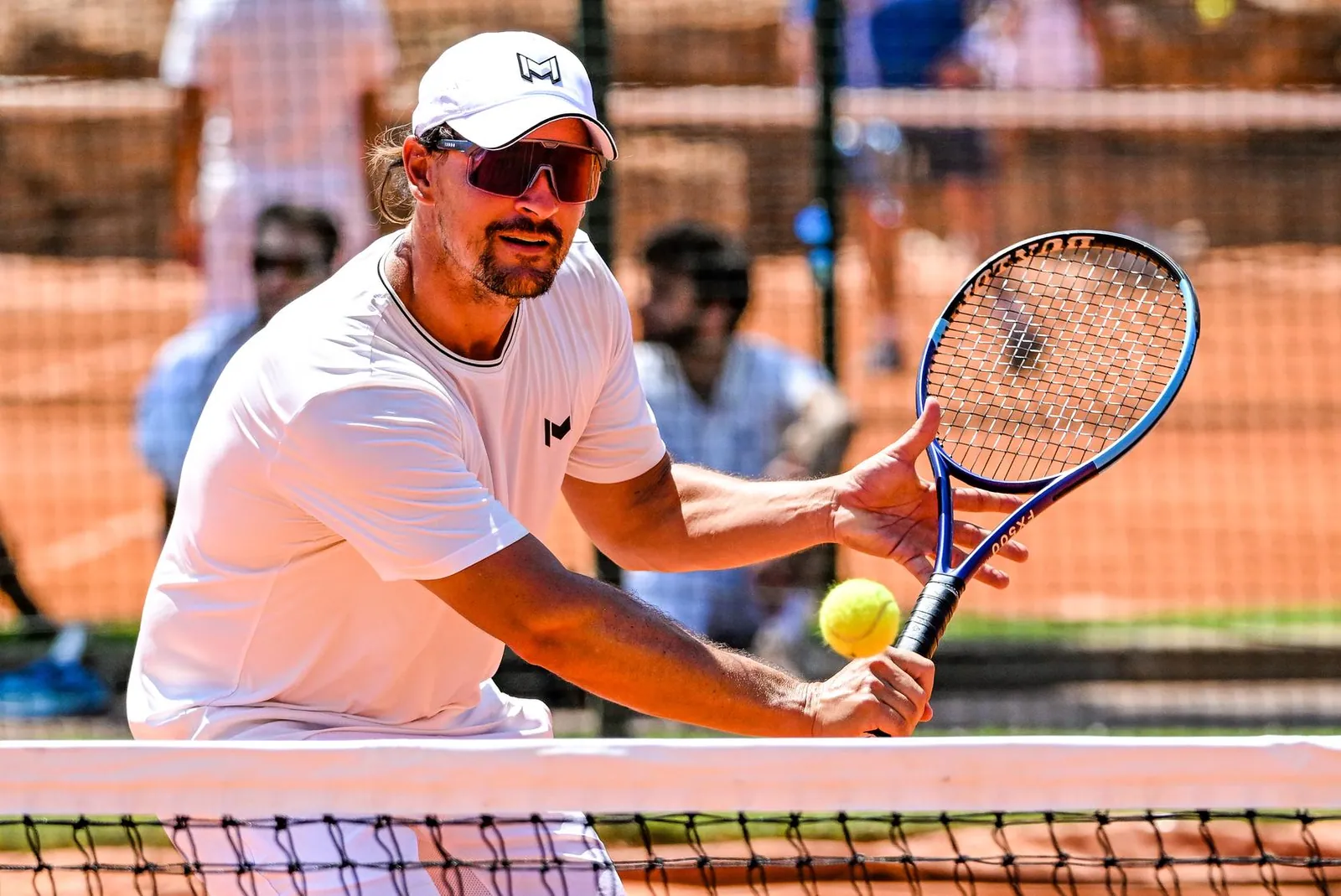 AdultsFull daysAll levelsPerformance Camp AdultA week of intensive tennis, 4 players per coach: technique, match play, physical and mental training.DISCOVER
 Frequently asked questions
Is the trophy position the same as the armed position?
Yes. They are two names for the same moment of the serve: the ball tossed, the tossing arm straight and the racquet raised behind the head, just before the racquet drop.
Why does my serve lack power?
Often because the trophy position is incomplete: elbow too low, shoulders level or legs that do not bend. The arm then has to do everything on its own. Fix the trophy position and the knee bend before trying to hit harder.
What are the main types of serve in tennis?
The flat serve (fast, little spin), the slice serve (the ball spins sideways and swings away from the returner), the topspin or kick serve (high bounce, very safe) and, more rarely, the underarm serve, hit from below to surprise a returner standing far back.
Can the trophy position cause shoulder pain?
A poorly built trophy position, with the elbow too low or no leg drive, overloads the shoulder. A well-coordinated motion spreads the effort across the whole body. If pain persists, see a health professional before you serve again.
Should you film your serve to fix your trophy position?
It is one of the most effective ways: the trophy position lasts a fraction of a second and is hard to feel. Film yourself from the side and from behind, then compare with the six checkpoints in this article: elbow, racquet, shoulders, knees. One or two corrections at a time are enough. On the Performance Camp Adult, coaches use video for this work.