Technique · Serve
The starting position for the tennis serve: mastering the technique
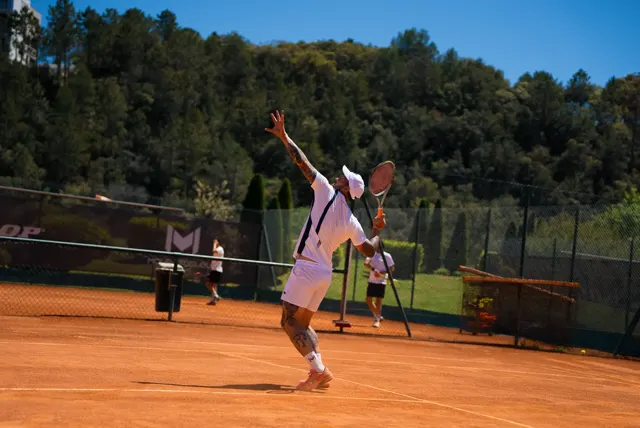
The starting position for the tennis serve is side-on, behind the baseline: front foot pointing towards the net post, back foot parallel to the line, knees slightly bent and weight shared between both feet. This stance shapes your balance, your toss and your body rotation. A poor starting position costs you at every stage of the motion.
Key takeaways
- Where to stand: behind the baseline, between the centre mark and the imaginary extension of the sideline (singles or doubles).
- Feet: for a right-hander, left foot in front, pointing towards the right-hand net post; right foot behind, parallel to the baseline.
- Body: side-on, soft knees, relaxed shoulders, weight on the balls of the feet.
- First point rule: every game starts from the right-hand (deuce) side, then you alternate every point.
- Foot fault: touching the baseline or the court before contact makes the serve a fault.
Where should you stand in the serve starting position?
The rules of tennis require you to serve from behind the baseline, between the centre mark and the imaginary extension of the sideline. On the first point of every game you serve from the right-hand side (the ‘deuce’ court), aiming at the diagonal service box; on the next point you move to the left (the ‘ad’ court), and so on. You get two serves per point.
Within that area, where you stand depends on the format:
- Singles: most players stand close to the centre mark, which makes serving down the T and recovering to the middle easier.
- Doubles: the server moves out towards the tramlines, about halfway between the centre mark and the sideline, to cover their half of the court. See also the Australian formation.
- To vary: shifting a few steps changes the angle and can unsettle a returner who has found their rhythm.
How should you place your feet and body?
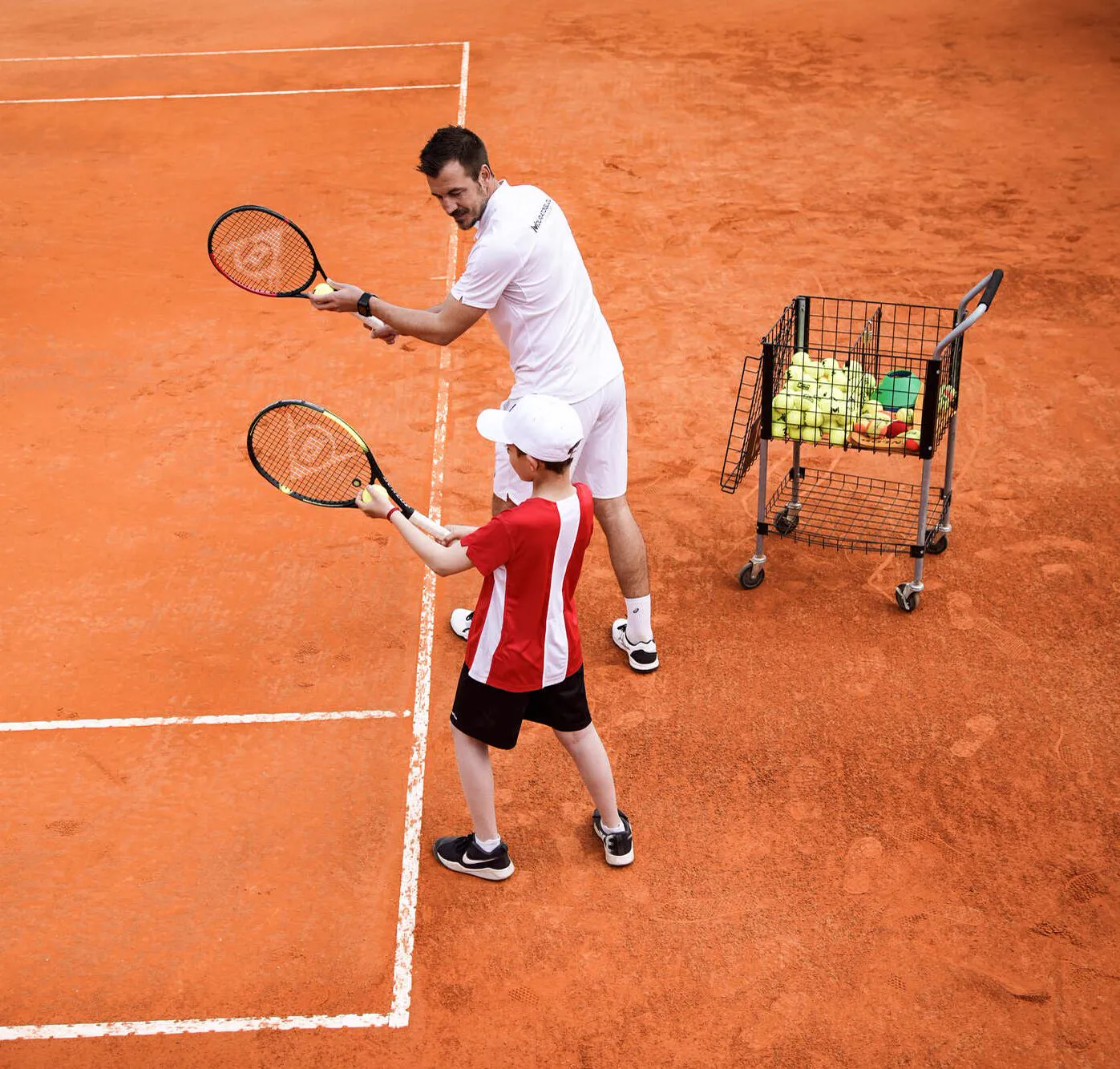
- Front foot (left for a right-hander) a few centimetres behind the line, pointing towards the right-hand net post, roughly 45° to the baseline.
- Back foot behind, about shoulder-width away, roughly parallel to the baseline.
- Side-on body: your shoulder line points at the target, left shoulder towards the opponent’s service box.
- Knees slightly bent, weight on the balls of the feet, ready to shift forwards.
- Left hand holding the ball against the strings or in front of the racquet; right arm relaxed.
There are two ways to use your feet during the motion. In the pinpoint stance, the back foot slides up to the front foot during the toss: more vertical drive, but more coordination needed. In the platform stance, the feet stay where they are until contact: more stable and ideal for learning. Both work; choose the one that keeps you balanced.
Which grip should you take at the start?
Take a continental (hammer) grip from the starting position so you no longer have to think about it. It allows forearm pronation at contact and all three spins (flat, slice, kick). Beginners often serve with a forehand grip, which works at first but soon limits pace and spin. Full details: the hammer grip.
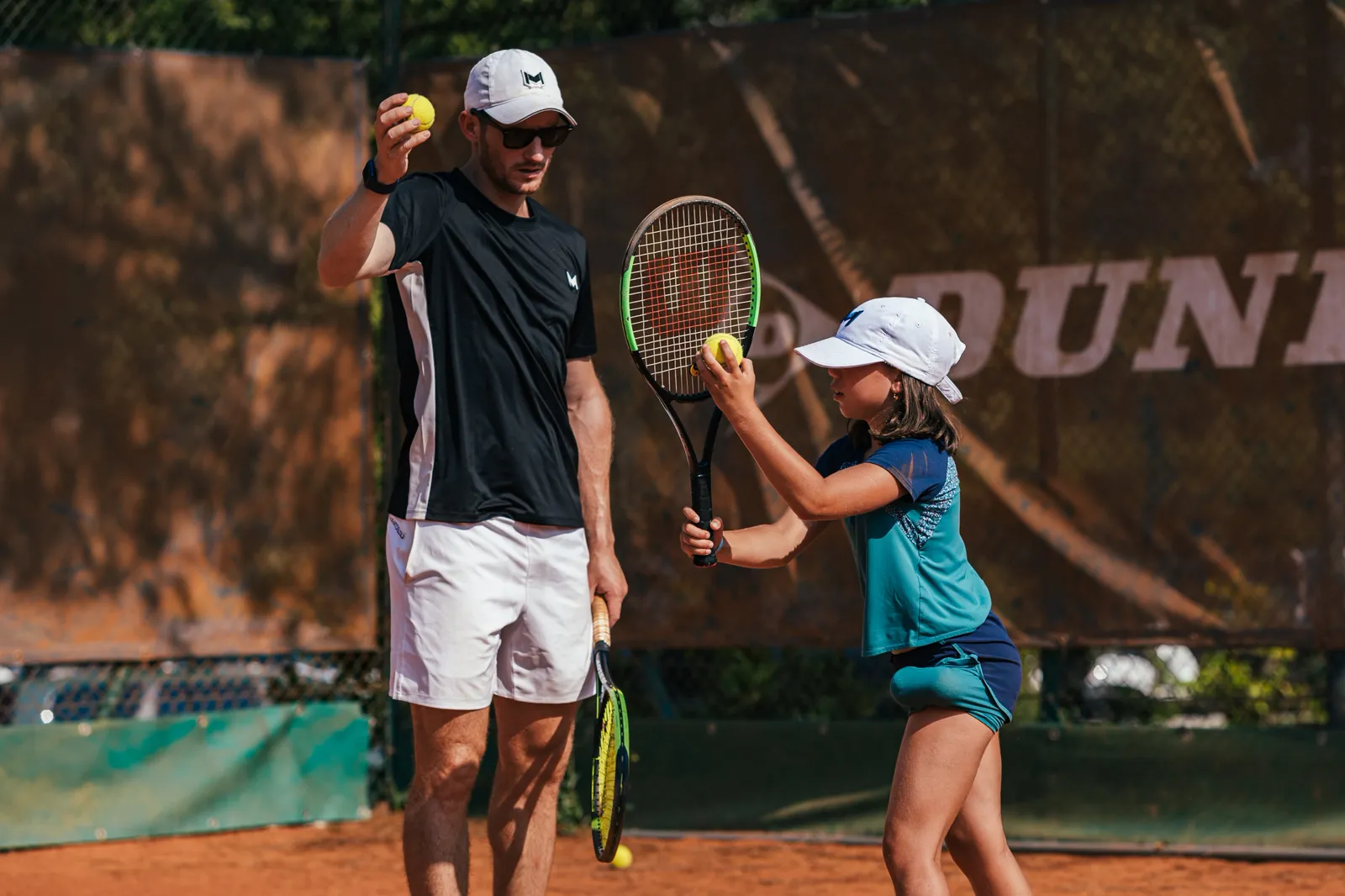
The racquet points towards the target, at waist or chest height depending on your habits. Keep your hand soft: squeezing too hard locks the wrist before you have even started.
Why have a routine before serving?
The starting position is also a mental moment. The same routine on every point (a few bounces, a breath, a look at the target) stabilises the motion and helps you handle pressure. Choose your target before you settle into position, never during the toss.
- Set your feet, always in the same place for the same serve.
- Bounce the ball the same number of times.
- Breathe, look at the target, then toss without rushing.
Once you are set, the motion flows: toss, trophy position, leg drive, contact. The whole sequence is covered in our guide to serve technique.
The most common starting-position mistakes
| Mistake | Consequence | Fix |
|---|---|---|
| Facing the net | No trunk rotation, slow serve | Turn side-on, front shoulder towards the target |
| Feet too close together | Loss of balance on the toss | About shoulder-width apart |
| Stiff legs | No leg drive, the arm does everything | Soft knees from the starting position |
| Foot on the line | Foot fault | Leave a few centimetres behind the line |
| Position changing every point | Inconsistent toss and motion | Pick a mental marker on the ground |
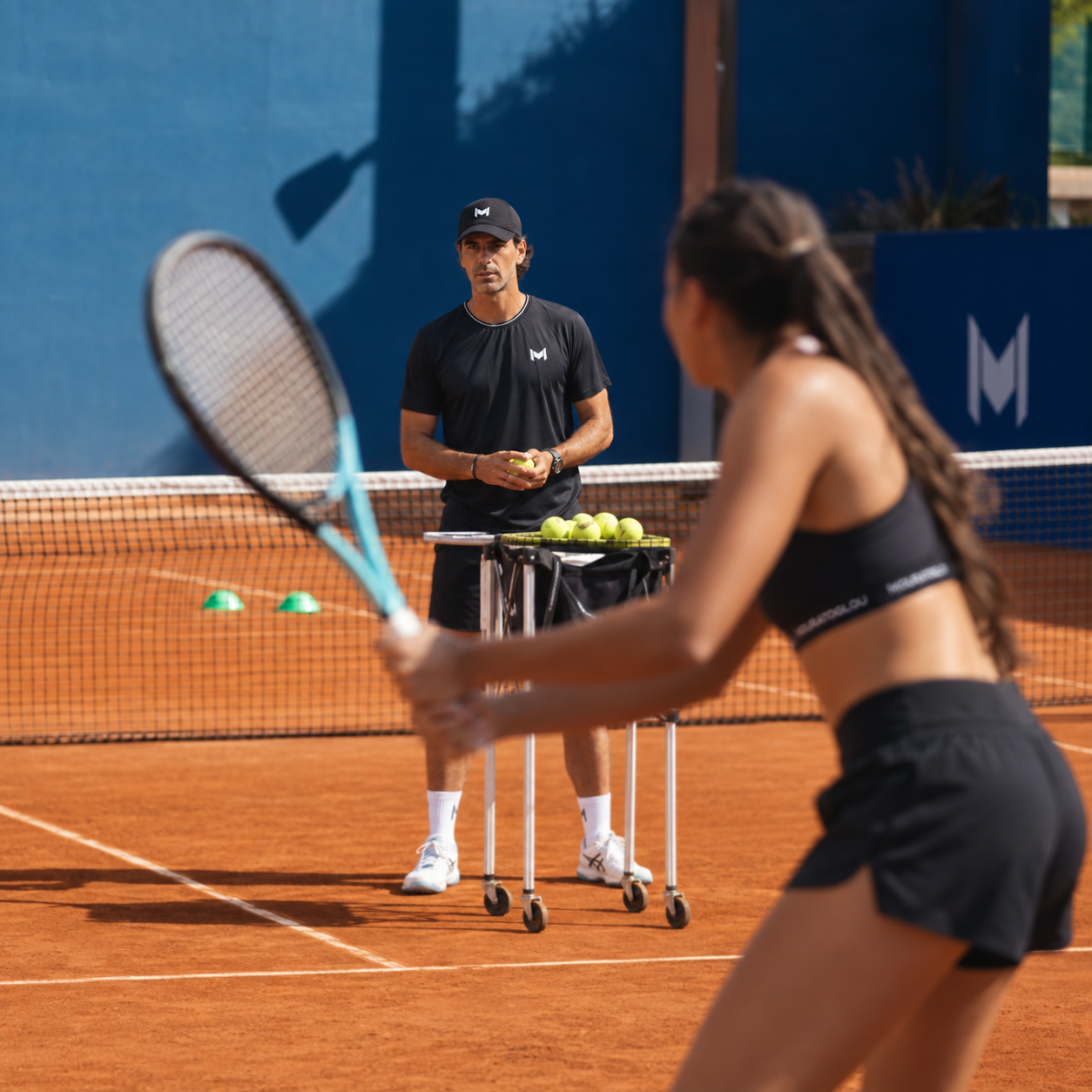
These details can be fixed in a few sessions with a coach. Our adult camps and our junior morning camps work on the serve from day one.
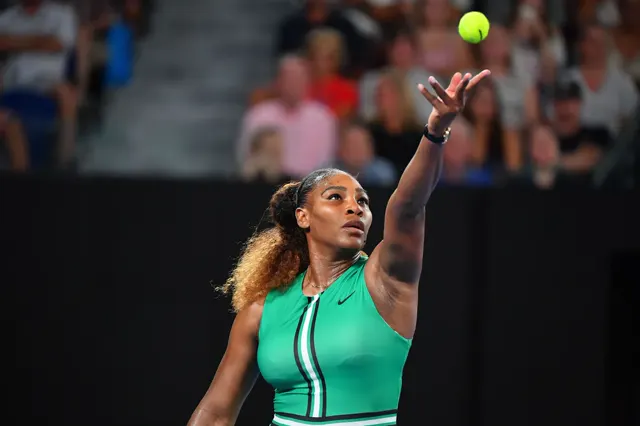
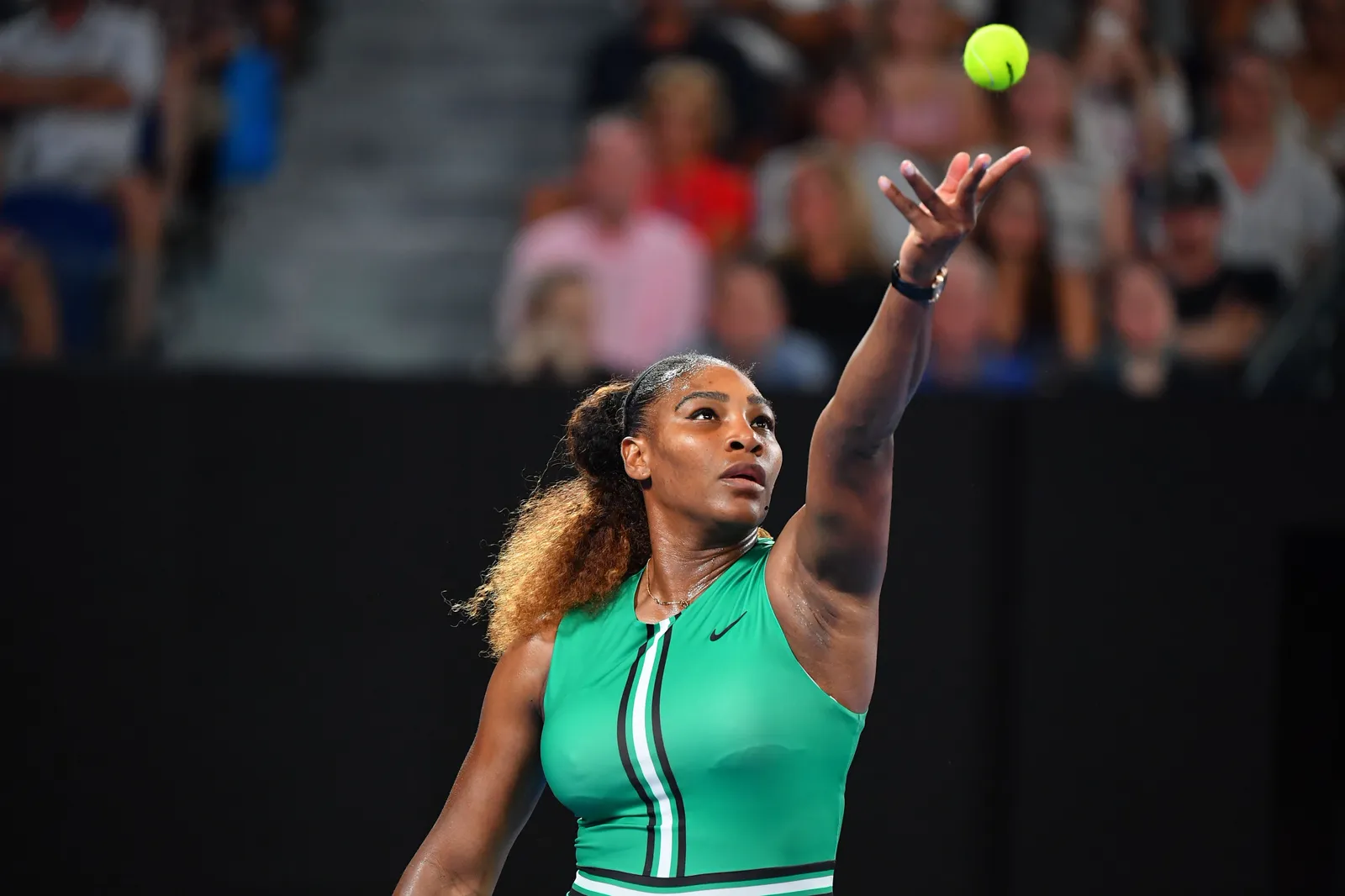
At the Mouratoglou Academy on the French Riviera (Biot, near Nice), the starting position is the first thing checked on video: the Mouratoglou Method fixes the base before touching the rest of the motion. Serena Williams, coached by Patrick Mouratoglou, had a remarkably consistent set-up, which underpinned the reliability of her serve. The rest of the motion is covered in serve technique and the trophy position. More about our camps.
 AdultsFull daysAll levelsPerformance Camp AdultA week of intensive tennis, 4 players per coach: technique, match play, physical and mental training.DISCOVER
 Frequently asked questions
Which side do you serve from at the start of a game?
Always from the right-hand (deuce) side, aiming at the diagonal service box. You then alternate every point: left side, then right side, and so on until the end of the game.
What is a foot fault on the serve?
Touching the baseline, or the court inside it, before you have hit the ball, or standing outside the area between the centre mark and the sideline. The serve then counts as a fault.
Should you bring your back foot up on the serve?
It is not compulsory. Bringing the back foot up to the front foot (pinpoint stance) gives more vertical drive; keeping the feet still (platform stance) is more stable. Both are used at the highest level.
Which muscles work hardest during the serve?
The legs (quads, glutes, calves) for the drive, the abdominals and back muscles for rotation and stability, then the shoulder and forearm for the strike. An effective serve shares the effort along this whole chain.
How can you quickly fix your serve starting position?
Film yourself side-on and front-on, then compare with the checkpoints in this article: foot alignment, weight distribution, racquet height. Correct one element at a time, over twenty or so slow serves. An outside eye speeds things up a lot: on the Performance Camp Adult, video analysis is part of the serve work.