Technique · Racquet grips
The hammer grip in tennis: how to hold it and use it
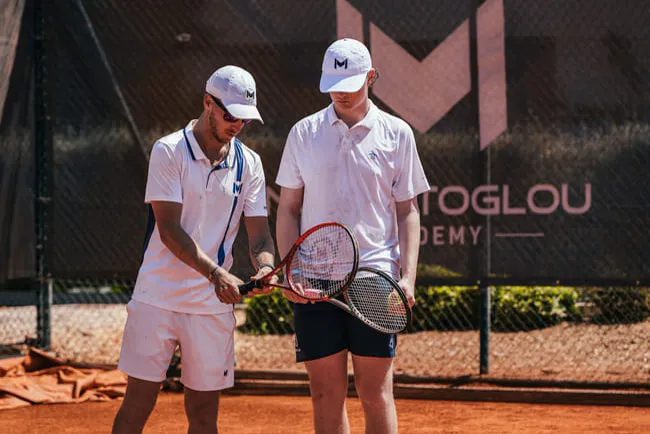
The hammer grip means holding the racquet like a hammer, with the base of your index finger on the second bevel of the handle. It is the reference grip for the serve, volley, smash and slice: versatile, and worth learning from your very first lessons.
Key takeaways
- Definition: the hand holds the handle like a hammer; the base of the index finger and the heel of the hand sit on the upper bevel (bevel 2 for a right-hander).
- Shots: serve, volley, smash, backhand slice, drop shot and defensive shots. For a topspin forehand, switch grips.
- Benefit: one grip to link serve and volley, with a free wrist to add slice or racquet-head speed on the serve.
- Simple check: stand the racquet on its edge on the ground and pick it up naturally, like a hammer.
What is the hammer grip?
A racquet handle has 8 bevels: 4 flat sides and 4 angled edges. In the hammer grip, the base of the index finger and the heel of the hand (the pad at the base of the little finger) sit on the upper right bevel for a right-hander, upper left for a left-hander. The hand then wraps around the handle exactly as it would around a hammer, hence the name.
The hammer grip is very close to the continental grip: both names describe the same family of grips, the hammer grip being the most neutral version. For the differences and how players use it in competition, read our guide to the continental grip.
How to hold the hammer grip, step by step
- Stand the racquet on its edge, frame perpendicular to the ground, handle pointing towards you.
- Pick up the handle naturally, as if you were picking up a hammer to drive in a nail: the strings stay perpendicular to the ground.
- Check the landmark: the knuckle at the base of the index finger and the heel of the hand are on the upper bevel (bevel 2).
- Spread the index finger slightly from the middle finger, like a trigger: it steers the racquet face.
- Keep the hand relaxed: a grip pressure of 3 to 4 out of 10 is enough; the wrist and forearm do the rest.
Which shots do you play with the hammer grip?
The serve: flat, slice or kick
It is the basic serving grip. It allows natural forearm pronation at contact, essential for a fast serve, and leaves the wrist free to vary spin: flat, slice (curving away off the court) or kick. To build the motion, see also our article on the serve starting position.

The volley and the smash
At the net there is no time to change grips: the hammer grip lets you play forehand and backhand volleys with the same grip, with a slightly open racquet face. It is also the reference grip for a powerful smash, on the same principle as the serve. More in our article on volley technique.
The slice, the drop shot and defensive shots
The backhand slice, the sliced forehand, the drop shot and the counter drop shot are all played with this grip: it opens the racquet face slightly and makes backspin easy. It also helps in defence, when you are stretched and need to lift the ball with the wrist.
And the backhand?
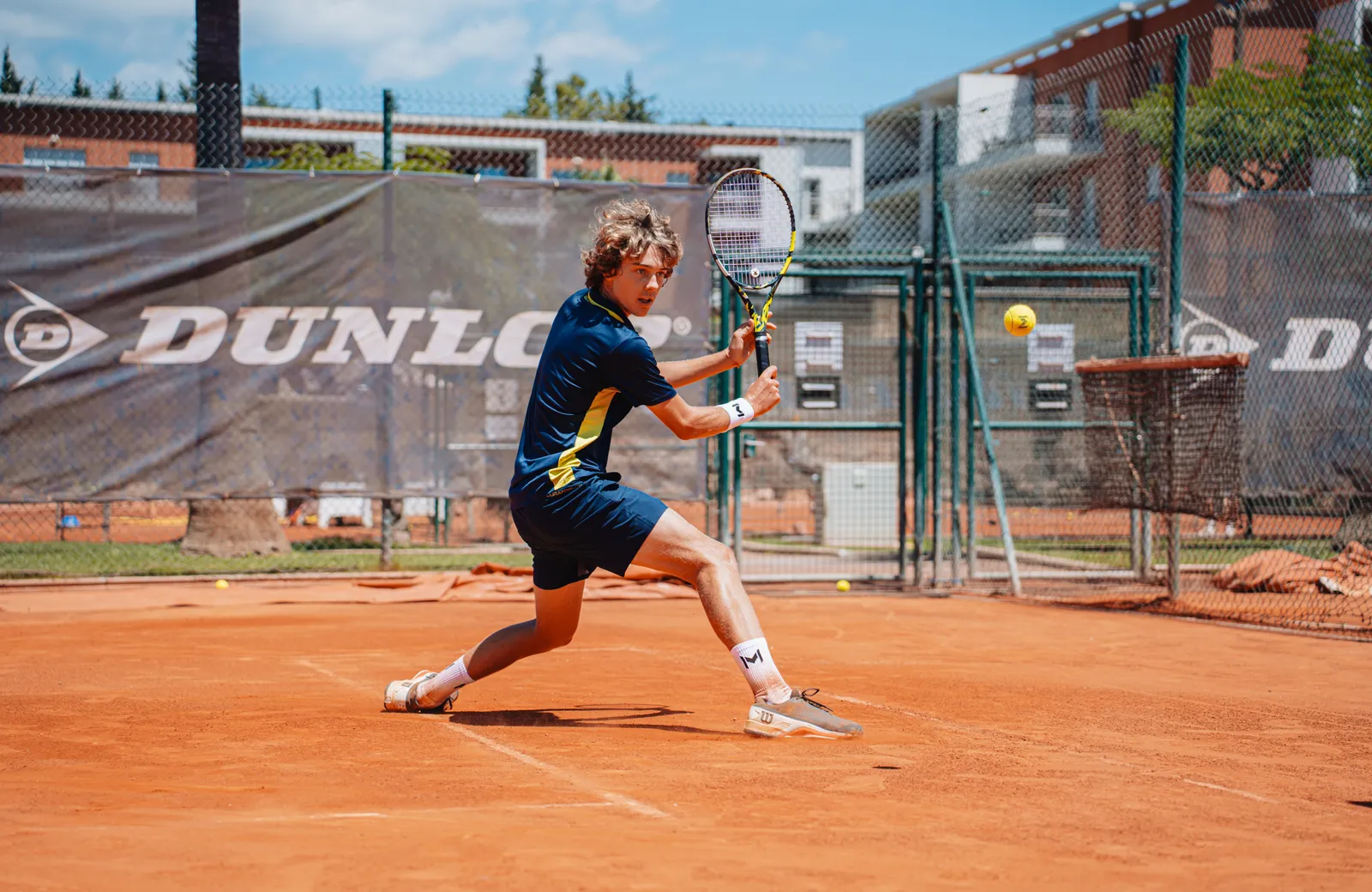
With a one-handed backhand, some players use it to hit flat down the line, but most switch to a more closed grip (eastern backhand) to hit topspin. With a two-handed backhand, the dominant hand can stay in a hammer grip while the other hand holds the handle in a forehand grip.
When not to use the hammer grip
On a baseline forehand, the hammer grip severely limits topspin and forces you to hit early and in front, with little margin over the net. Modern players hit their forehand with a semi-western or western grip: see our guide to forehand grips.
| Shot | Hammer grip? | Why |
|---|---|---|
| Serve | Yes, the reference | Pronation and variety of spin |
| Volley and smash | Yes | No grip change at the net |
| Slice, drop shot | Yes | Open face, natural backspin |
| Topspin forehand | No | Too little spin and margin |
| One-handed topspin backhand | Rather not | A more closed grip is recommended |
Common mistakes with the hammer grip
- The “frying pan” grip: palm under the handle, racquet face pointing at the sky. It is the instinctive beginner grip and prevents any pronation on the serve.
- Squeezing too hard: tension locks the wrist and kills racquet-head speed.
- Index finger glued to the others: you lose control of the racquet face, especially on the volley.
- Changing grips too late at the net: on the volley, keep the hammer grip between shots.
At the Mouratoglou Academy on the French Riviera (Biot, near Nice), the hammer grip is introduced from the first lessons, because it shapes the serve, the volley and the slice. The Mouratoglou Method teaches it progressively, at each player’s level. To complete this, read our guides to the continental grip and volley technique. More about our camps.
 AdultsFull daysAll levelsPerformance Camp AdultA week of intensive tennis, 4 players per coach: technique, match play, physical and mental training.DISCOVER
 Frequently asked questions
Are the hammer grip and the continental grip the same?
Almost. Both names describe the same family of grips, with the hand on the upper bevel of the handle. Some coaches call the most neutral version the hammer grip and a version shifted slightly towards the backhand the continental grip. See our article on the continental grip.
Can you hit a forehand with the hammer grip?
Yes for a sliced or defensive forehand, no for a topspin baseline forehand: the hammer grip gives too little spin and margin. Use a semi-western grip for an attacking forehand.
At what age should you learn the hammer grip?
From the very first lessons, especially for the volley and the serve. Children first learn it in mini-tennis, then keep it on the serve as their motion develops.
How do I know my hammer grip is right?
Stand the racquet on its edge on the ground and pick it up without thinking: the base of your index finger should sit on the upper bevel. The “V” between thumb and index finger points towards your left shoulder if you are right-handed.
How do you get used to the hammer grip if you serve with a forehand grip?
The switch feels strange at first: serves tend to go left (for a right-hander). Start serving without a full swing, from the trophy position, letting pronation turn the strings towards the target. Accept a few practice sessions of double faults before using it in matches. On the Performance Camp Adult, this transition is guided step by step.