Technique · Serve
Tennis serve technique: mastering this essential stroke
Tennis serve technique links six steps: stance, ball toss, trophy position, leg drive, contact and follow-through. A good serve relies less on arm strength than on a consistent toss and a smooth chain of movement from the legs to the racquet. It is the one shot you fully control, so it deserves proper work.
Key takeaways
- Six steps: stance, toss, trophy position, knee bend and leg drive, contact, follow-through and recovery.
- The toss decides everything: a ball tossed slightly in front and to the right (right-hander), always to the same spot, makes the rest of the motion possible.
- Power comes from the legs and trunk: the arm only passes on the energy created by the drive and rotation.
- Three spins: flat for pace, slice to pull the returner wide, kick for a high bounce and a safe second serve.
- Continental grip: the reference serving grip, allowing pronation and every type of spin.
Why does tennis serve technique matter so much?
The serve is the only shot in tennis you play without depending on your opponent: you choose the rhythm, the spin and the target. A reliable serve lets you take the initiative from the very first shot and hold serve more easily. A poorly built motion, on the other hand, costs double faults and hands out second serves that are easy to attack.
Serve technique breaks down into steps that flow into one another without a pause. Each one has its own detailed article in our coaching corner; here we summarise them to give you the full picture, from foot placement to recovery.
The 6 steps of an effective serve
1. The starting stance
Stand behind the baseline, side-on. For a right-hander, the left foot is in front, pointing towards the right-hand net post, with the right foot behind and roughly parallel to the line. Knees slightly bent, body relaxed, weight on the balls of the feet. All the details (stance width, positioning rules) are in our article on the serve starting position.
2. The ball toss
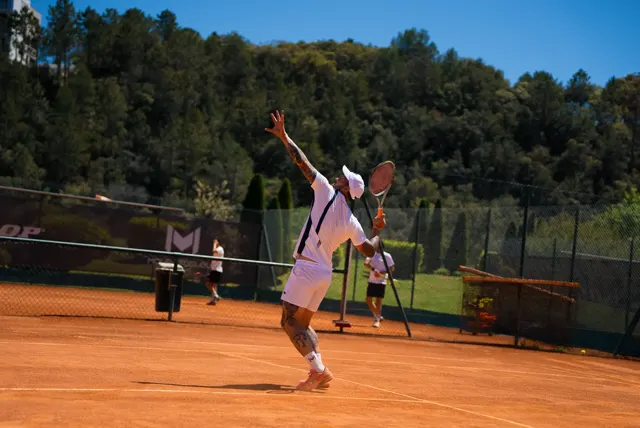
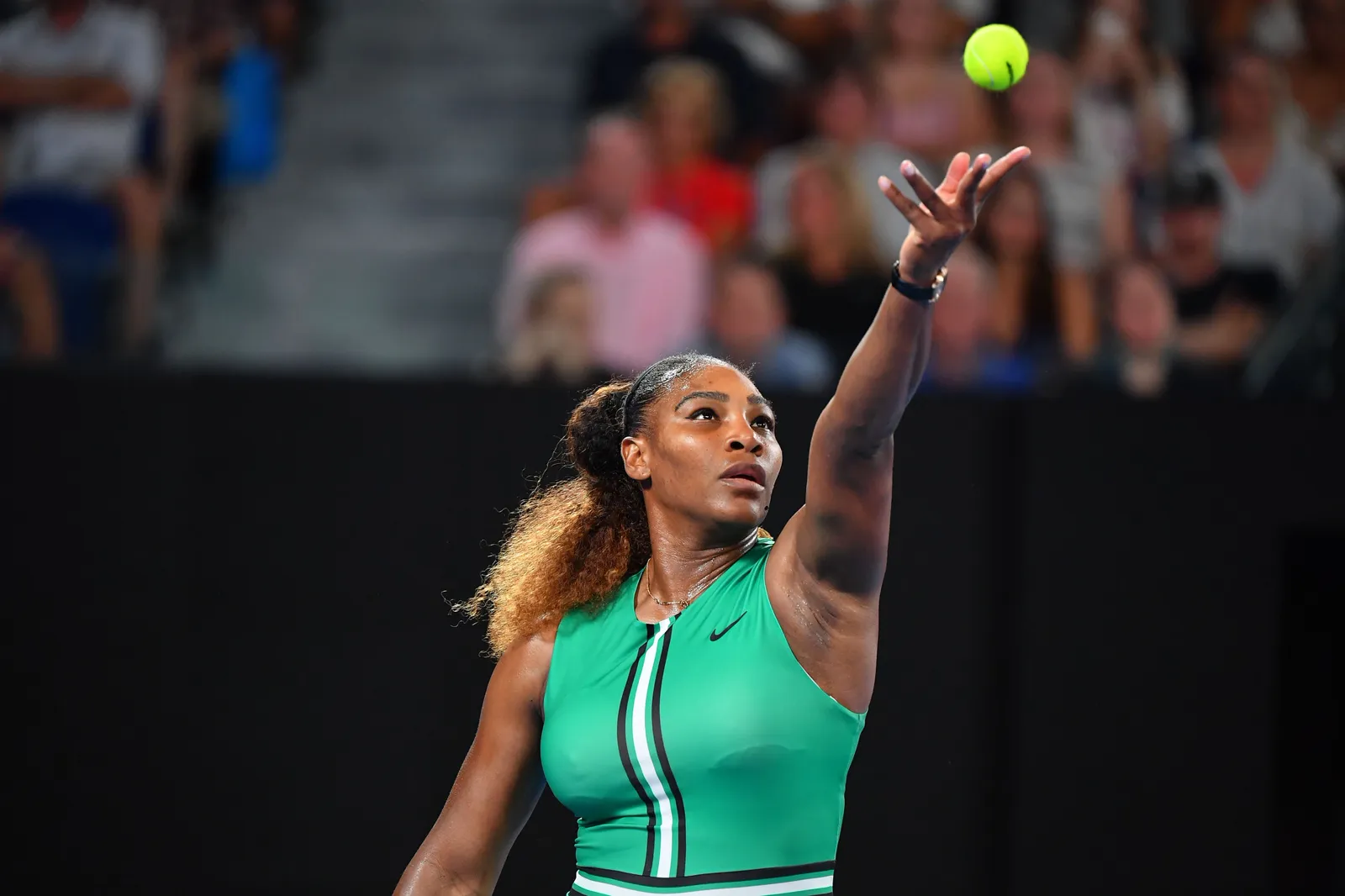
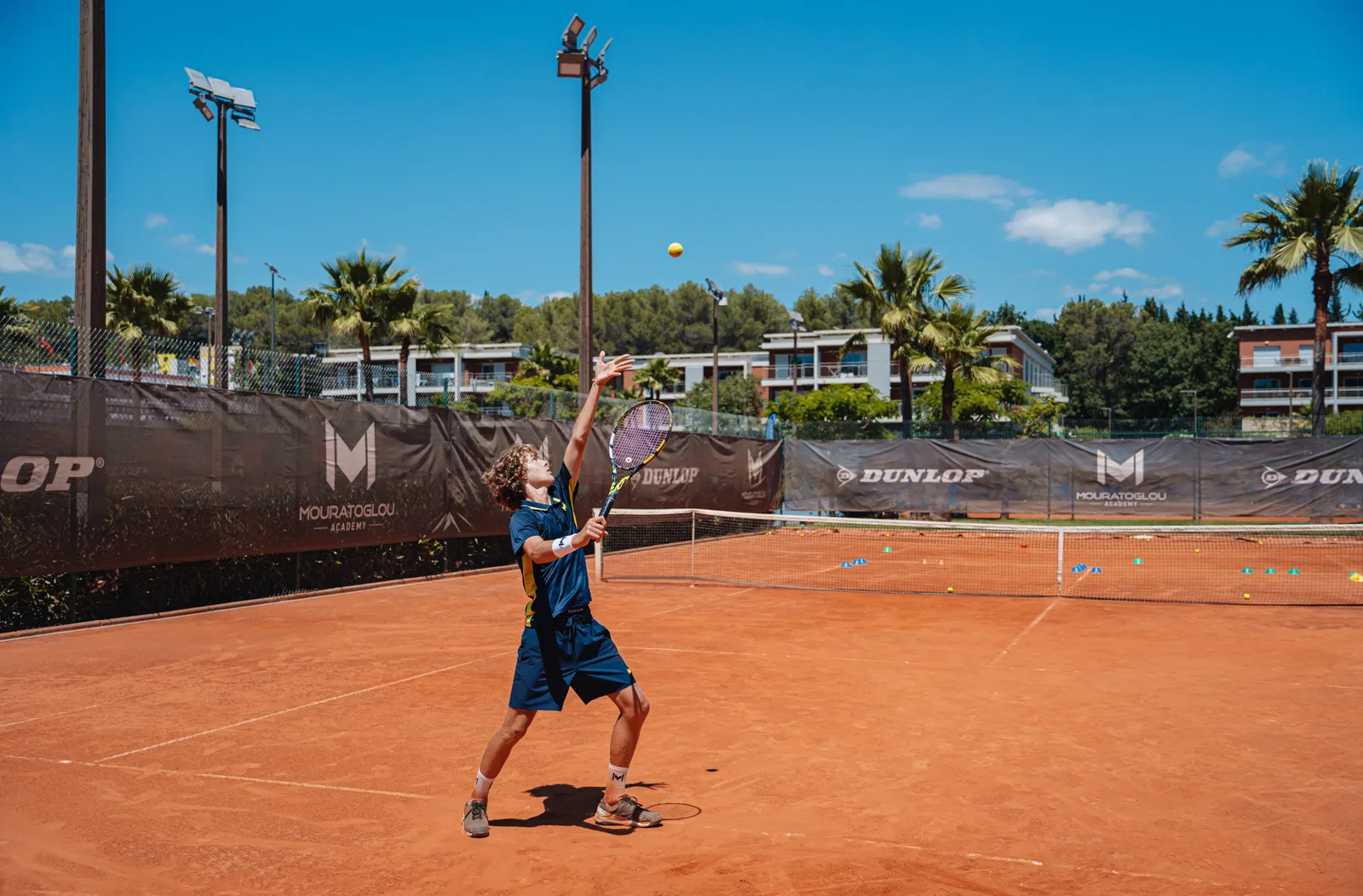
The toss is the single most decisive element. Release the ball with a straight arm and a firm wrist, slightly higher than your contact point. For a flat serve it should rise a little in front of you and slightly to the right (right-hander): if you let it drop, it would land about 30 cm in front of your front foot. An inconsistent toss forces the arm to compensate, and that is where faults come from.
3. The trophy position
As the ball rises, so does the racquet: left arm reaching up towards the ball, right elbow at shoulder height, shoulders tilted, head turned towards the future contact point. This is the trophy (or cocked) position, the hinge of the serve, covered in detail in our article on the trophy position.
4. Knee bend and leg drive
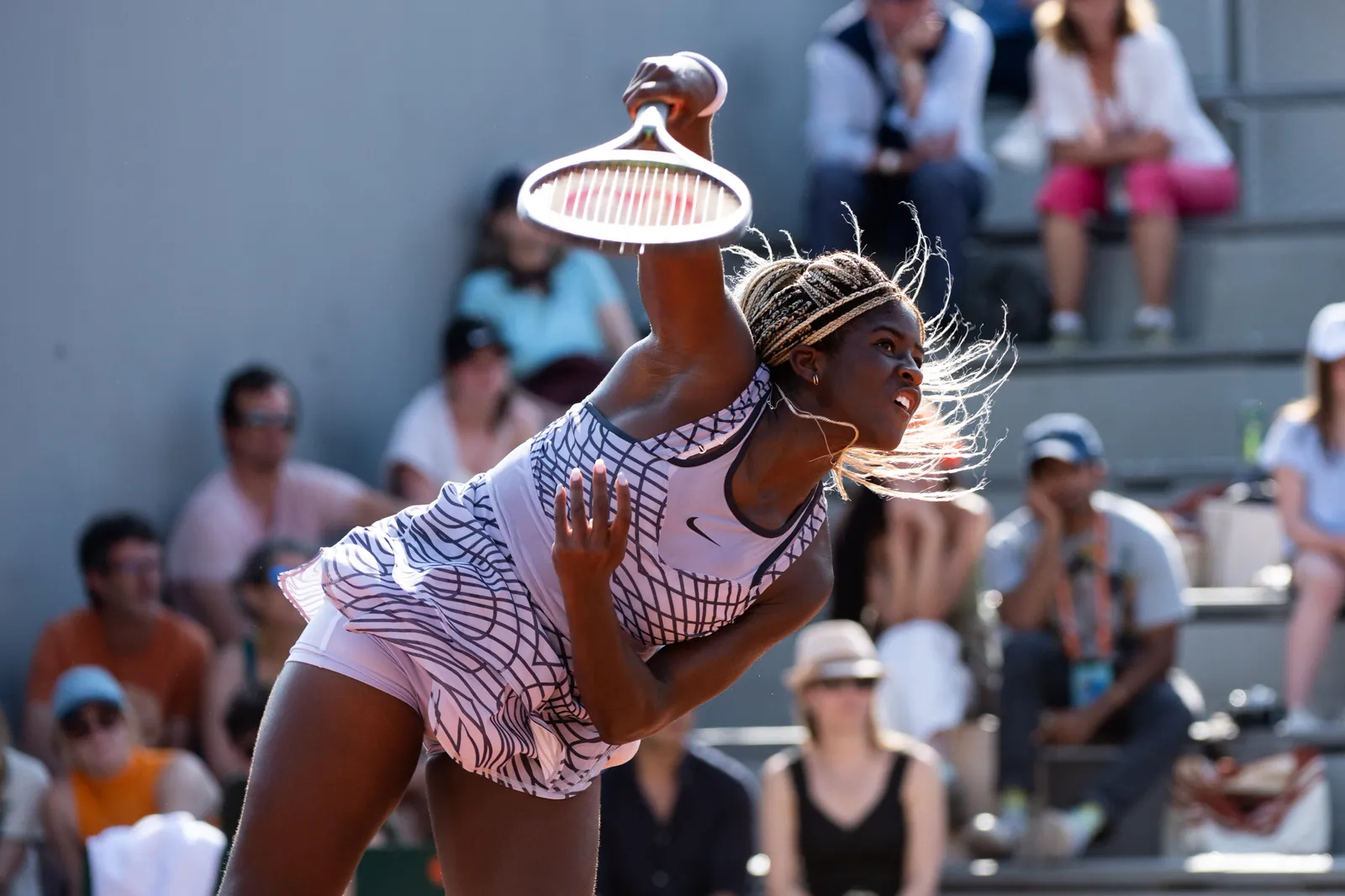
In the trophy position, the knees bend and the back arches slightly. Then the legs drive up and forwards: this extension launches the rotation of the trunk, then the shoulder, then the arm. The racquet drops behind the back (the ‘racquet drop’) before accelerating towards the ball.
5. Contact
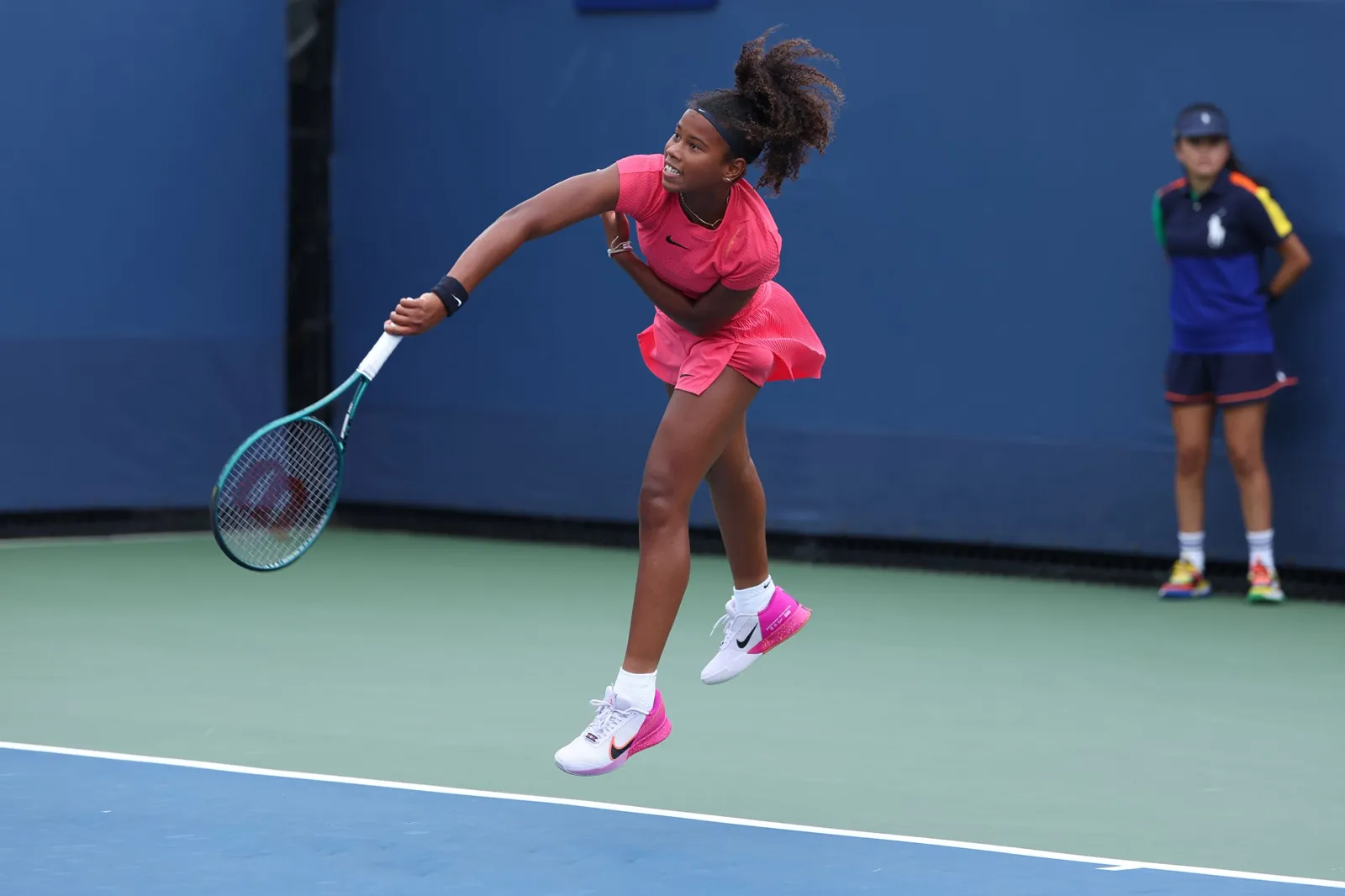
Hit the ball with a straight arm, at the highest point you can reach, slightly in front of you. Just before contact, the forearm rotates outwards: this is pronation, the source of racquet-head speed. Keep your head up until contact.
6. Follow-through and recovery
The racquet finishes across the body (on the left side for a right-hander) and your body weight carries you into the court, usually onto the front leg. Do not stop the swing: a full follow-through protects the shoulder. Then get straight back into a ready position, knees bent, for the return.
Flat, slice or kick serve: what is the difference?
With the same continental (hammer) grip, you can put three kinds of spin on the serve. What changes is the position of the toss and the way the strings meet the ball.
| Serve | Toss (right-hander) | Contact | Use |
|---|---|---|---|
| Flat | In front, slightly to the right | Racquet face square to the target | First serve, going for the ace |
| Slice | A little further right | Strike the right side of the ball | Pull the returner wide, serve down the T |
| Kick (topspin) | Above the head, even slightly behind | Brush up and from left to right | Safe second serve, high bounce |
The kick serve is the most pronounced form of topspin serve: the ball clears the net with plenty of height, dips thanks to the spin and kicks up high, often towards a right-handed returner’s backhand. It is the second serve of most competitive players, because it leaves a big margin over the net.
How can you make your serve more consistent and more dangerous?
- Repeat the same toss: spend 10 minutes per session tossing without hitting, letting the ball drop to check it lands in the same spot every time.
- Vary your targets: down the T, into the body and out wide. An average serve that is well placed causes more trouble than a fast serve always going to the same spot.
- Disguise your intentions: keep your toss as similar as possible for every serve, so the returner cannot read the spin.
- A stable routine: same number of bounces, same breathing, same look at the target before every point.
- Practise your second serve as much as your first: it is what prevents double faults and wins you the tight points.
The serve also opens up tactical patterns: following a good serve to the net is serve and volley; in doubles, the Australian formation changes the angle of the opponents’ return.
The most common technical mistakes on the serve
- Toss too low or too far back: you hit with a bent arm and the ball goes into the net or long.
- ‘Frying pan’ grip (palm under the handle): no pronation is possible, so the serve stays slow and spinless.
- Lazy legs: the shoulder does all the work, tires quickly and eventually gets injured.
- Eyes dropping too early: the head falls before contact and pulls the chest down, so the strike goes off-centre.
- Braking the swing: trying to ‘steer’ the ball by slowing the arm costs accuracy instead of adding it.
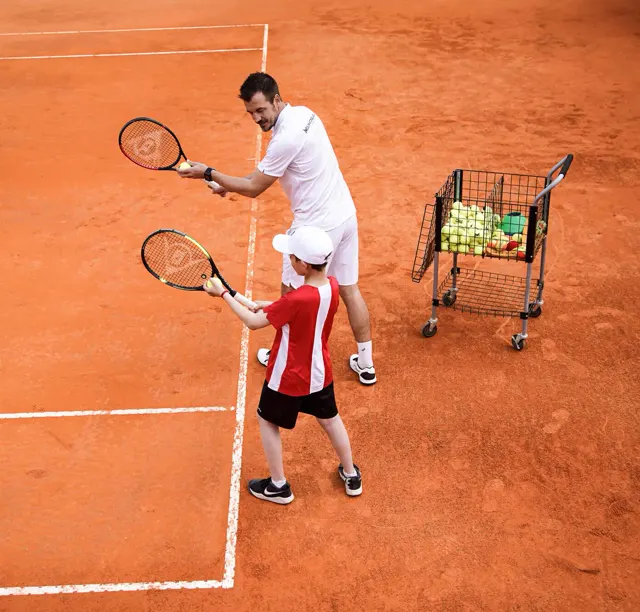
These faults are corrected far more quickly with an outside eye. At a camp, our coaches film your serve and rebuild it step by step: that is the idea behind our Performance Camp Adult and, for young players aiming at competition, our Tennis & School programme.
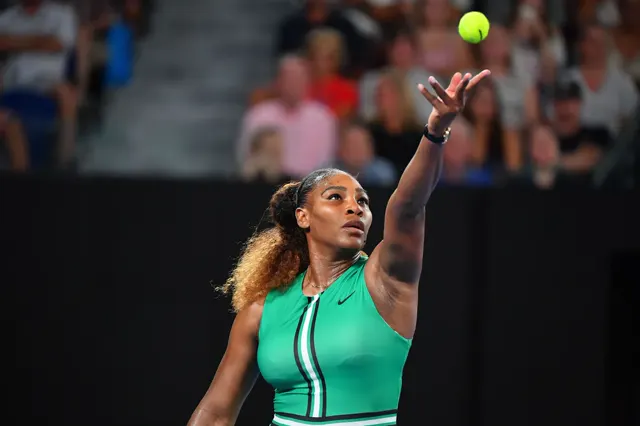
At the Mouratoglou Academy on the French Riviera (Biot, near Nice), the serve is filmed and broken down step by step: the Mouratoglou Method adapts the motion to each player’s build. The serve of Serena Williams, coached by Patrick Mouratoglou, remains a benchmark of fluidity and power. Work on yours at a tennis camp.
 AdultsFull daysAll levelsPerformance Camp AdultA week of intensive tennis, 4 players per coach: technique, match play, physical and mental training.DISCOVER
 Frequently asked questions
What is the best grip for serving in tennis?
The continental grip, also called the hammer grip. It allows forearm pronation at contact and gives you all three spins (flat, slice, kick) without changing grip. Beginners who serve with a forehand grip quickly hit a ceiling in pace and spin.
How can I serve faster?
Look for speed in the chain of movement, not in the arm: knee bend then leg drive, trunk rotation, then forearm pronation. A relaxed arm moves faster than a tense one. Also hit the ball higher, with a straight arm, thanks to a well-placed toss.
What is a kick serve?
A heavily topspun serve: the racquet brushes up the back of the ball, so it clears the net high, then bounces high and to the side. It is slower than a flat serve but much safer, which is why it is often used as a second serve.
Where should you toss the ball on the serve?
For a flat serve, slightly in front of you and a little towards your hitting side, a bit higher than the contact point. Further right to slice (right-hander), more above the head to kick. What matters most is tossing to the same spot every time.
How can I improve my second serve?
Find safety through spin, not by slowing your arm: a kick or slice serve clears the net higher and drops into the box. Practise in sets of ten, aiming at a specific zone. At the Performance Camp Adult, the coach reviews your toss and brushing action on video.