Technique · Serve
Serve power: how to serve faster like the pros
The best servers on tour go past 200 km/h (125 mph), but their arm does only part of the work. Serve speed comes from a chain of movements: leg drive, trunk rotation, a relaxed shoulder, then forearm pronation at the highest possible contact point. A club player can gain 10 to 20 km/h simply by getting these steps in the right order.
Key takeaways
- Speed is built from the ground up: legs, hips, trunk, shoulder, arm, wrist.
- Relaxation is decisive: a tense arm is a slow arm.
- Pronation of the forearm provides the final “whip”.
- Hit high and in front: a high contact point opens the angle into the box.
- Accuracy before speed: a fast serve that does not go in is worthless.
How do the pros serve so fast?
Big servers are not necessarily the most muscular players. What sets them apart is coordination: each part of the body accelerates at the right moment and passes its energy to the next. The legs drive, the hips and then the shoulders turn, and the arm comes last, like the tip of a whip.
That is also why a powerful serve protects the shoulder: when the legs and trunk do their share, the arm does not need to force. An “all-arm” serve, by contrast, is slow and often ends up causing pain.
The 5 keys to a more powerful serve
1. Leg drive
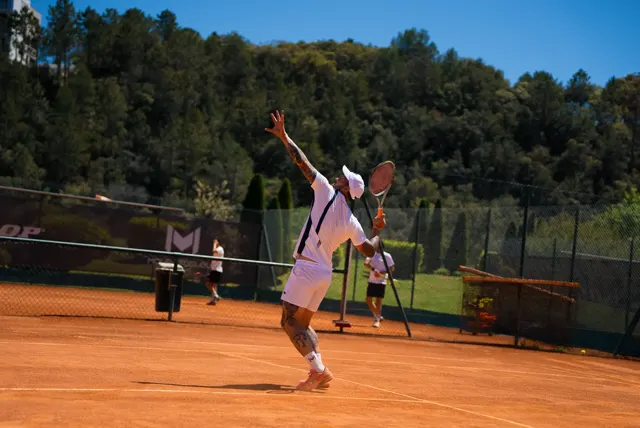
In the trophy position, bend your knees, then drive up and forward. That extension starts the whole chain. Players who keep their legs straight lose much of their potential speed.
2. Rotation and the trophy position
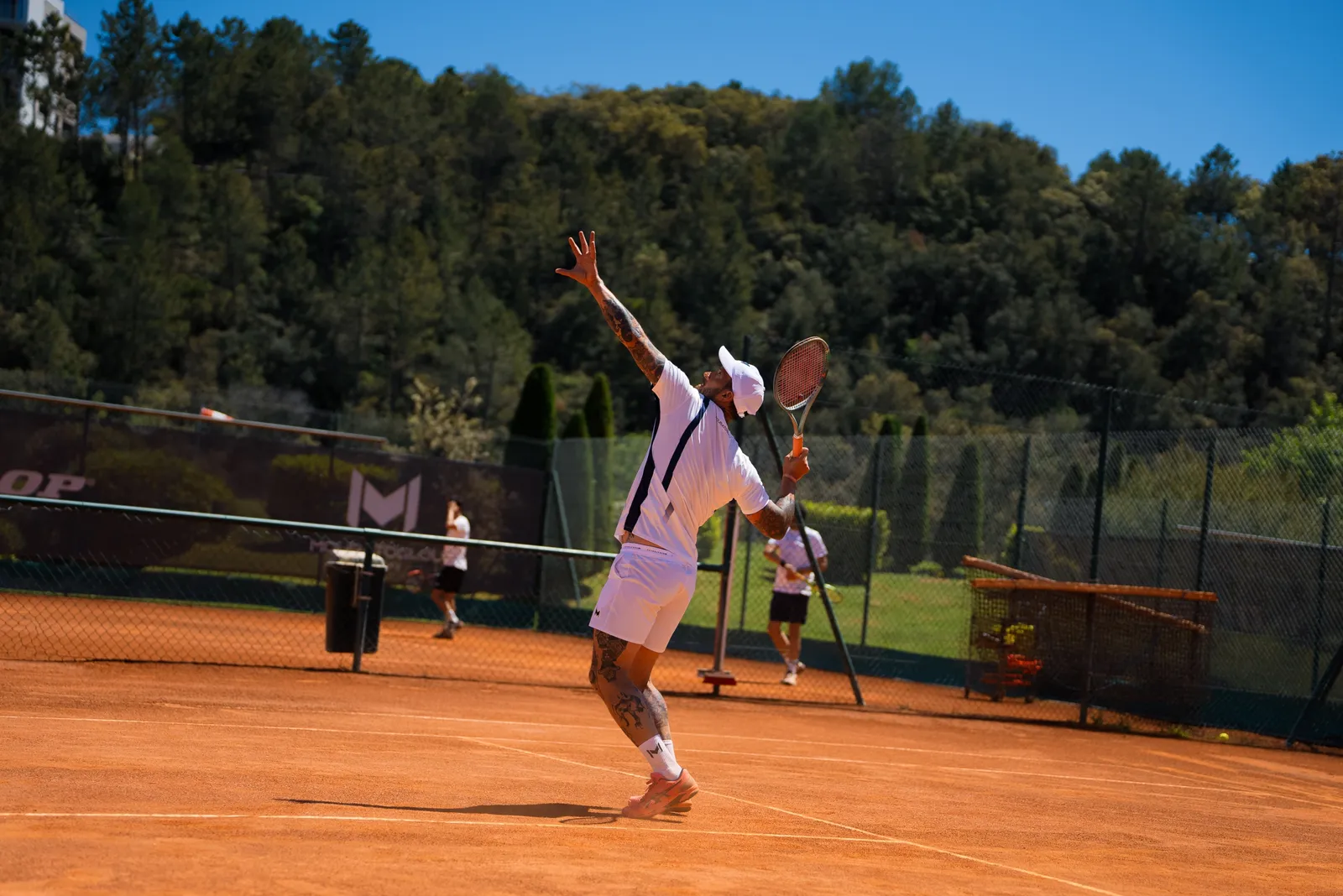
Your shoulders stay side-on while the toss rises, then turn towards the net as you hit. The trophy position, elbow at shoulder height, is the hinge that stores energy before contact.
3. A relaxed arm
Hold the racquet loosely: the racquet head must be free to drop behind your back (the loop) before swinging up. A tight hand blocks that loop and slows the whole motion. Read more in our article on relaxation.
4. Pronation
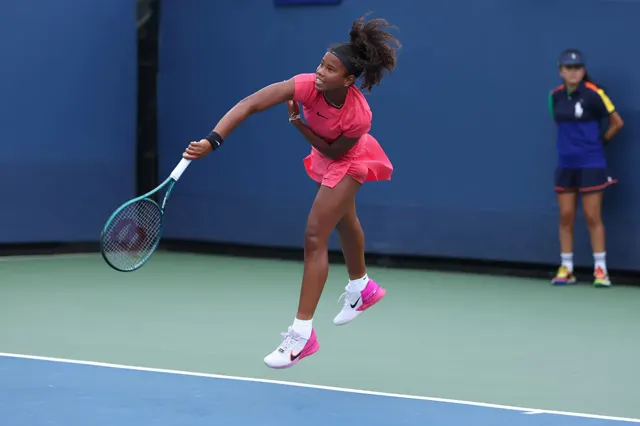
Just before contact, the forearm rotates outwards, as if showing your palm to the right (right-hander). This movement, only possible with the continental grip, multiplies racquet-head speed.
5. A high contact point, in front
Hit with your arm extended, at the highest point, slightly in front of you. The higher the contact, the wider the angle into the service box, and the harder you can hit while keeping the ball in.
Speed and accuracy: finding the right balance
First-serve percentage matters as much as speed. A well-placed 160 km/h serve wins more points than a 180 km/h serve that goes in one time in three. Pros usually aim for 60 to 70 % first serves in.
| Goal | Setting | When |
|---|---|---|
| Ace / unreturned serve | Maximum speed, flat, down the T or wide | Big points, when you feel confident |
| Take the initiative | 80 to 90 % speed, well placed | Most first serves |
| Play safe | Kick or slice serve | Second serve, tense moments |
For the full motion step by step, see our guide to serve technique, and for the second serve, our article on the kick serve.
Drills to add speed to your serve
- Throwing a ball: throw a tennis ball as far as you can with a serving motion. It is the reference drill to feel the chain and pronation.
- Overhead medicine-ball throw (1 kg) without a racquet, driving with the legs.
- Towel shadow swings: swing a knotted towel; it should snap in front of you at the contact point.
- Sets of 5 serves at 100 %, followed by 5 serves at 80 % aimed at a target: you learn to combine speed and accuracy.
- Core and rotation work: planks, cable or band rotations, twice a week.
The mistakes that kill serve speed
- Serving with a forehand grip: no pronation possible.
- Tossing too low: you hit with a bent arm and the motion is cut short.
- Opening the shoulders too early: the rotation is wasted before contact.
- Passive legs: the shoulder compensates, with a risk of tendinitis.
- Slowing down after contact: maximum speed must happen at the ball, not before.
Build a powerful serve at camp
The serve is best trained with video and a coach, alongside fitness work. That is the approach of the Mouratoglou Method, applied every day on the courts of the Mouratoglou Academy in Biot, on the French Riviera. Adults experience it during the Performance Camp Adult, juniors during the Performance Camp Junior. The serve of Serena Williams, coached by Patrick Mouratoglou, remains a model of fluidity. Compare our tennis camps and book your week.
 AdultsFull daysAll levelsPerformance Camp AdultA week of intensive tennis, 4 players per coach: technique, match play, physical and mental training.DISCOVER
 Frequently asked questions
How can I serve faster in tennis?
Use your legs, keep your arm relaxed, rotate your trunk and finish with pronation at a high contact point. Speed comes from coordination, not arm strength.
What is the average serve speed for an amateur?
For club players, first serves are often between 120 and 160 km/h (75 to 100 mph). The best professionals regularly go past 200 km/h.
Does strength training help you serve faster?
Yes, especially leg, core and rotational work. But without good technique, the gains stay limited and the shoulder is exposed.
Why does my shoulder hurt when I serve hard?
Often because the arm makes up for passive legs or a toss that is too low. Have a coach check your motion and strengthen your rotator cuff.
Do I need to serve flat to serve fast?
The flat serve is the fastest but has the smallest margin. A little slice often lets you keep high speed with a better success rate.