Rules · Faults
Double fault in tennis: how to avoid and fix it
A double fault in tennis means missing both serves on the same point: the point goes straight to your opponent. It usually comes from an over-ambitious second serve, an inconsistent toss or tension, and is fixed with a routine, a stable toss and a second serve hit with spin.
Key takeaways
- Rule: the server has two attempts per point; two consecutive service faults make a double fault and the point is lost.
- What counts as a fault: ball into the net, outside the service box, a foot fault, or missing the ball when trying to hit it.
- What does not: a let (a serve that clips the net and lands in the correct box) is replayed, without cancelling a first fault.
- Main causes: inconsistent toss, a flat second serve, tension on big points, fatigue.
- Remedy: a second serve with spin (slice or kick), a fixed routine and training under pressure.
What is a double fault in tennis?
A double fault is losing a point after two consecutive service faults. The server has two attempts: if the first is a fault, they hit a second serve; if that one is a fault too, the point goes to the receiver without them even touching the ball.
A serve is a fault when the ball lands outside the diagonal service box, goes into the net, when the server foot faults, or misses the ball completely while trying to hit it. A let (a serve that clips the net and lands in the correct box) is not a fault: it is replayed, but if it was a second serve you replay a second serve. For an overview of the rules, see our guide to tennis faults.
Why does a double fault weigh so heavily in a match?
It is a point given away in the only phase of play you fully control. On a break point, at the end of a set or in a tie-break, a double fault can swing the match.
It also weighs on what comes next: your opponent, sensing a fragile second serve, steps into the court to attack it. And you may start serving even more cautiously, with a short ball that is easy to punish. Breaking that cycle is as much a mental matter as a technical one.
What causes a double fault?
- An inconsistent toss: too far left, too far back or too low, it changes the contact point and forces you to compensate with the arm.
- A flat second serve: with no spin, the ball has very little margin. It is the most common mistake at club level.
- Tension: on big points the arm tightens, the swing slows and the ball finds the net. Other players speed up to “get it over with”.
- Fatigue: late in a match, your base is less stable and your timing drifts.
- Wind and sun: they disrupt the toss. Adjusting the height of your toss or your position is part of the game.
Do not confuse it with a foot fault: there, it is not the ball’s flight but the position of your feet that is penalised.
How to avoid double faults: our coaches’ method
- Put spin on your second serve: a slice or kick serve clears the net comfortably and then drops into the box. Spin is your safety margin, far more than slowing down.
- Stabilise your toss: do sets of tosses without hitting, letting the ball drop. It should land in the same spot every time, in front of you and slightly to the right for a right-hander.
- Build a routine: the same number of bounces, one slow breath, a target chosen before you toss. The routine crowds out distracting thoughts.
- Aim well inside the target: on a second serve, aim for an area about a metre inside the lines rather than the lines themselves.
- Train under pressure: play sets of second serves where every double fault costs two points, or serve only second serves for a whole practice set.
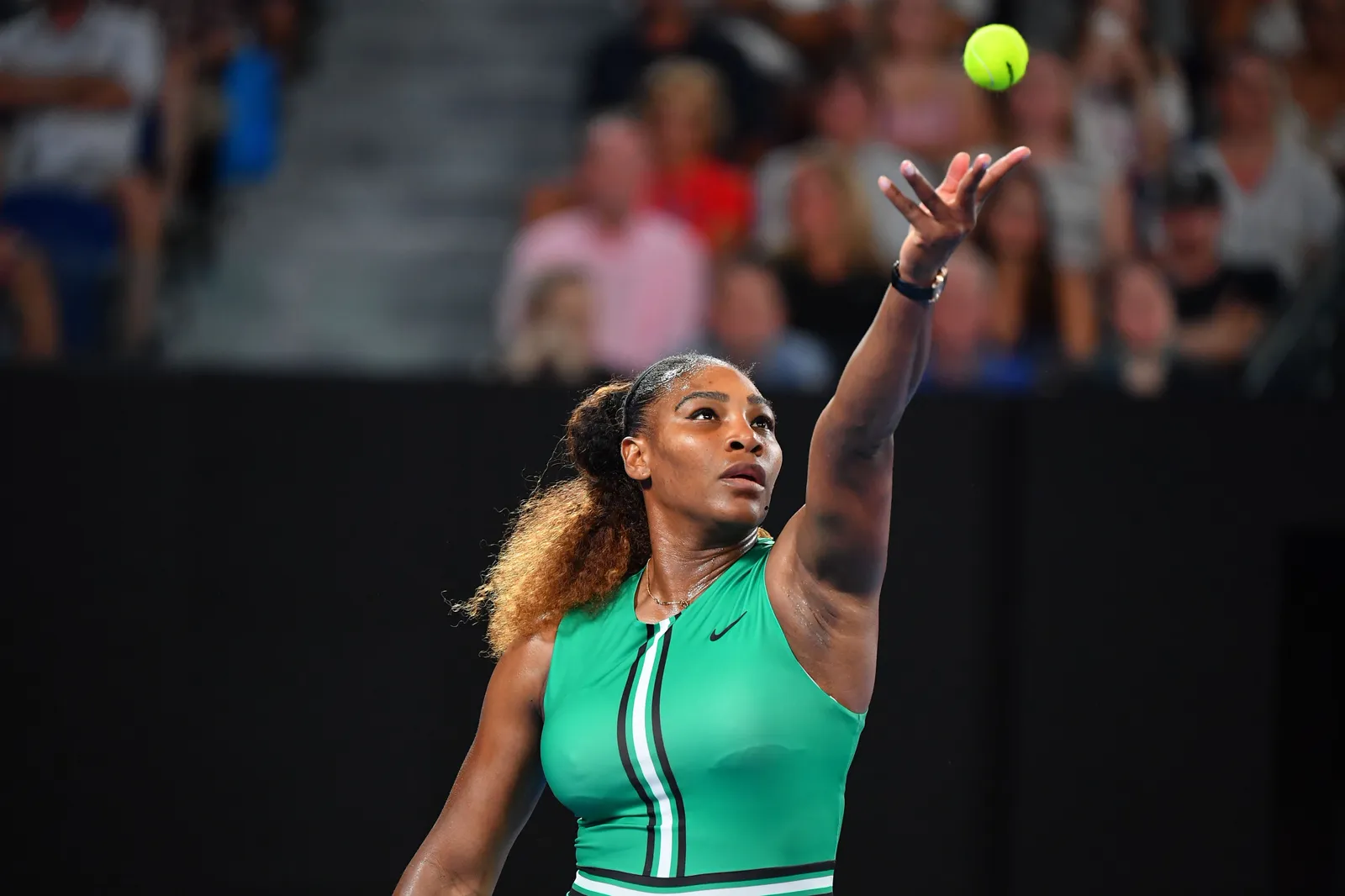
To revisit the basics of the motion, read our guide to serve technique and the one on the serve starting position.
A reliable second serve often depends on a solid trophy position and on emotional control trained like everything else, as explained in our physical and mental preparation section. The Mouratoglou Method treats double faults as a player issue before a stroke issue: first find the cause, whether technical, tactical or mental. That is the work the coaches at the Mouratoglou Academy on the French Riviera (Biot, near Nice) do with their players.
How do you handle a double fault on a big point?
One double fault must not lead to another. After the miss, turn away from the net, breathe, then go back to your usual routine. Keep the same intention on the next serve: a timid first serve or an even softer second serve is exactly what your opponent is waiting for. Refocusing techniques are covered in our article on pre-match routines.
At our camps we work on the serve in match situations, with set scores and real pressure. That is the case in the Tournament Camp Junior for young competitors, as well as in the Performance Camp Adult.
 AdultsFull daysAll levelsPerformance Camp AdultA week of intensive tennis, 4 players per coach: technique, match play, physical and mental training.DISCOVER
 Frequently asked questions
Is a foot fault on the second serve a double fault?
Yes. A foot fault makes the serve a fault, just like a ball outside the box. If it happens on the second serve, it is a double fault and the point is lost.
Does a let cancel the first fault?
No. A let only means that particular serve is replayed. If you serve a let on your second serve, you replay a second serve: the first fault still stands.
Should you serve slower on a second serve to avoid double faults?
Not only. A slow but flat ball is still risky and easy to attack. What makes a second serve safe is spin (slice or kick), which lets the ball clear the net high and still drop into the box, while your arm speed stays fast.
How do you stop double faulting repeatedly?
Go back to your routine between every point: breathing, bounces, choosing a target. Aim for a large zone rather than the lines, and keep a relaxed swing. In practice, serve sets of second serves with something at stake so your motion gets used to pressure.
Should you practise your second serve on its own?
Yes, and often more than your first serve. Hit sets of second serves only, with a target and a minimum number to make, then play points where you only get one serve. That constraint recreates match pressure. On the Tournament Camp Junior at the Mouratoglou Academy on the French Riviera, this work is built into serve sessions.