Technique · Forehand
The forehand follow-through: finishing your swing properly
The forehand follow-through is the part of the swing after contact: the racquet keeps travelling forward, then rises and finishes over the opposite shoulder or around the body. It does not add power after the event, but it reflects and secures the quality of the shot: direction, depth, spin and protection for the arm.
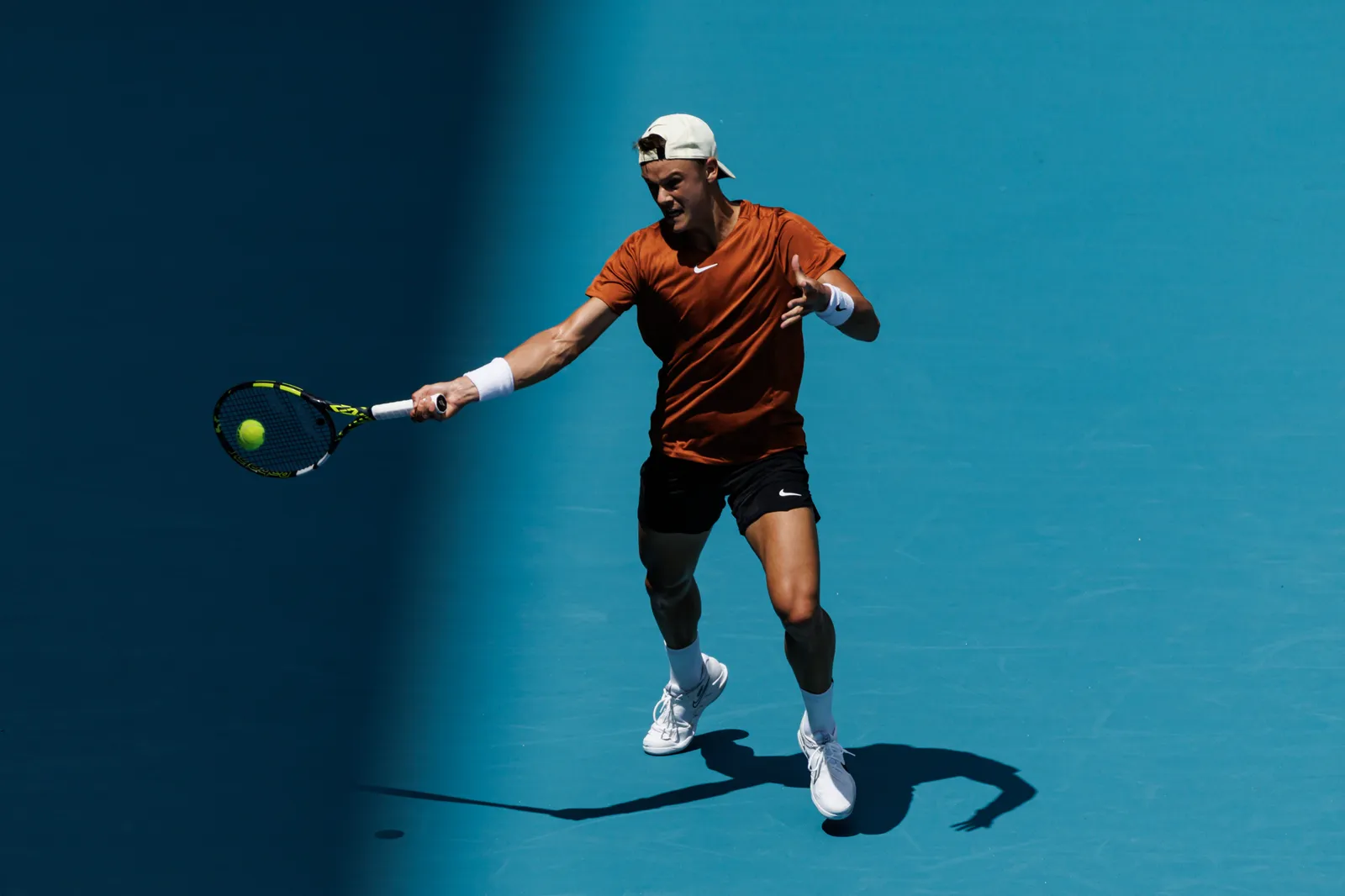
Key takeaways
- Definition: everything the racquet does after contact with the ball, until the swing comes to a complete stop.
- Purpose: extend the intended path, control depth and slow the arm down gradually.
- By spin: a high finish over the shoulder for topspin, a lower finish towards the target for a flat shot.
- The body follows through too: hips and shoulders end up facing the net, weight on the front leg.
- Mistake no. 1: stopping the swing just after contact, which costs depth and control.
What is the forehand follow-through?
The forehand swing breaks down into preparation, contact and follow-through. The follow-through starts as the ball leaves the strings and ends when the racquet stops. An effective swing does not stop at contact: the racquet must keep travelling “through” the ball in the chosen direction.
Why bother once the ball has gone? Because the follow-through mirrors what happened at contact. A player who brakes to finish short has slowed the racquet before even hitting the ball. Conversely, aiming for a full finish forces you to accelerate through the ball.
- Direction: a racquet that travels towards the target keeps the face stable.
- Depth: a full swing lengthens the trajectory and pushes your opponent back.
- Spin: the racquet rising after contact is essential for topspin.
- Injury prevention: the arm decelerates over a long distance, which spares the elbow and shoulder.
A good follow-through starts before contact
You cannot fix the end of a swing without looking at what comes before. Three things make a natural follow-through possible:
- The grip: the semi-western, the most common grip, makes a high, topspin finish easy. A more open grip calls for a lower finish. See our guide to forehand grips.
- The preparation: an early shoulder turn, free arm pointing at the ball, racquet head dropping below the ball.
- Contact in front of the body: ideally at waist height, with weight shifting from the back leg to the front leg. A late hit makes any follow-through impossible.

Where should the racquet finish? 3 finishes by spin
| Finish | Where the racquet ends | Shot |
|---|---|---|
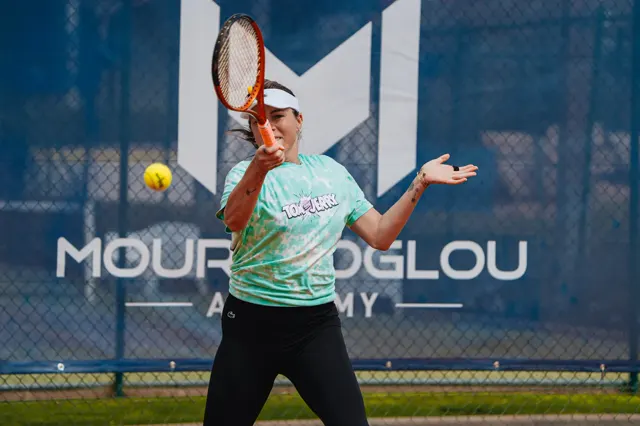
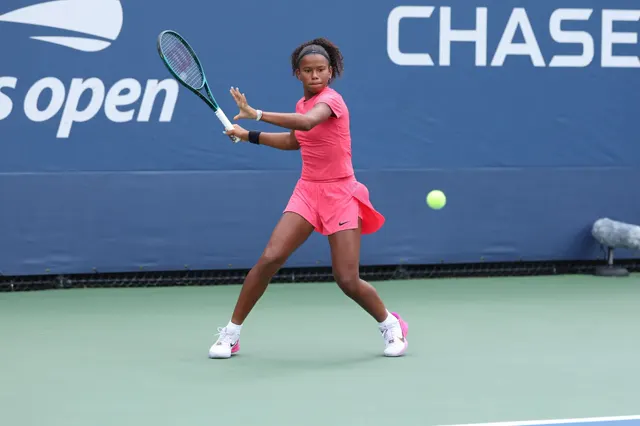
| Over the shoulder | Over the opposite shoulder, elbow pointing at the target | Classic topspin forehand |
| Across the body (“windshield wiper”) | Racquet sweeps across the body and ends near the opposite hip | Heavy topspin, low balls or short angles |
| Towards the target | Arm extended forward, lower finish | Flat forehand, acceleration |
| Above the head | Racquet rises almost vertically | Defence, high-spinning balls on the run |
On a topspin forehand, the racquet rises sharply after contact: that upward path brushes the ball and gives it rotation. On a flat shot, the follow-through is more forward, but it should never be cut short.
The role of the body in the follow-through
The follow-through is not just about the arm. The hips and shoulders keep rotating until they face the net, or slightly beyond. The back leg releases, sometimes swinging through, which helps you recover. Your eyes stay on the contact point for a split second after the hit: a still head means a centred contact.
A smooth follow-through also needs a relaxed arm. A tight hand blocks deceleration and sends vibrations to the elbow. To learn to hit hard without tension, read our article on staying relaxed in tennis.

Common mistakes and how to fix them
- Cutting the swing right after contact: you lose depth and control. Fix: aim for a finish over the shoulder on every shot, even at a slow pace.
- Finishing low on a topspin shot: the ball goes into the net. Fix: let the racquet head drop below the ball as you prepare, then swing up.
- Following through with the arm only: the body stays side-on and the arm forces. Fix: let the hips and shoulders turn to face the net.
- Hitting late: you cannot follow through on a ball struck behind you. Fix: prepare earlier, as soon as the ball leaves your opponent’s racquet.
- Losing balance at the end of the swing: usually a distance problem. Fix: small adjustment steps before the hit.
 AdultsFull daysAll levelsPerformance Camp AdultA week of intensive tennis, 4 players per coach: technique, match play, physical and mental training.DISCOVER
 4 drills for a smooth follow-through
- Freeze the finish: hit the ball, then hold your final position for 2 seconds. Your coach (or a phone video) checks racquet height and shoulder position.
- Slow-motion shadow swings: 3 sets of 15 swings without a ball, breaking down preparation, contact and follow-through.
- Deep target: cross-court rallies aiming between the service line and the baseline. A full follow-through is the key to depth.
- Topspin mini-tennis: inside the service boxes, exaggerate the upward swing to feel the brushing action.
The follow-through is one of the last stages of the swing: for the big picture, see our tennis forehand guide, and for the offensive version, the attacking forehand. The same principle applies on the other side: see the two-handed backhand follow-through. For steady progress in the mornings, the Player Camp Adult is a good fit.
In the Mouratoglou Method, the follow-through is never fixed in isolation: it is adapted to your grip and game style, as the individualisation pillars explain. That is how we work at the Mouratoglou Academy on the French Riviera (Biot, near Nice), alongside the running forehand and the inside-out forehand.
Frequently asked questions
Where should the racquet finish after a forehand?
On a classic topspin forehand, over the opposite shoulder, with the elbow pointing at the target. On a heavier topspin shot, the racquet can finish across the body near the opposite hip. On a flat shot, the finish is lower and more forward.
Does the follow-through add power?
Not directly, since the ball has already left the strings. But aiming for a full follow-through forces you to accelerate through the ball instead of braking before contact: that is why a full swing goes with more powerful, deeper shots.
Why does my topspin forehand go into the net?
Most often the racquet does not drop far enough below the ball during the preparation, or the follow-through goes down instead of up. Exaggerate the low-to-high path and finish over the shoulder.
Does a short follow-through protect the arm?
No, quite the opposite: a cut-off swing makes the arm decelerate abruptly, which loads the elbow and shoulder. A long, relaxed follow-through spreads the effort and protects the joints.
How long does it take to fix a forehand follow-through?
Expect a few weeks of regular repetition before a new finish becomes automatic in practice, and longer before it holds up under match pressure. Work on one cue at a time, ideally with video or a coach. A week on the Performance Camp Adult packs in a large volume of supervised repetitions to speed this up.