Technique · Backhand
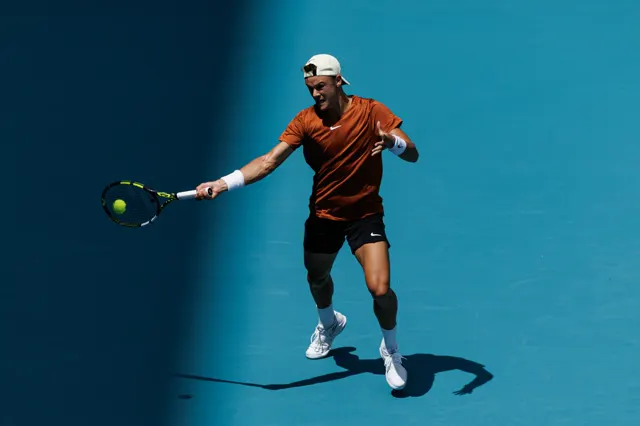
The follow-through and finish on the two-handed backhand
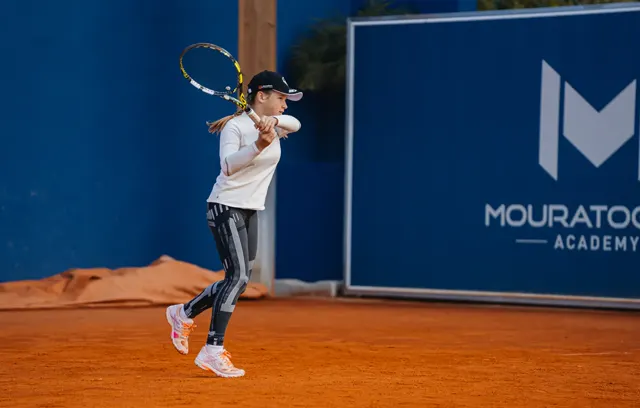
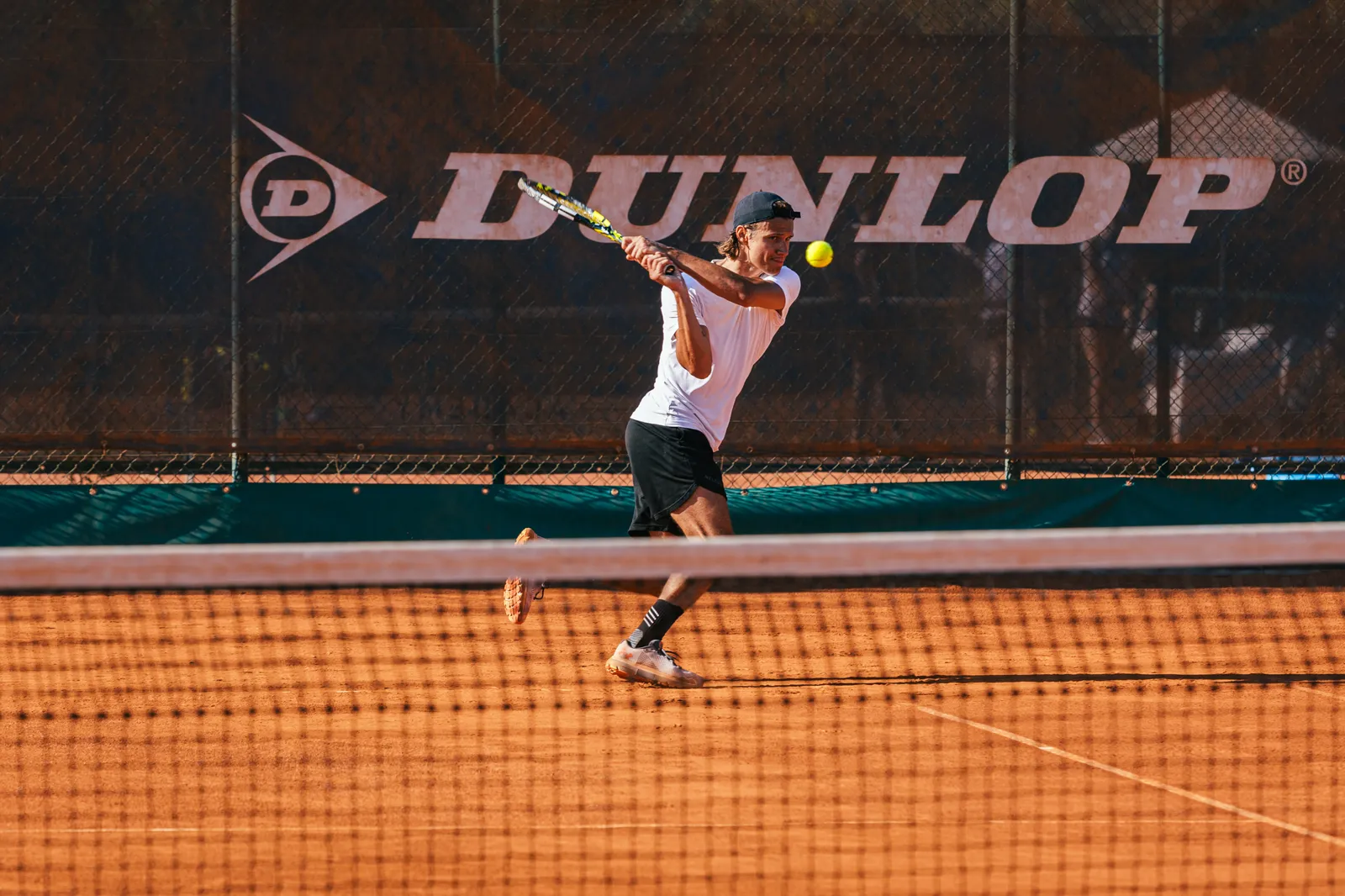
On a two-handed backhand, you follow through with both hands on the racquet, without braking after contact, until the racquet finishes over the opposite shoulder with the strings facing the ground. A full follow-through preserves racquet-head speed, topspin and accuracy, and protects your arm.
Key takeaways
- Never brake: the follow-through extends the acceleration; stopping just after contact costs you power and control.
- Two hands to the end: both hands stay on the handle until the swing is complete.
- Finish position: racquet over the dominant shoulder (the right shoulder for a right-hander), face closed towards the ground, elbows at shoulder height.
- Direction: just after contact, the racquet extends towards the target before wrapping around the body.
- Protection: a blocked swing makes the arm absorb the energy, a source of long-term pain.
What is the follow-through for on a two-handed backhand?
A backhand has three parts: the preparation, the contact point and the follow-through. Contact decides the direction, but the follow-through is what ensures the racquet is travelling at full speed when it meets the ball. The two-handed backhand follow-through is not decoration: it is the natural extension of a successful acceleration.
It does three jobs:
- Keeps the speed: if you plan to stop just after the ball, your body subconsciously slows down before contact.
- Controls the trajectory: a racquet extending towards the target steadies direction and depth.
- Creates topspin: the racquet rising up to the shoulder is what brushes the ball and makes it dip.
Why do so many players cut their swing short?
The biggest follow-through mistake is… not following through. Many players stop the swing before it is finished, usually for one of three reasons:
- Fear of losing control: they think slowing down will keep the ball in. It is the opposite: the stroke becomes inconsistent.
- Not understanding the follow-through’s role, seen as an afterthought.
- Fear of hitting themselves with the racquet as it wraps around the body.
Stopping the swing sharply reduces acceleration, and the arm absorbs all the energy of the shot, which over time can lead to elbow or shoulder pain.
How to follow through on a two-handed backhand, step by step
- After contact, extend towards the target: for a short distance the racquet follows the line of the ball, arms unfolding forward.
- Keep both hands on the handle: this is what gives you control, stability and consistency.
- Let the shoulders turn until they face the net, or beyond; the hips have already led the way.
- Swing up: the racquet travels low to high and wraps over your dominant shoulder.
- Finish balanced: weight on the front leg or centred, head still, then recover straight away for the next shot.
What is the right finish position?
At the end of a two-handed backhand the racquet should be closed: the strings face the ground. The non-dominant hand is turned so that the palm faces down and the knuckles face the sky. The elbows end roughly at shoulder height, with the hands near or above the shoulder.
| Finish | What it produces | Fix |
|---|---|---|
| High, face closed towards the ground | Topspin, a stable and controlled trajectory | This is the reference |
| Face open towards the sky | Accidental backspin or a ball that flies long | Close the top hand at the finish |
| Low, at waist height | Little topspin, a flat ball that ends in the net | Swing up to the shoulder |
| Stopped in front of the body | Lost speed, strain on the arm | Let the swing run without braking |
The finish varies with the ball: more wrapped around the neck on a topspin backhand, longer and further forward on a flat attacking backhand. The principle stays the same: a full, fluid swing without interruption.
An attacking two-handed backhand built on a consistent finish
More powerful and more stable, the two-handed backhand should not be thought of as a defensive shot. Once mastered, it lets you take control of the rally, especially against fast or heavy topspin balls. The key is consistency: the same finish, shot after shot, makes the stroke predictable for you and not for your opponent.
The same logic applies to the forehand: see our article on the forehand follow-through. To automate these finishes at high intensity, our adult camps alternate targeted repetition with match play.
At the Mouratoglou Academy on the French Riviera (Biot, near Nice), our coaches often film the end of the backhand swing: it is the fastest way to see whether the racquet stops short. The work follows the Mouratoglou Method: one correction at a time, tailored to the player. Watch how Novak Djokovic lets his backhand flow after contact, then work on yours at a tennis camp.
 AdultsFull daysAll levelsPerformance Camp AdultA week of intensive tennis, 4 players per coach: technique, match play, physical and mental training.DISCOVER
 Frequently asked questions
Where should the racquet finish on a two-handed backhand?
Over the dominant shoulder (the right shoulder for a right-hander), with the strings facing the ground and both hands still on the handle. The elbows end up roughly at shoulder height.
Should you let go with the top hand at the end of the backhand?
As a rule, no: both hands stay on the racquet until the end of the swing for control and stability. Some players release the top hand after contact on very wide balls, but that is not the basic stroke.
Why does my backhand keep going long?
Often because the finish is too low or the racquet face stays open, so the ball lacks topspin. Swing up to the shoulder and close the face towards the ground.
Can a poor follow-through cause injury?
A swing blocked just after contact makes the arm absorb the energy of the shot, which over time can cause elbow or shoulder pain. A full follow-through spreads the effort across the whole body.
How long does it take to fix a two-handed backhand follow-through?
Allow a few weeks of regular repetition before a new follow-through becomes automatic. Work at reduced pace first, with basket feeding, then in rallies, and finally in match situations. A week at our Performance Camp Adult speeds things up considerably thanks to the volume of balls and the coach’s video feedback.