Technique · Backhand
The attacking backhand in tennis: technique and tactics
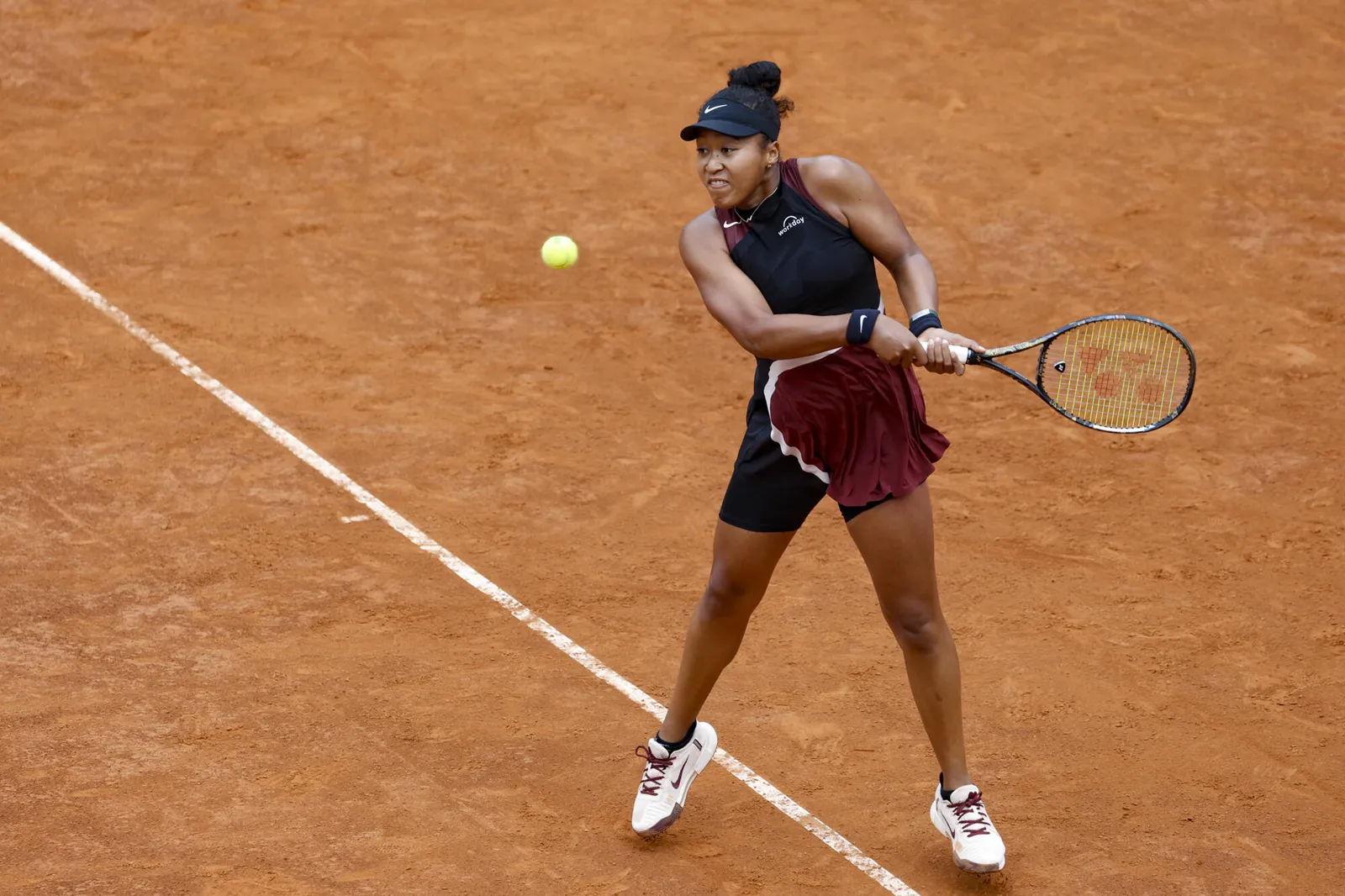
The attacking backhand is an accelerated backhand, taken early and with little margin, to seize the initiative in a rally: on a short ball, a loose high ball or to open up the court. It relies on quick preparation, footwork that takes you into the court and a forward weight transfer, far more than on arm strength.
Key takeaways
- Definition: a backhand hit early, fairly flat, to wrong-foot your opponent or set up a move to the net.
- When to use it: on a short ball, a ball left in the middle or a high ball you can take on the rise.
- The technical key: step into the court and hit in front, with your weight moving forward.
- One or two hands: both backhands can attack; the two-hander is steadier against fast balls.
- Controlled risk: aim for a zone (cross-court or down the line) rather than the line itself.
Why does the backhand feel weaker than the forehand?
For many players the backhand is the “safe” shot: you play it to get the ball back, not to attack. There are several reasons: it uses the dominant hand less naturally, it calls for finer coordination between footwork and arm, and it often gets less practice time. Yet a reliable attacking backhand changes everything: your opponent can no longer get out of trouble just by aiming at your backhand.
Before attacking, the basics must be solid: preparation, contact and follow-through for the two-hander, or the one-handed backhand stroke if that is your backhand.
How to play an attacking backhand, step by step
- Choose the right grip: on a two-hander, the dominant hand in a continental grip and the top hand in an eastern or semi-western forehand grip; on a one-hander, an eastern backhand grip. A grip that is too open stops you covering the ball as you accelerate.
- Prepare quickly: turn your shoulders as soon as you read the short ball, racquet slightly raised then dropped below the ball. A compact backswing is enough, because the ball arrives sooner when you move forward.
- Step into the court: move forward with small steps to take the ball early, at the top of the bounce or on the rise.
- Hit in front: footwork timed with the swing, ball in front of the front hip, wrists relaxed. The body uncoils (legs, hips, shoulders) and the arm extends towards the target.
- Follow through fully: racquet high above the shoulder, then keep moving forward for the next shot, or to the net.
When should you use the attacking backhand?
| Situation | Attacking choice | Goal |
|---|---|---|
| Short ball in the middle | Backhand down the line or deep cross-court | Take the net or wrong-foot |
| High, slow ball | Take it early, flat or with heavy topspin | Take time away from your opponent |
| Opponent pulled wide | Backhand into the open court | Win the point outright |
| Return on a second serve | Step-in return, flat | Take control from the first shot |
| Fast ball under pressure | Counter-attack by blocking and redirecting | Turn the rally around |
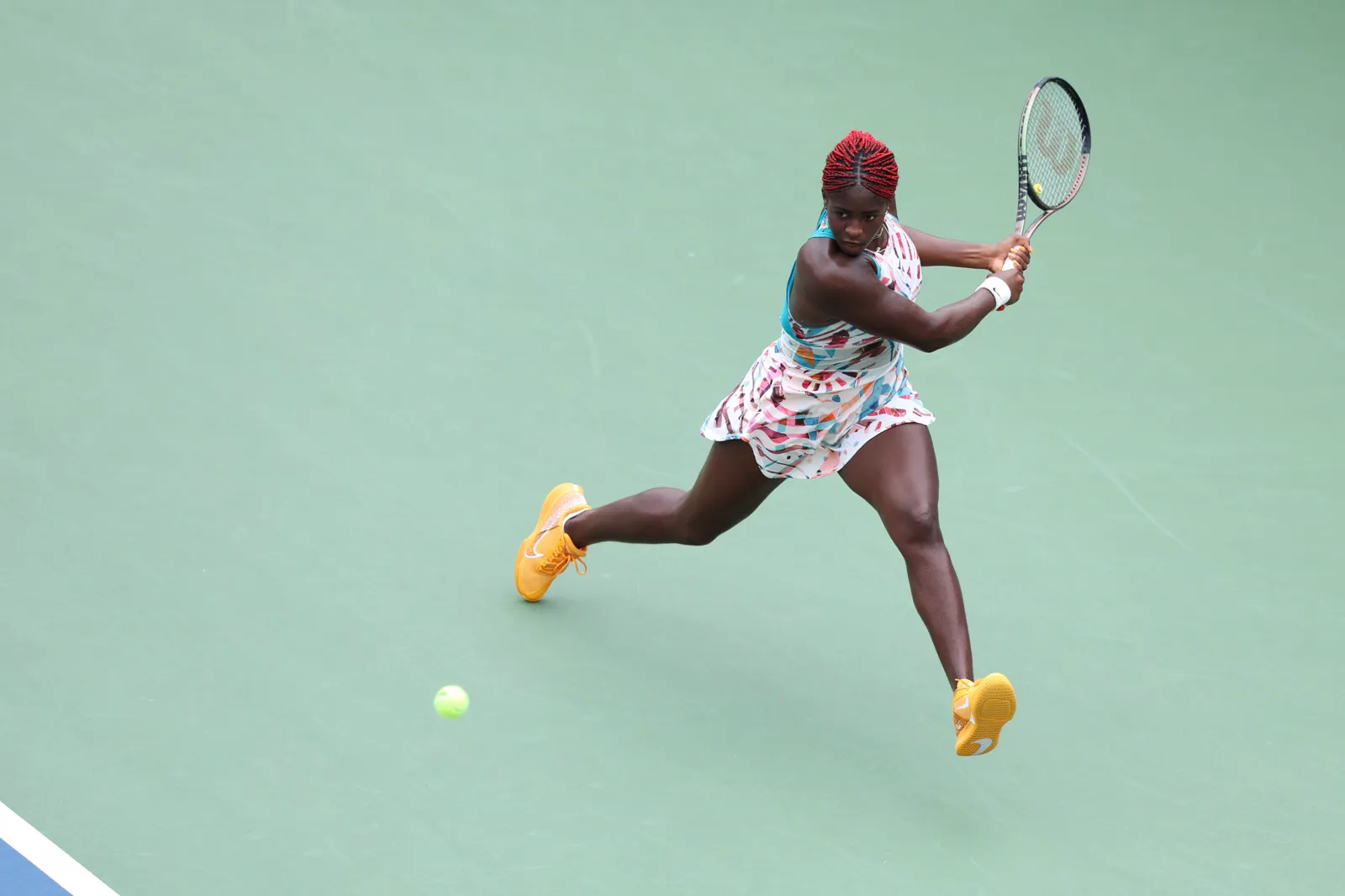
The backhand down the line is the attacking shot par excellence: it changes the direction of the rally and opens the cross-court. To fit it into your baseline game plan, see our guide to baseline tactics.
How do you train your attacking backhand?
- Short-ball sequences: a partner alternates a deep ball (you defend) and a short ball (you step in and attack down the line).
- Targets: place cones in both back corners and count your hits out of 10 attacks.
- Attack + volley: attack with the backhand, move in and finish with a volley. Net play is covered in our article on volley technique.
- Work with a coach: an outside eye quickly fixes a grip or position that is holding back your attack.
The forehand follows the same attacking logic: see also our article on the attacking forehand.
The mistakes that ruin an attacking backhand
- Attacking a ball that is too deep: from behind the baseline, an attack becomes a gamble. Wait for the short ball.
- Staying put: hitting a short ball without moving forward gives your opponent time to recover.
- Aiming for the line: aim a metre inside it and let the pace do the rest.
- Cutting the follow-through short for fear of missing: the ball loses pace and topspin.
- Forgetting the next shot: after an attack, move forward to finish the point.
In competition, these habits are built in match situations: that is the purpose of the Tournament Camp Junior for young competitors.
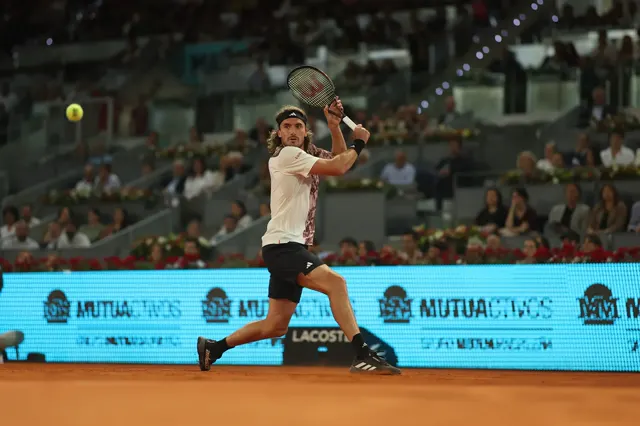
At the Mouratoglou Academy on the French Riviera (Biot, near Nice), the attacking backhand is trained to suit each player, one- or two-handed: the Mouratoglou Method starts from your strengths. Stefanos Tsitsipas, who developed at the academy, shows that a one-handed backhand can also be a weapon. See also two-handed backhand contact and the one-handed backhand. More about our camps.
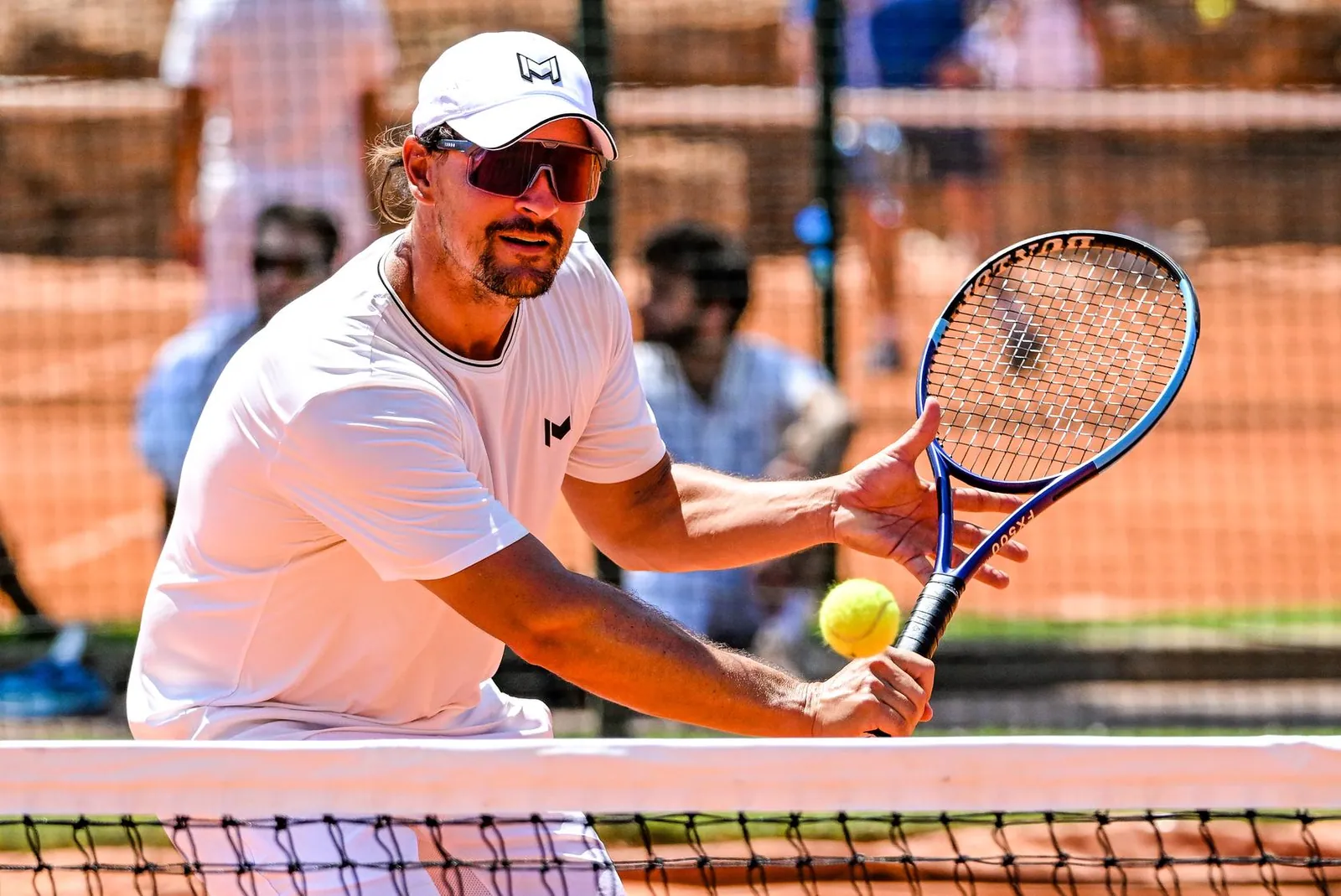 AdultsFull daysAll levelsPerformance Camp AdultA week of intensive tennis, 4 players per coach: technique, match play, physical and mental training.DISCOVER
 Frequently asked questions
How can I make my backhand more aggressive?
Take the ball earlier by stepping into the court, keep the preparation compact and transfer your weight forward as you hit. An attacking backhand is not necessarily harder, it is mainly taken earlier.
Should I attack down the line or cross-court?
Cross-court gives you more margin, as the court is longer and the net lower in the middle. Down the line surprises and opens the court but is riskier; keep it for short, central balls.
How should I practise my backhand?
With repetition drills from different areas of the court, varying ball height and pace, then with match situations. Working with a coach helps you quickly correct grip, timing and positioning.
Can a one-handed backhand be an attacking shot?
Yes. Well prepared, it produces great accelerations, especially down the line. It remains trickier on high balls, where the two-handed backhand is steadier.
How long does it take to make your backhand more aggressive?
Allow a few weeks of regular practice to feel the difference in rallies, and longer before you dare attack with it in matches. The key is repeating the same situation: short ball to the backhand, step in, hit to a target. An intensive week on the Performance Camp Adult speeds this stage up considerably thanks to the volume of balls.