Technique · Backhand
Preparing the one-handed backhand: technique and drills
The one-handed backhand has to be prepared earlier than any other stroke: a grip change to the eastern backhand, a full shoulder turn and the racquet taken back with the free hand on the throat. Because a single arm carries the racquet, power depends almost entirely on this preparation and on your footwork.
Key takeaways
- The one-handed backhand needs an earlier and fuller preparation than the two-handed backhand.
- The grip: eastern backhand (about a quarter turn from the forehand grip) for drive and topspin, continental for the slice.
- The free hand takes the racquet back by the throat; it helps turn the shoulders and change grip.
- Back almost to the net: the shoulder turn is bigger than on a two-hander.
- Set-up: preferably a closed stance, front foot towards the ball, at a good distance.
Why is preparation so important on the one-handed backhand?
The one-handed backhand is known for its elegance and variety: topspin, slice, passing shots, approaching the net. But with only one arm on the racquet, it forgives lateness less than a two-handed backhand. Preparation therefore starts well before contact, as soon as you read your opponent’s ball.
- Anticipation: read the direction and height of the ball as your opponent strikes it, so you can start preparing straight away.
- Distance: neither too close nor too far. On a one-hander the arm is almost straight at contact, so you need room.
- Balance: a one-handed backhand hit off balance loses its power immediately.
This article covers preparation. Contact and the finish are detailed in our guide to hitting the one-handed backhand.
Which grip for a one-handed backhand?
| Grip | Landmark | Used for |
|---|---|---|
| Eastern backhand | Base of the index finger on the top bevel | The reference for drive and topspin |
| Continental (hammer) | Base of the index finger on the upper angled bevel | Slice, volley, low balls; less topspin |
| Semi-western backhand | Hand turned even further over the top | Heavy topspin, high balls; needs a strong wrist |
To move from a forehand grip to an eastern backhand grip, turn your hand about a quarter turn to the left (for a right-hander). The free hand makes the change easy: it holds the racquet by the throat while the dominant hand rotates on the handle. For the slice, see our guide to the continental grip.
The key stages of preparation, step by step
- Split step as your opponent hits, then read the ball coming to your backhand.
- Grip change with the help of the free hand, placed on the throat of the racquet.
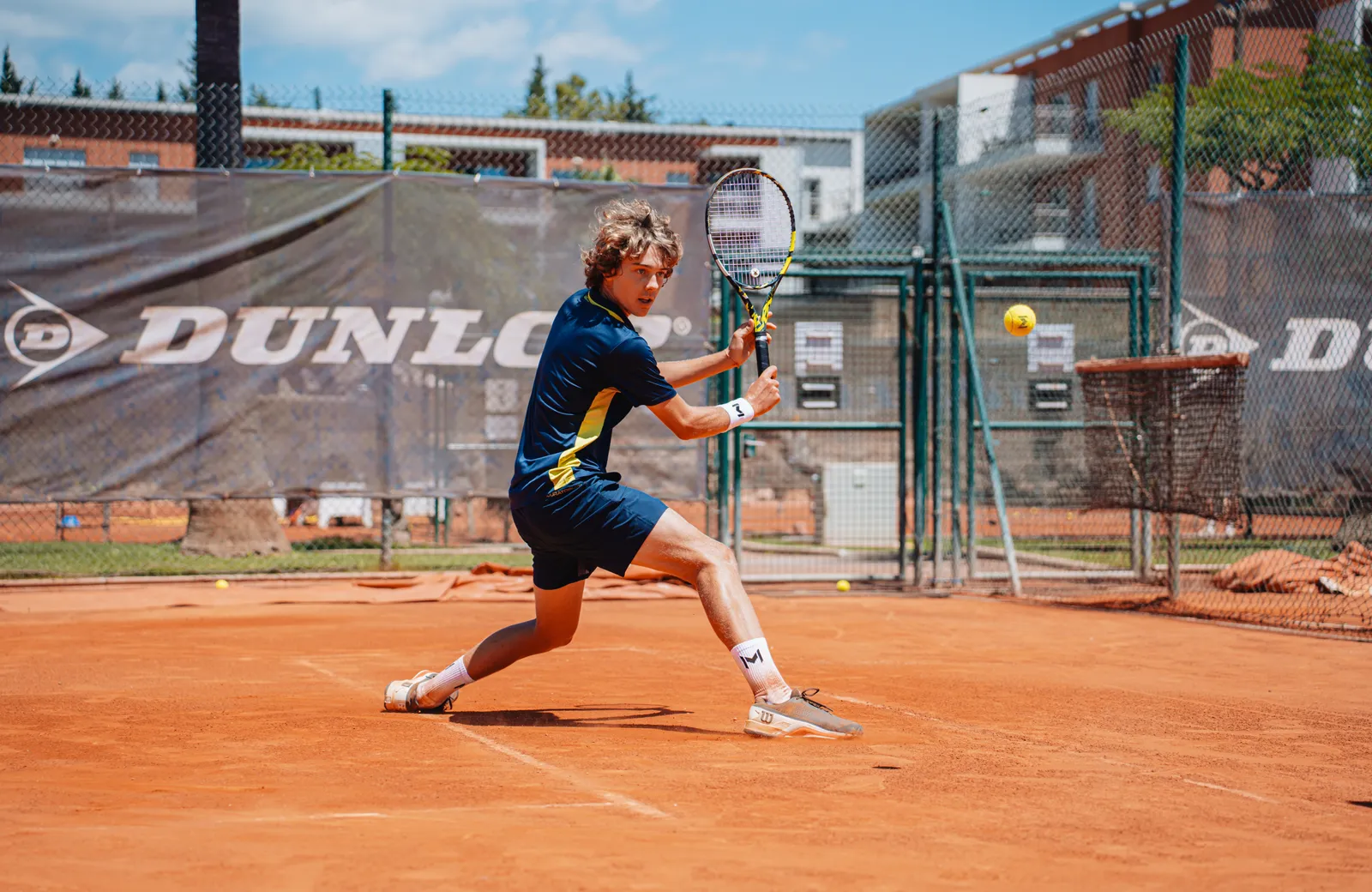
- Shoulder turn: turn until your back is almost facing the net, chin over the front shoulder. The free hand takes the racquet back with the trunk.
- Movement in small steps, then plant the front foot (the right foot for a right-hander) towards the ball, in a closed stance.
- Backswing: racquet head high at the start, then dropping below the ball for topspin; the elbow of the hitting arm close to the body.
- Knee bend, with your weight on the back leg, ready to transfer forward as you swing.
Three drills to improve your backhand preparation
Drill 1: shoulder rotation
Without a ball, hold the racquet behind your shoulders with both hands. From the ready position, turn your trunk until your front shoulder points at the net, then come back. 3 sets of 10 slow rotations, keeping your head still.
Drill 2: anticipation and footwork
A partner or coach feeds balls alternately short and deep to your backhand. Your only goal: complete the preparation (shoulders turned, front foot planted) before the bounce. Do not look for power yet.
Drill 3: preparation and full swing in slow motion
Hit backhands at reduced speed, pausing at the end of the preparation, then swing through to a high finish. This drill links preparation to contact and builds fluidity.
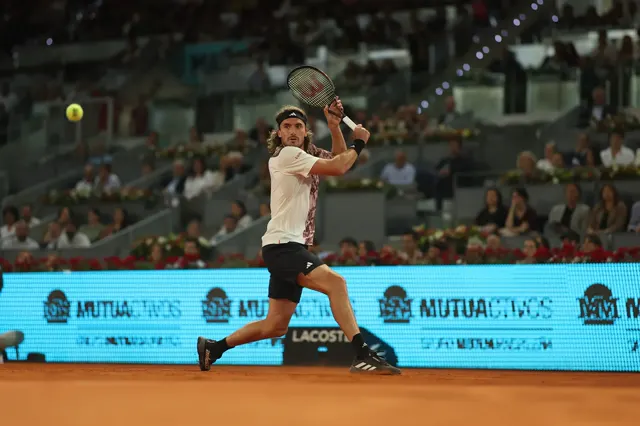
To picture a complete preparation, watch Stefanos Tsitsipas, who turns his shoulders fully and keeps his free hand on the throat until the last moment. In the Mouratoglou Method, these drills are then adapted to your build and timing. Our tennis camps at the Mouratoglou Academy on the French Riviera (Biot, near Nice) let you repeat them with a coach; see also our guide on improving your technique.
Preparation mistakes to avoid
- Preparing too late: with one hand you cannot make up the delay with your arm. Start turning as soon as you read the ball.
- Letting go with the free hand too early: the shoulders stop turning and the stroke becomes all arm.
- Lacking fluidity: a jerky preparation breaks the rhythm. Aim for one continuous movement from backswing to contact.
- Forgetting the legs: the one-handed backhand is not just about the arm. Without knee bend and weight transfer the ball lacks depth.
- Using an open stance on a neutral ball: on a one-hander, a closed stance allows a fuller rotation.
To then turn this stroke into a weapon, see our article on the attacking backhand.
 AdultsFull daysAll levelsPerformance Camp AdultA week of intensive tennis, 4 players per coach: technique, match play, physical and mental training.DISCOVER
 Frequently asked questions
One-handed or two-handed backhand: which should I choose?
The two-handed backhand is more stable and easier to learn, especially for children. The one-handed backhand offers more reach and variety (slice, passing shots, approaching the net), but needs an earlier preparation and more strength.
Which grip should I use for a one-handed backhand?
The eastern backhand grip is the reference: from a forehand grip, turn your hand about a quarter turn. For the slice, use the continental grip.
What does the free hand do on a one-handed backhand?
It holds the racquet by the throat during preparation, helps with the grip change and ensures the shoulders turn. It releases as the forward swing begins and moves back to balance the body.
Can you learn a one-handed backhand as an adult?
Yes. It takes a little longer than a two-handed backhand, but regular work on preparation, footwork and timing makes it reliable.
How long does it take to fix your backhand preparation?
Allow several weeks of regular practice for a new preparation to become automatic, and longer for it to hold up under match pressure. Start with slow, easy balls, then gradually increase pace and variety. An intensive camp such as the Performance Camp Adult at the Mouratoglou Academy speeds things up thanks to daily repetition.