Technique · Backhand
Two-handed backhand: preparing the stroke
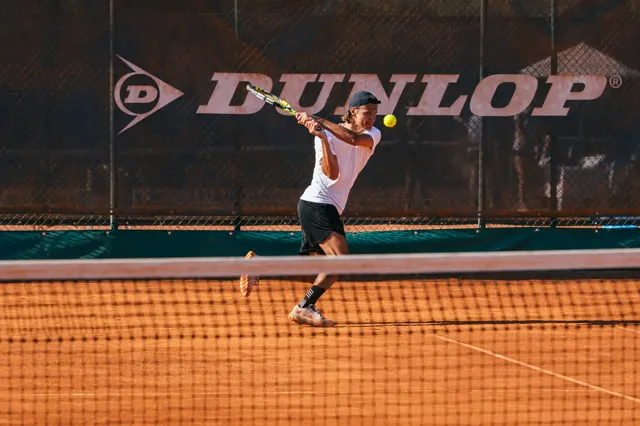
The two-handed backhand starts the moment the ball leaves your opponent’s strings: both hands on the grip, shoulders turned, racquet back and feet set. An early, compact preparation is half the shot: it gives you time to hit in front, using your legs and trunk rather than your arms.
Key takeaways
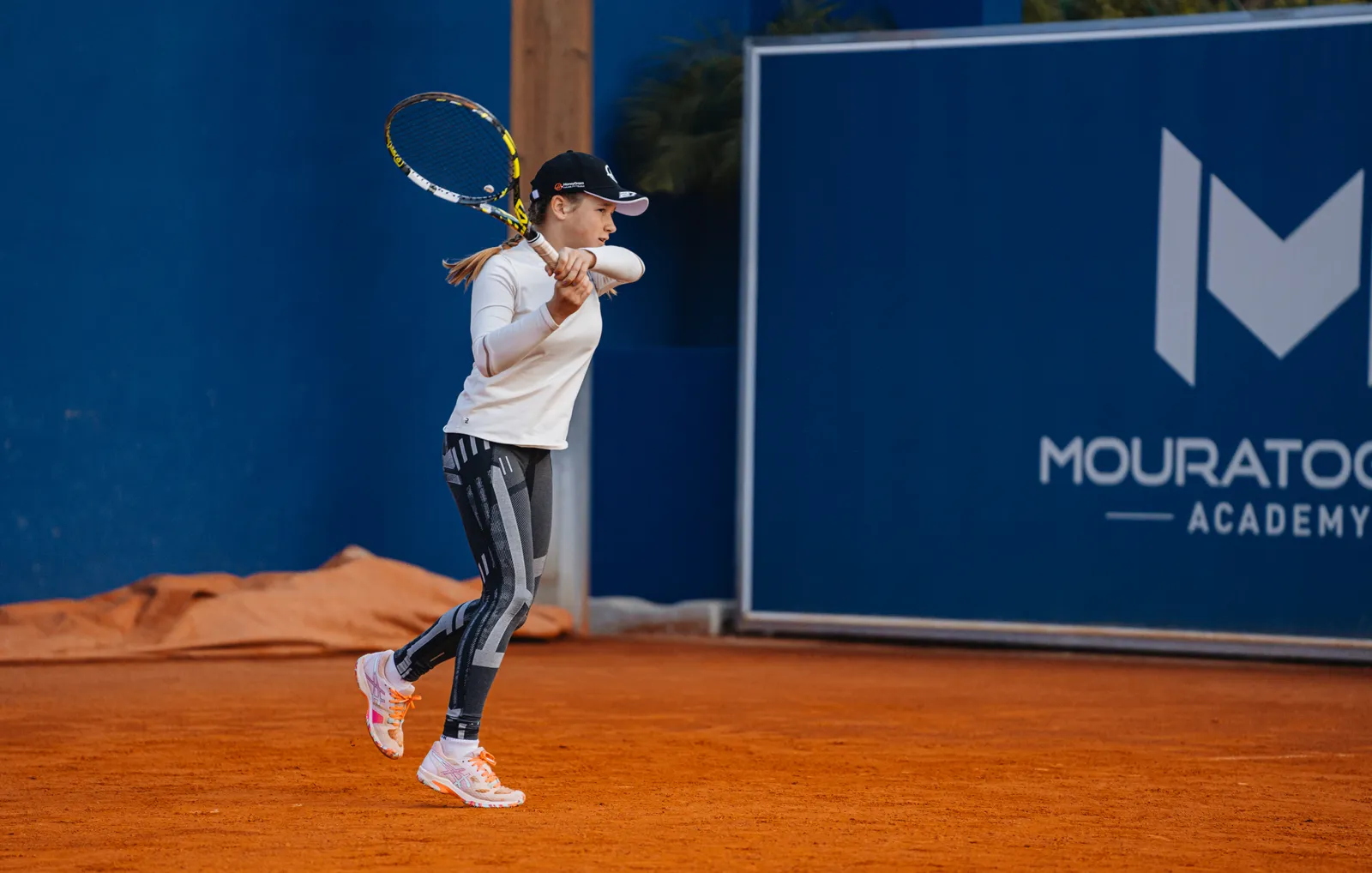
- Three phases: the two-handed backhand breaks down into preparation, contact and follow-through. This article covers the first one.
- The grip: dominant hand in a continental (or eastern backhand) grip at the bottom of the handle, other hand in an eastern forehand grip just above.
- The trigger: turn your shoulders as soon as you read the ball coming to your backhand, before you even start moving.
- The timing: the racquet should be back before the ball bounces, not as it arrives.
- Mistake no. 1: preparing with the arms only, with no trunk rotation, which makes you hit late.
Why does preparation make or break the two-handed backhand?
In tennis, the two-handed backhand is often the stroke beginners pick up fastest: both hands steady the racquet and the trunk supplies most of the power. But that stability comes at a cost: with two hands on the handle, your reach is shorter than with one. You need to be well positioned and ready earlier.
Like the forehand, the backhand has three stages: preparation, contact and follow-through. Preparation shapes the other two: if the racquet is late, you end up hitting behind you and off balance. Contact is covered in our guide to hitting the two-handed backhand, and the end of the swing in our article on the two-handed backhand follow-through.
The three types of two-handed backhand
| Backhand | Preparation | Used for |
|---|---|---|
| Classic (drive) | Short loop, vertical racquet face | The beginner’s base, maximum control |
| Topspin | Racquet head below the ball | Baseline rallies, margin over the net |
| Slice | Racquet high, above the ball | Defence and variety; often played one-handed |
How do you hold the racquet for a two-handed backhand?
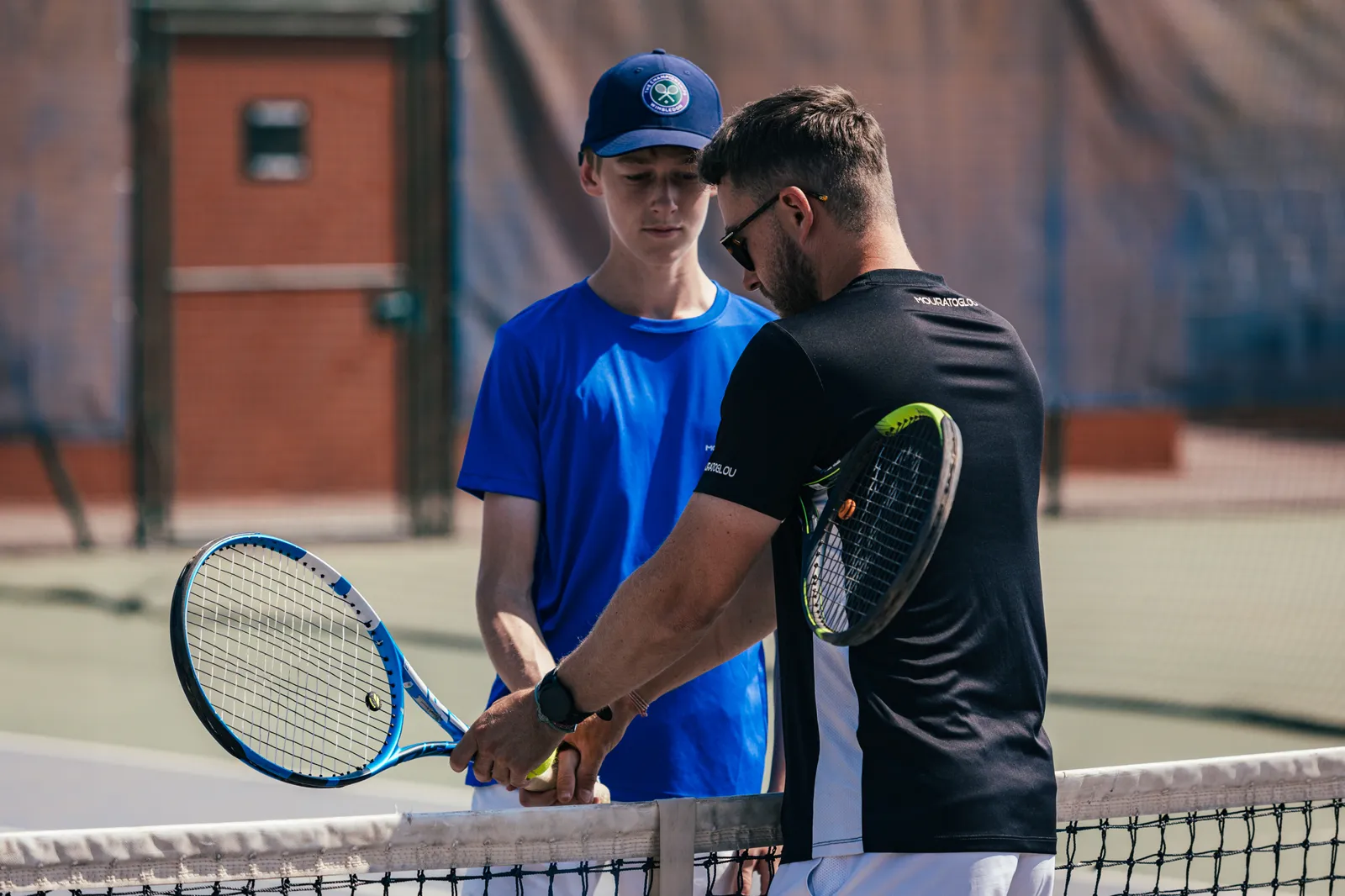
The most common grip combines two complementary hand positions. For a right-hander:
- Right hand (bottom of the handle): hammer grip, also known as the continental grip. This is the control hand; some players turn it slightly towards an eastern backhand grip for extra stability.
- Left hand (above, touching the right hand): eastern forehand grip, or even semi-western. This hand drives the ball and supplies the power: a two-handed backhand is essentially a left-handed forehand.
- Hands together: leave no gap between them, or they will work against each other.
Step by step: from the ready position to the backswing
- Ready position: feet shoulder-width apart, knees bent, weight on the balls of your feet, racquet in front held with both hands.
- Split step: a small hop as your opponent strikes the ball, so you can push off in either direction.
- Shoulder turn: as soon as the ball heads to your backhand, turn your shoulders until your back is almost facing the net. The racquet goes back with the trunk; the arms do not work on their own.
- Movement and set-up: reach the ball with small steps, then plant your front foot (right foot for a right-hander in a closed stance, or both feet in an open stance on a fast ball).
- Backswing: racquet back before the bounce, racquet head level with or below the contact height to hit topspin, elbows relaxed and close to the body.
- Load: bend your legs to get the racquet under the ball; the upward drive at contact comes from this knee bend.
Preparing for more backhand power
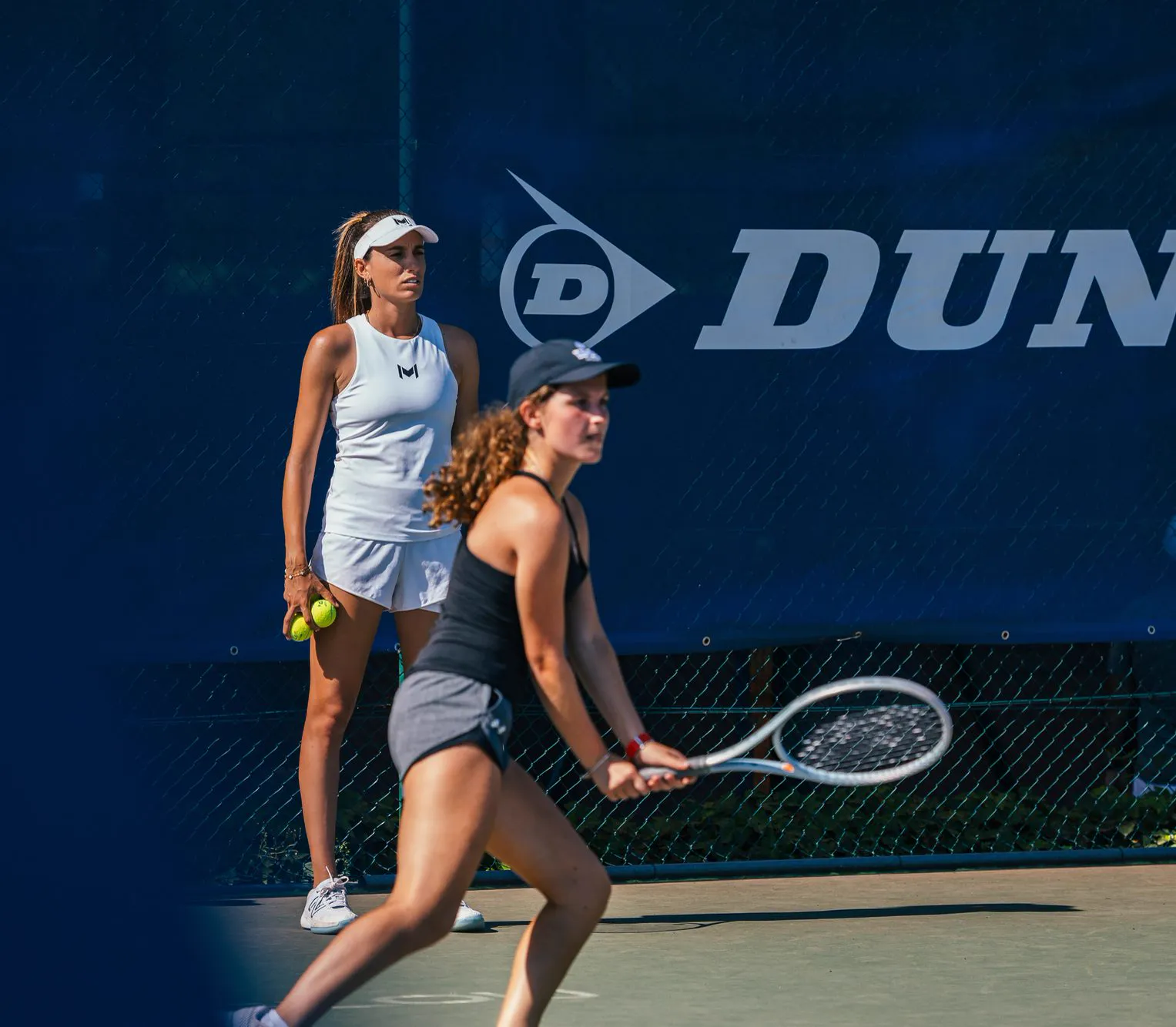
Power on a two-handed backhand does not come from the arms but from the legs – hips – shoulders chain. Preparation is what loads it:
- A real trunk rotation: the more your shoulders turn relative to your hips, the more energy you release at contact.
- Bent legs: pushing up and forward with your legs drives the stroke.
- A compact loop: an oversized backswing wastes time; a small, fluid loop is enough to accelerate.
- Good timing: a racquet ready early lets you meet the ball in front, where your weight transfer is greatest.
The same principles apply to the attacking backhand: to turn this stroke into a weapon, see our article on the attacking backhand.
The most common preparation mistakes
- Preparing too late: the racquet goes back as the ball bounces. Fix it by starting the shoulder turn as soon as you read the direction of the ball.
- Preparing with the arms: the shoulders stay square to the net and only the arms go back. The result: a weightless shot, hit late.
- Standing tall: without bending your knees you cannot get under the ball to hit topspin, especially on low balls.
- Getting too close: with two hands you lack reach, but you also need room. Keep roughly an arm-plus-racquet length from the ball.
- Squeezing the grip: tight hands lock the wrists and slow the racquet head.
 AdultsFull daysAll levelsPerformance Camp AdultA week of intensive tennis, 4 players per coach: technique, match play, physical and mental training.DISCOVER
 Two-handed or one-handed backhand: which should you choose?
The two-handed backhand is steadier against fast and high balls, easier to learn and very effective on the return of serve. Its weak spots are reduced reach and low or sliced balls, which force you to bend a lot. The one-handed backhand offers more reach and variety but demands more strength and timing: its specific preparation is covered in our article on the one-handed backhand.
For children, the two-handed backhand remains the norm when learning: it makes up for a lack of wrist strength. Our coaches work on it from the very first junior camps.
On tour, players such as Daniil Medvedev and Coco Gauff show that a well-prepared two-handed backhand can become a weapon. Which stroke suits you always depends on your profile, as the Mouratoglou Method pillars explain. For the end of the swing, see the forehand follow-through and the work done on our tennis camps on the French Riviera (Biot, near Nice).
Frequently asked questions
What is the right grip for a two-handed backhand?
For a right-hander, the right hand is in a continental (hammer) grip at the bottom of the handle and the left hand in an eastern forehand grip just above. Some players close the right hand slightly towards an eastern backhand grip for more stability.
When should you prepare your backhand?
As soon as you see the ball coming to your backhand, right after your opponent hits it. The aim is to have the racquet back before the ball bounces on your side.
Is the two-handed backhand more powerful than the one-handed backhand?
It is generally easier to generate power with it, because both arms and the trunk rotation work together. A well-mastered one-handed backhand can be just as powerful, but it requires more strength and precision.
How do you play a low ball with a two-handed backhand?
Prepare earlier and bend your legs more to get the racquet under the ball. On very low or sliced balls, a one-handed slice is sometimes the safest option.
How long does it take to fix a two-handed backhand preparation?
A late preparation often improves within a few sessions if you focus on one cue: turn your shoulders as soon as the ball heads to your backhand. It then takes several weeks for the reflex to hold up in matches. On the Performance Camp Junior, the daily hitting volume speeds up this process.