Technique · Backhand
The one-handed backhand stroke: technique and advice
The one-handed backhand stroke is struck well in front of the body, arm extended, with an eastern backhand grip, just as your weight moves onto the front leg. The racquet travels through the ball from low to high, wrist firm but not tense, then finishes high while the free arm moves back to balance the stroke.
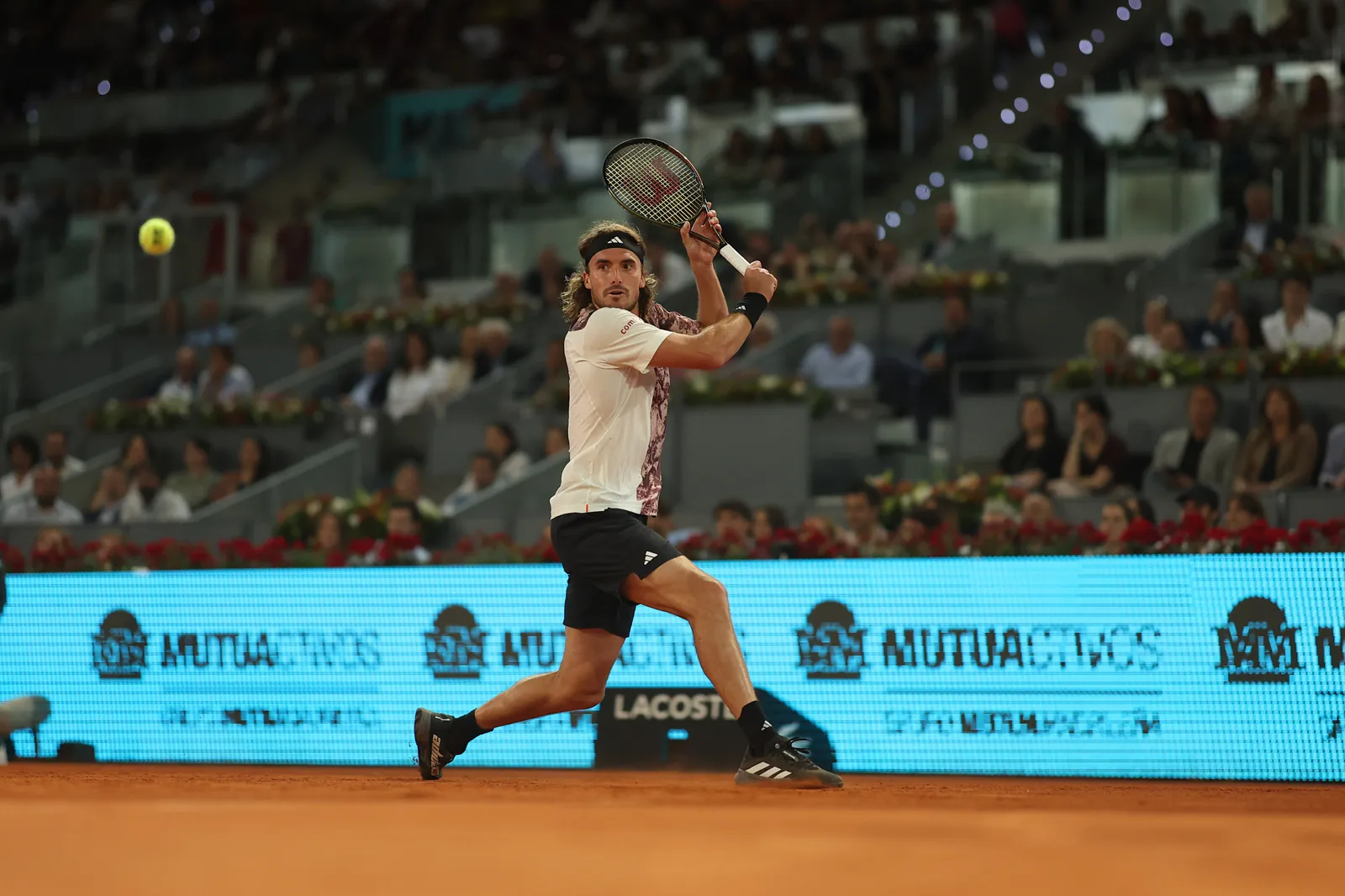
Key takeaways
- Contact point: further forward than on a two-hander, in front of the front foot, hitting arm extended.
- Grip: eastern backhand to drive and hit topspin; continental to slice.
- Power: comes from weight transfer and body rotation, not a flick of the wrist.
- Free arm: moves back at contact, like a counterweight, to keep the shoulders side-on.
- Finish: racquet high, above the shoulder, then a quick recovery to the ready position.
Why choose a one-handed backhand?
The one-handed backhand is valued for its freedom of movement, its reach and how easily it links with a slice, a volley or a move to the net. Players such as Roger Federer, Stan Wawrinka, Dominic Thiem, Grigor Dimitrov and Stefanos Tsitsipas have made it a weapon. It is less common than the two-hander on the professional tours today, especially among women, because it demands more strength and timing.
The stroke itself is the second phase, after an early and full one-handed backhand preparation. If you are torn between one and two hands, compare with hitting the two-handed backhand.
Which grip for hitting a one-handed backhand?
| Grip | Strengths | Limits |
|---|---|---|
| Eastern backhand | Lines up hand and forearm; stability, power and topspin | Less suited to very high balls |
| Continental (hammer) | Ideal for slice, volleys and low balls | Little topspin, needs a firm wrist |
| Semi-western backhand | Plenty of topspin, effective on high balls | Contact far in front, demanding on the wrist |
The eastern backhand grip is the most common: from a forehand grip, turn your hand about a quarter turn. Some experienced players extend the thumb along the back of the handle for extra stability. The slice is played with the hammer grip.
How to strike the ball: the moment of contact
- Shift your weight forward: from the bent back leg, drive onto the front leg as the racquet accelerates.
- Uncoil: the hips then the shoulders turn towards the net, but less than on a two-hander; the shoulders stay almost side-on at contact.
- Hit in front: take the ball in front of the front foot, hitting arm extended, between waist and chest height.
- Vertical face: the racquet comes from below the ball and swings up through it for topspin, or flatter to drive it.
- Free arm back: the free hand leaves the racquet and moves the opposite way, like a counterweight that steadies the shoulders.
The follow-through and finish
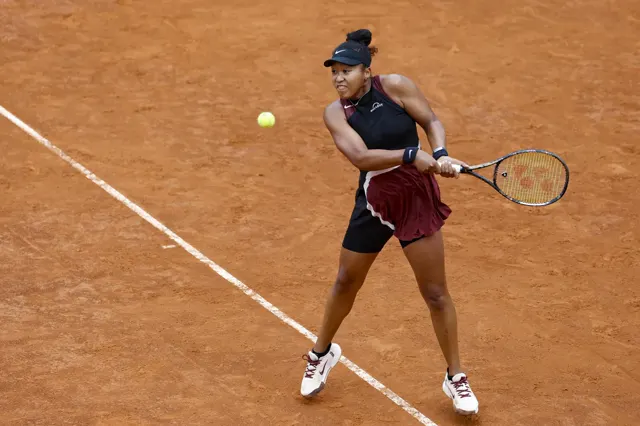
The follow-through matters as much as contact: it keeps the movement continuous and the shot accurate. After contact, the racquet continues towards the target then rises above the dominant shoulder, arm straight or slightly bent. The shoulders stay side-on for longer than on a two-handed backhand.
- Topspin backhand: high finish, racquet above the head or shoulder.
- Flat backhand: longer finish forward, along the line of the ball.
- Slice: the racquet finishes in front of the body at shoulder height, face open.
Once the ball has gone, recover quickly to the ready position with small adjustment steps, at the baseline or towards the net depending on the situation.
Tips to improve your one-handed backhand
- Practise at reduced speed: a clean stroke at 60% pace is worth more than a forced one.
- Work on high balls: the classic weak spot of the one-hander. Move back to take them on the way down, or step in to take them early.
- Add the slice: mastering the slice gives you a defensive option on awkward balls.
- Strengthen shoulder and forearm: suitable physical work protects the arm and steadies contact.
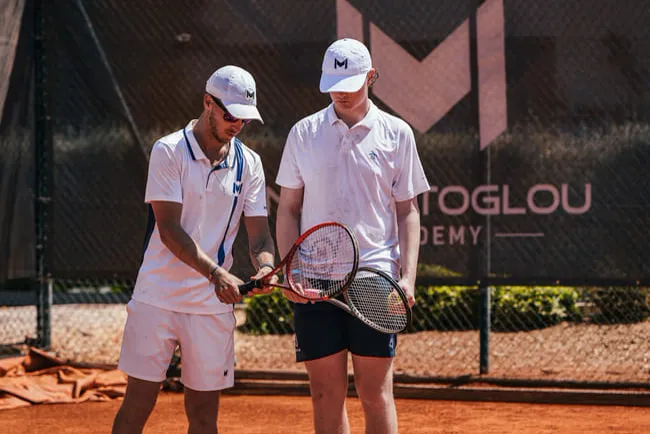
To use this stroke offensively, see our article on the attacking backhand. At camp, our coaches film and correct your stroke: discover the Performance Camp Adult.
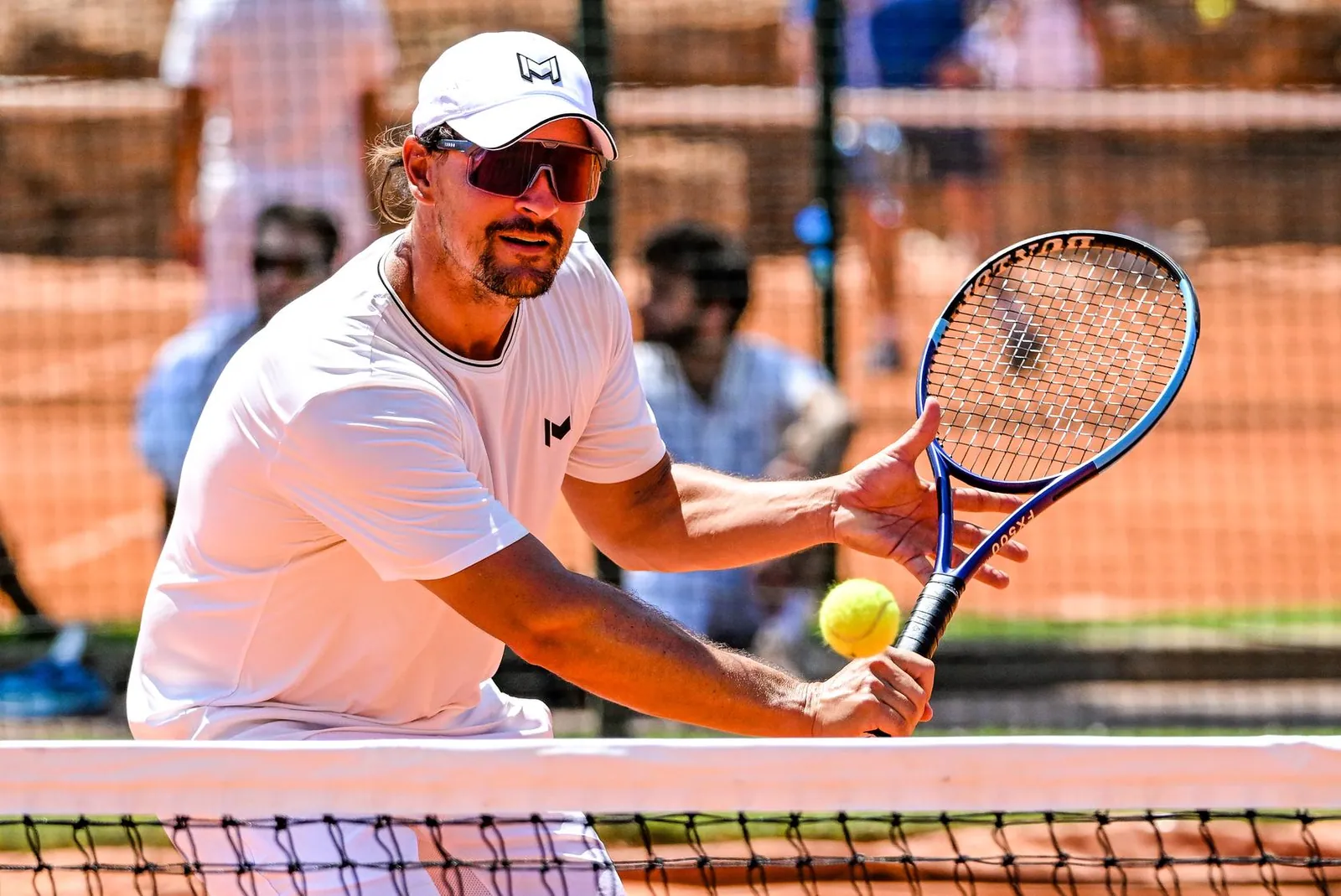 AdultsFull daysAll levelsPerformance Camp AdultA week of intensive tennis, 4 players per coach: technique, match play, physical and mental training.DISCOVER
 Which players should you watch to improve your one-handed backhand?
Watching the best one-handed backhands helps you understand the rhythm of the stroke. Stefanos Tsitsipas, who trained partly at the Mouratoglou Academy, shows a full preparation and an arm released forward. Stan Wawrinka shows power drawn from the legs and rotation, and Grigor Dimitrov shows variety, from topspin to slice. Watch their footwork and front shoulder before contact rather than their finish.
Copying a model is not enough: the Mouratoglou Method adapts the stroke to each player’s build and game. Our tennis camps at the Mouratoglou Academy let you work on this shot with coaches used to one-handed players. To structure your sessions, see our guide on improving your technique.
Frequently asked questions
How do you hit a one-handed backhand?
Prepare early by turning your shoulders, shift your weight from back leg to front leg, hit the ball in front of the front foot with the arm extended, then finish with the racquet high. The free arm moves back at contact to balance the stroke.
Which players have a one-handed backhand?
Among the best known: Roger Federer, Stan Wawrinka, Dominic Thiem, Grigor Dimitrov, Stefanos Tsitsipas and Lorenzo Musetti. Among women, the one-handed backhand is much rarer on the professional tour.
Why has the one-handed backhand become rarer?
It requires more strength, timing and preparation time, which makes it harder against the fast, high balls of modern tennis. The two-handed backhand is also easier for children to learn.
How do you play a high ball with a one-handed backhand?
Two options: move back to let the ball drop to chest height, or step in to take it early, before it rises. A more closed grip helps when hitting above the shoulder.
How do you add power to a one-handed backhand?
Power comes from the legs and rotation, not the arm. Prepare early with the shoulders well turned, drive off the front leg as you hit and let a relaxed arm unwind, keeping the shoulder closed until contact. Hitting the ball in front of your body is essential. On the Performance Camp Adult, coaches film the stroke to spot where energy is lost.