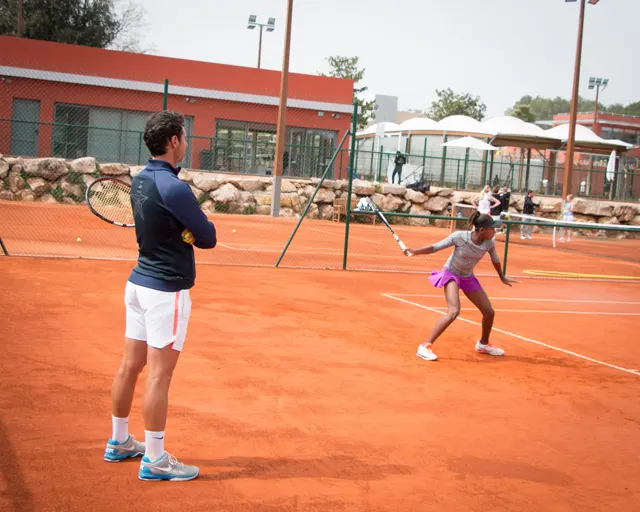
Technique · Return
Return of serve technique: how to improve your return
A good return of serve relies on four technical points: a low ready position, a split-step as the server strikes the ball, a shoulder turn with a short backswing, and contact in front of the body while moving forwards. The faster the serve, the shorter the swing: you use the pace of the ball rather than your own.

Key takeaways
- The split-step happens as the server hits the ball: you land balanced, ready to move either way.
- Short backswing: against a fast serve, a simple shoulder turn is enough; a full swing arrives too late.
- Hit in front, with your weight going forwards, rather than backing off and absorbing the ball.
- Adapt to the spin: step in on a kick, follow the curve of a slice, block a flat serve.
- Consistency first: a deep return through the middle beats a winner attempted once in five tries.
Why is return of serve technique so important?
The return is the second most-played shot in a match, right after the serve. A good return neutralises the server’s advantage and sometimes lets you take control of the rally from the second shot. A weak return, on the other hand, gives the server free points and constant pressure on your return games.
This article is about hitting technique: posture, timing, swing. Choosing targets and patterns depending on the opponent’s serve is covered in our article on return of serve tactics.
Where should you stand and how should you wait for the serve?
Stand on the bisector of the server’s possible angles, halfway between the serve down the T and the serve out wide. How far behind the baseline depends on the serve and your style:
- Fast serve: one or two steps behind the baseline, to buy a little time.
- Second or slow serve: on the line, or even inside it, to take the ball early and attack.
- Heavy kick serve: either step in to take the ball before it climbs too high, or move well back; avoid the halfway house.
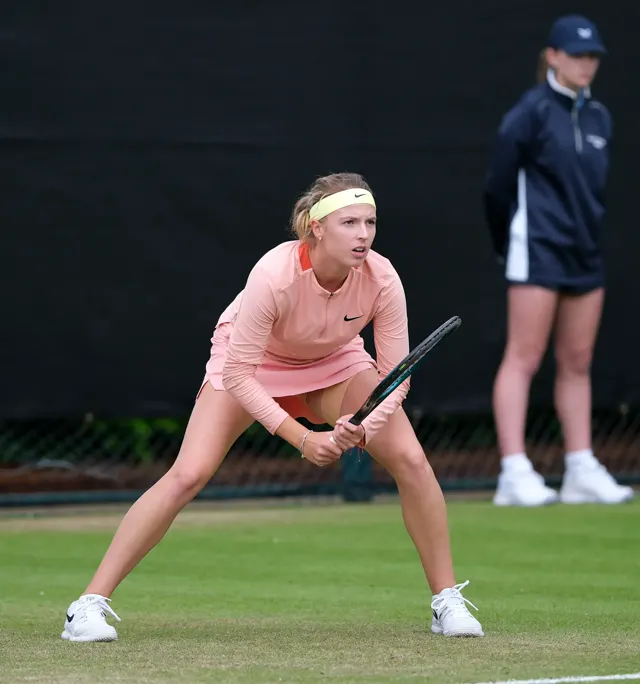
The ready position: feet slightly wider than shoulder-width, knees bent, upper body leaning slightly forwards, racquet in front held with both hands, weight on the balls of the feet.

The return stroke, step by step
- Take a small step forwards during the server’s toss, so you are already moving.
- Split-step: a small hop as the server strikes the ball; you land on the balls of your feet, balanced, just as you read the direction.
- Turn your shoulders immediately towards the ball: that is your preparation. Against a fast serve, the racquet goes no further back than the rear shoulder.
- Step into the ball with your front leg (left leg on the forehand for a right-hander, if you have time) to make contact in front of the body.
- Keep the racquet face stable at contact and the head still: on a fast serve you block and follow through rather than swing.
- Finish towards the target and recover straight away: the next ball comes quickly.
The split-step and the adjustments that follow are part of baseline footwork. If the ball is wide, a crossover step helps you cover the distance faster.
How do you return a kick, slice or flat serve?
| Serve | What it does | Return technique |
|---|---|---|
| Kick | High bounce, often to the backhand | Step in to take the ball on the rise, before it gets above the shoulder; slightly closed face |
| Slice | Swings away and stays low | Read the curve and move early; knees bent, hit back into the court |
| Flat | Fast, true bounce | Very short swing, block using the ball’s pace; aim through the middle |
Against a server who comes in behind the serve, keep the return low, at their feet, to force a difficult volley. Patterns by type of serve are detailed in our article on return tactics.
3 drills to improve your return
1. Returns from a short serve
Your partner serves from the service line (or just inside the baseline). The ball arrives faster than usual, so you have to shorten your swing and time your split-step. Sets of 10 returns, simply aiming for the deep half of the court.
2. Returns against mixed spin
The server alternates kick and slice without warning. You have to read the spin from the toss and the motion, then adjust your position. Goal: 7 returns out of 10 in the court.
3. Returns to targets
Set out two targets: one deep in the middle, one deep cross-court. On first serves, aim for the middle; on second serves, the diagonal. You work on both accuracy and intent.
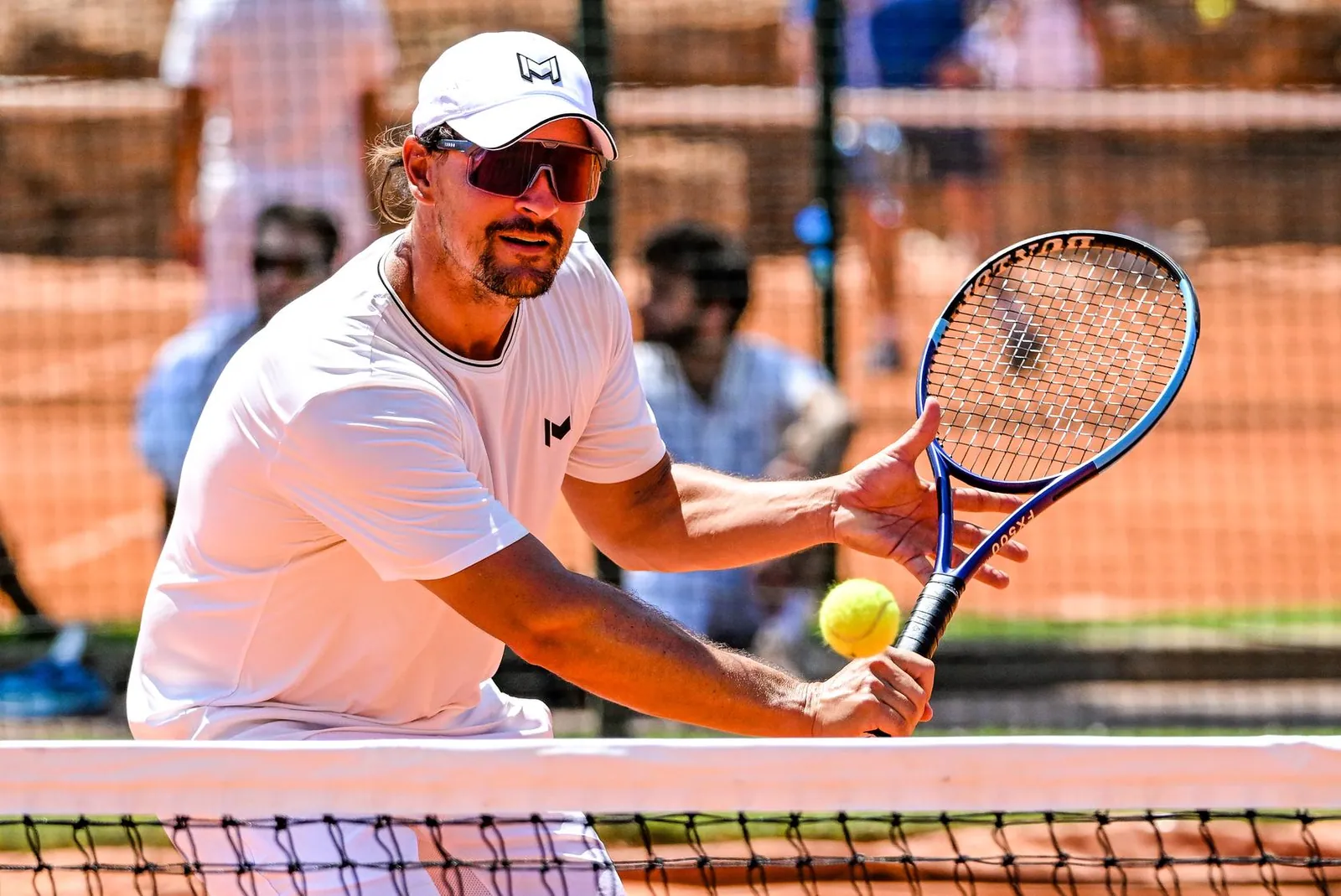 AdultsFull daysAll levelsPerformance Camp AdultA week of intensive tennis, 4 players per coach: technique, match play, physical and mental training.DISCOVER
 Common return of serve mistakes
- Staying flat-footed: without a split-step you are always late.
- Taking the racquet back too far: a full baseline swing does not work against a fast serve.
- Backing off as you hit: you lose your body weight and the ball lands short.
- Going for a winner on every return: unforced errors pile up; look for consistency and depth first.
- Losing focus between points: a short routine (breathe, set up, watch the server) keeps you ready.
At our camps, the return is practised against real serves, with a coach correcting your timing live: that is the case in our Performance camps for adults and juniors.
At the Mouratoglou Academy on the French Riviera (Biot, near Nice), the return is trained against real servers, not just a ball basket. The Mouratoglou Method adapts the return position to each player’s profile: some gain by standing very deep, like Daniil Medvedev, others by taking the ball early. Complete this with our article on return of serve tactics and baseline footwork. More about our camps.
Frequently asked questions
How do you return a very fast serve?
Step back one or two paces, split-step as the server hits, and shorten your swing to a simple shoulder turn. Block the ball with a stable racquet face, aiming through the middle of the court: you use the server’s pace rather than your own.
When should you split-step on the return?
As the server makes contact with the ball. You are then in the air or landing, and you touch down just as you pick up the direction of the serve, ready to push off the right way.
Should you return with a forehand or a backhand?
It depends on where the serve goes, but many players shade slightly to protect their weaker side. Against a serve into the body, the backhand is often easier, because it lets you hit a ball close to the body.
Can you return with a slice?
Yes. The sliced return (or chip) is very useful against a powerful serve or a ball swinging away from you: the swing is short and the ball stays low. It is less aggressive than a topspin return but far safer in difficult situations.
How can you improve your return of serve quickly?
By hitting lots of returns against a real server, with one simple goal: get the ball back deep and central. Count successful returns out of ten, then add a target. The return is the least practised shot among club players, so it is the one with the biggest payoff. On the Performance Camp Adult, serve-and-return sequences are built into every session.