Technique · Beginners
Tennis for beginners: the fundamentals to master
Starting tennis is first about learning to control the ball before trying to hit hard. A good grip, an early preparation, a contact point in front of you and active feet: these four fundamentals are enough to start rallying quickly and enjoy the game. Here is the learning order our coaches follow with beginners, adults and children alike.
Key takeaways
- Start small: mini-tennis and slower balls to learn control.
- Four fundamentals: grip, preparation, contact point in front, footwork.
- The serve is learned simply, with a shortened motion before the full one.
- Suitable equipment (racquet, balls, shoes) prevents injury and speeds up progress.
- Short, regular sessions beat one long session a month.
Where to start when you are new to tennis
The most common beginner mistake is to play straight away from the baseline, with regular balls, trying to hit hard. The ball moves fast, rallies last two shots and frustration sets in. Coaches work the other way round: start close to the net, on a smaller court, with slower balls, then move back gradually.
For equipment, a light racquet (about 270 to 285 g for an adult) and a grip size that fits your hand are enough. Our detailed advice on choosing a racquet helps you avoid the classic mistakes. Add proper tennis shoes, which protect your ankles when you move sideways.
The 4 fundamentals to master
1. The grip
For the forehand, a semi-western or eastern grip; for the serve and volley, the continental grip. A good grip makes the stroke feel natural. A poor one forces you to compensate with the wrist, and bad habits set in quickly.
2. Early preparation
As soon as the ball leaves your opponent’s racquet, turn your shoulders and take the racquet back. Beginners often prepare too late, then hit in a rush, without control.
3. Contact in front
Hit the ball in front of your body, to the side, ideally at waist height. That contact point gives you both control and power. If the ball reaches your body, you are late.
4. Footwork
Stay on the balls of your feet, do a small balance hop (the split-step) when your opponent hits, then use small steps to get into position. Our guide to baseline footwork explains these movements in detail.
The basic strokes: forehand, backhand, serve, volley
| Stroke | Key point for beginners | Mistake to avoid |
|---|---|---|
| Forehand | Shoulders side-on, low-to-high swing | Hitting with the arm only |
| Backhand | Two hands for stability at first | Preparing too late |
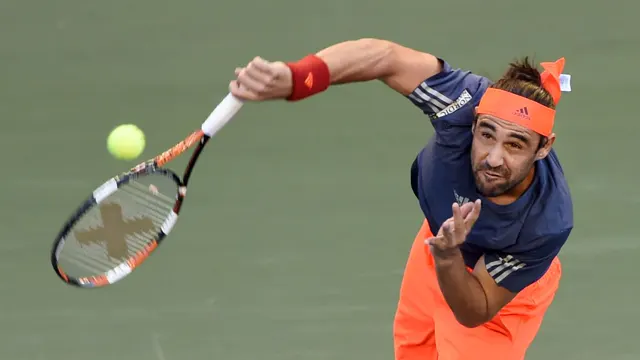
| Serve | Short motion (racquet already behind the back), then full | Tossing the ball anywhere |
| Volley | Short motion, racquet in front | Taking a big baseline swing |
The two-handed backhand is often easier to start with, especially for children and less muscular players. The serve is built in stages: first an overhead motion without a loop, then the full motion. To follow a match and keep score, read our article on how to keep score in tennis.
How to progress fast as a beginner
- Play often: two one-hour sessions a week beat a single three-hour session.
- Aim for consistency: count your rallies; the goal is 10, then 20 balls without a mistake.
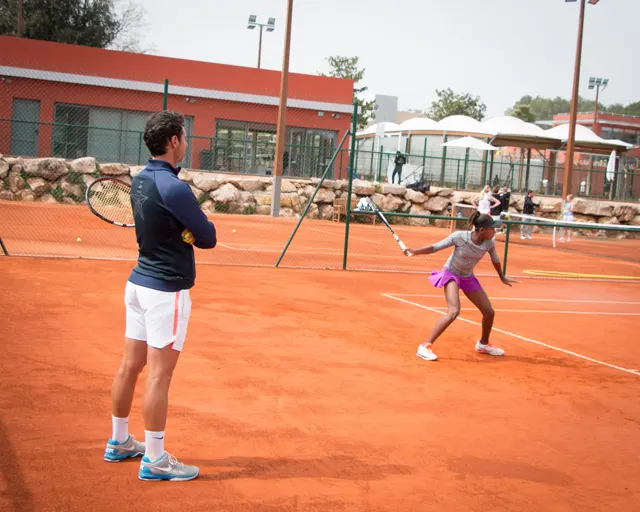
- Take lessons: a coach fixes faults before they become habits.
- Vary your partners: playing different styles teaches you to adapt.
- Play matches early: even at a modest level, matches give meaning to practice.
Classic beginner mistakes
- Trying to hit hard right away instead of looking for consistency.
- Standing still and waiting for the ball.
- Squeezing the racquet as hard as possible: the arm tires and the elbow suffers.
- Watching the opponent instead of the ball at contact.
- Skipping the warm-up, even though tennis loads the shoulders, knees and ankles.
Start or return to tennis at camp on the French Riviera
A camp speeds up learning enormously: several hours of play a day, groups of the same level and a coach who corrects you on the spot. At the Mouratoglou Academy in Biot, on the French Riviera, beginners of all ages are welcome, following the Mouratoglou Method. Adults choose the Player Camp Adult, with coached tennis mornings, while children and teens join the Player Camp Junior. Every option is on our tennis camps page, and you can book online.
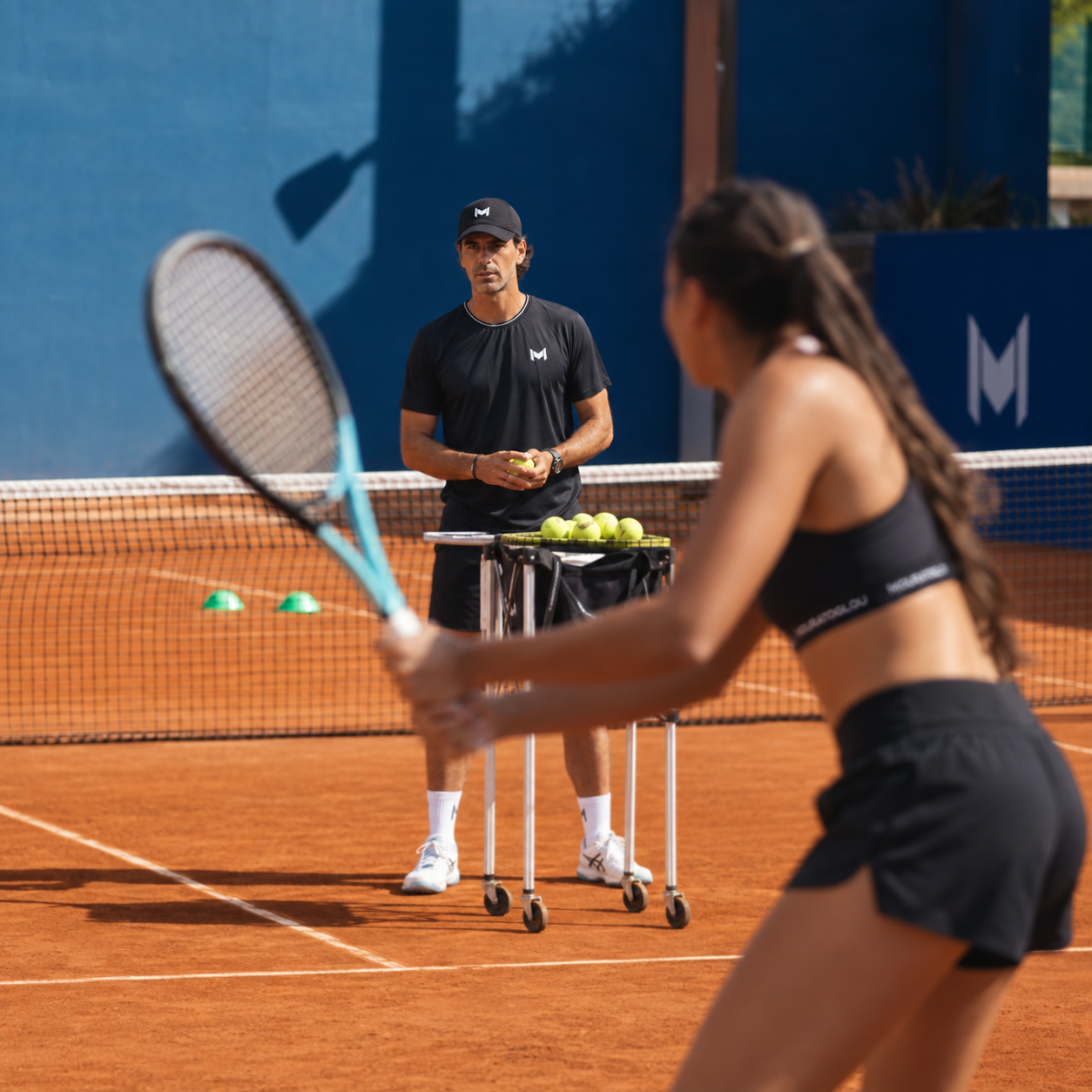 AdultsMorningsAll levelsPlayer Camp AdultCoached tennis mornings to progress at your own pace, with afternoons free on the French Riviera.DISCOVER
 Frequently asked questions
At what age can you start tennis?
At any age. Children often start around 4 to 6 with adapted equipment, but many adults take up the game at 30, 40 or 60 and progress very well.
How long does it take to learn tennis?
With two sessions a week, most beginners can rally properly from the baseline after a few months. The serve usually takes longer.
Which racquet should a beginner use?
A light racquet with a fairly large head (100 square inches or more) and a grip size that fits your hand. Avoid heavy “players’” racquets.
Do I need lessons to start tennis?
It is strongly recommended. A coach sets up the right grips and strokes from the start, which avoids faults that are hard to fix later.
Can I join a tennis camp as a beginner?
Yes. Groups are organised by level, and a camp is one of the fastest ways to learn the basics and gain confidence.