Technique · Volley
Backhand volley technique in tennis
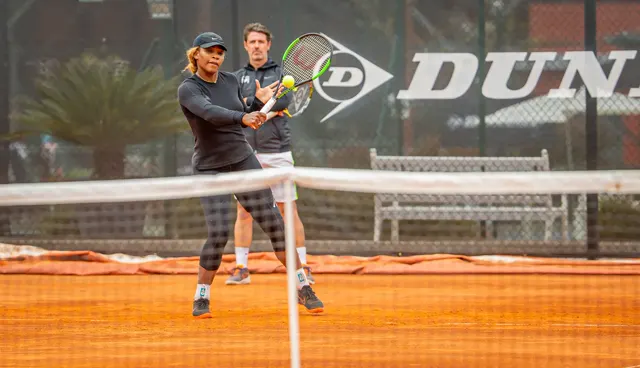
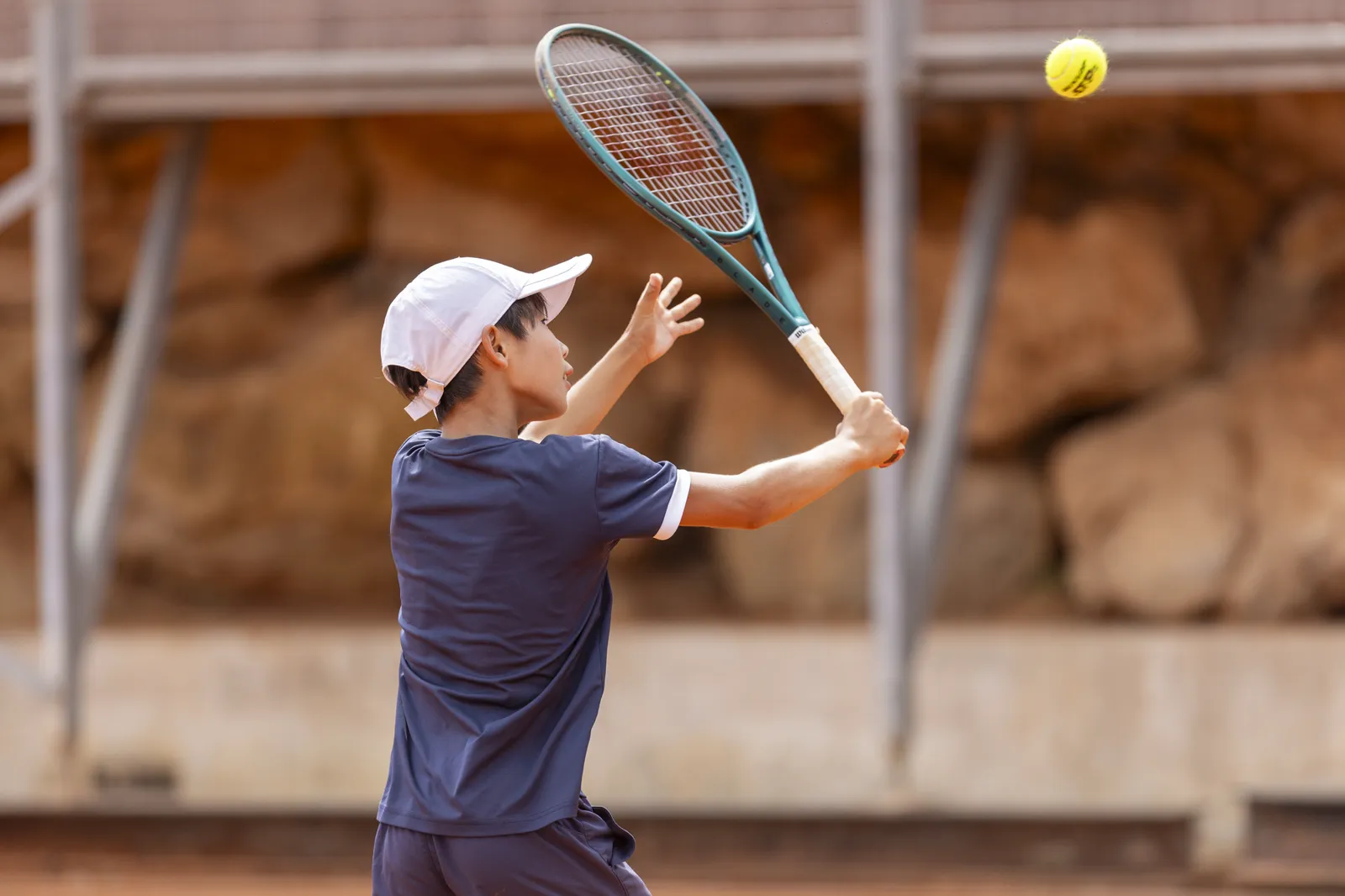
The backhand volley is played before the bounce, with a continental grip, the racquet held high in front and supported by the free hand until the last moment. The ball is met well in front of the body, arm almost straight and wrist firm, with a step of the front foot: it is a forward block rather than a swing.
Key takeaways
- Two one-handed techniques: the block volley, to learn first, and the high volley, with a bigger shoulder turn.
- The grip: eastern backhand to start, then continental (hammer) so you never need to change grip.
- The free hand supports the racquet by the throat and releases just before contact.
- Contact is further in front than on the forehand volley, arm almost straight, face slightly open.
- The follow-through is short: the racquet follows the line of the ball, then stops.
What is the backhand volley?
The backhand volley is played on any ball arriving on your backhand side before the bounce, except balls above your head, which call for the smash. There are two one-handed techniques: the block volley and the high volley. Experienced volleyers use both; beginners should master the block volley first, in a closed stance. Moving from one to the other comes naturally as you progress and spend more time at the net.
The general principles of volleying (grip, ready position, stepping towards the ball) are set out in our article on volley technique. Here, we focus on the backhand side.
Which grip and ready position for the backhand volley?
The grip
The eastern backhand grip gives the firmness needed to block the ball: it is recommended for beginners until they can control the racquet head at every height. Most experienced players use the continental grip (or hammer grip), which saves time between shots and makes the sliced volley and drop volley easier.
The ready position
- Racquet held fairly high, just below eye level, in front of you.
- Free hand on the throat of the racquet to support it.
- Knees bent, weight on the balls of your feet.
- Handle pointing forward at about 45°, so you could look through the strings; hand, elbow and racquet head form a triangle.
How to play the backhand volley, step by step
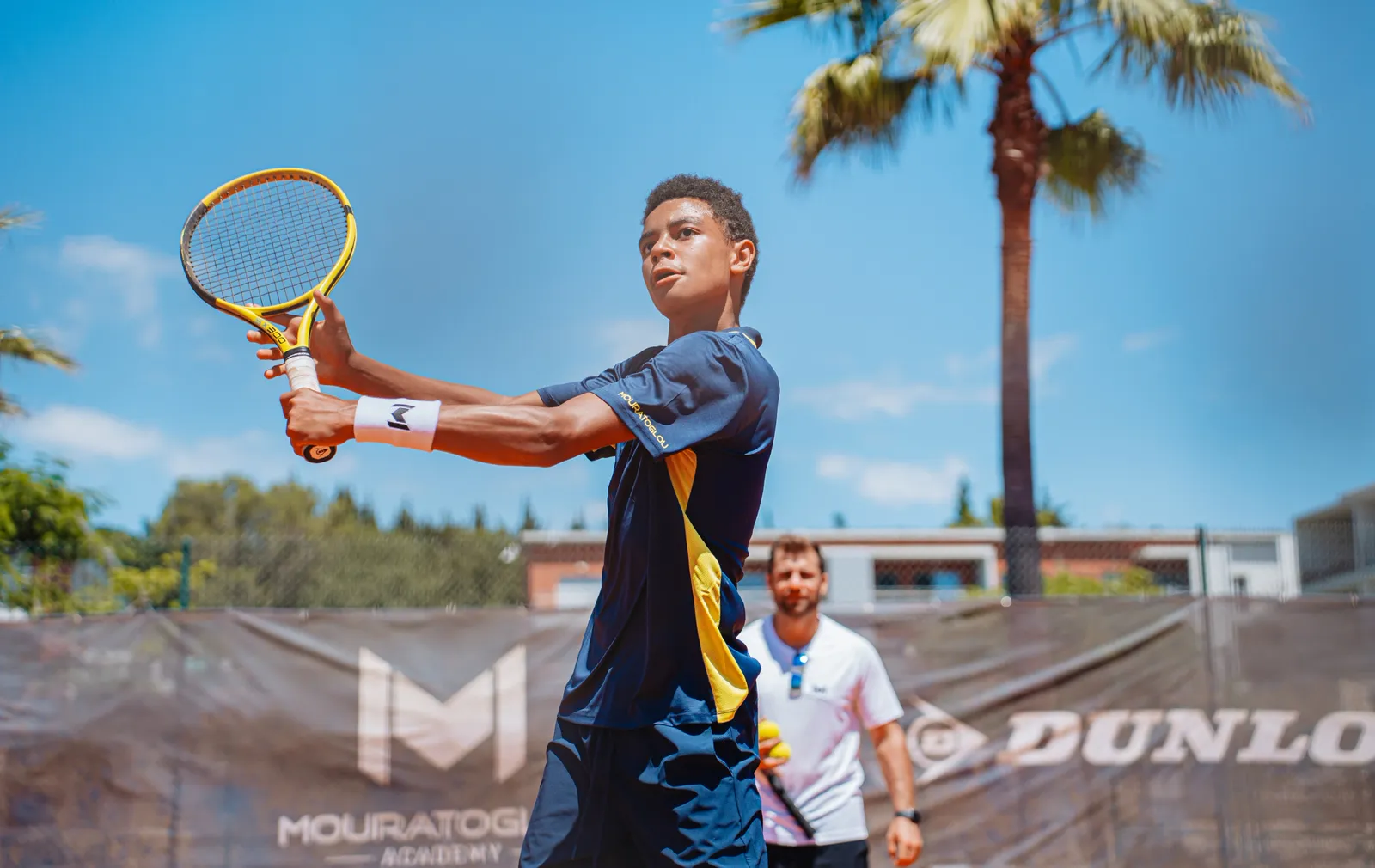
- Turn your shoulders to the left (for a right-hander), racquet high and held with both hands, the hitting elbow almost parallel to the ground.
- Tilt the face back slightly (open face) as the ball approaches.
- Draw the bow: the free hand pulls the racquet back a little by the throat, like the string of a bow.
- Step with the right foot towards the ball and forward (for a right-hander), in a closed stance.
- Contact in front of the body: the free hand lets go and the racquet goes forward like an arrow released. The arm is almost straight, the wrist firm.
- Short follow-through: the racquet travels slightly past the contact point along the line of the ball, face still a little open. The back of the hand and the shoulder show the direction.
At contact, the free hand moves back to balance the shoulders, just as on a one-handed groundstroke. To work on this rotation, see also our article on preparing the one-handed backhand.
Block volley or high volley: what is the difference?
| Block volley | High backhand volley | |
|---|---|---|
| Shoulder turn | Limited | Bigger |
| Contact point | Well in front of the body | In front, or slightly later depending on the ball |
| Backswing | Almost none, racquet stays in front | A little bigger, to punish soft balls |
| Used for | Fast exchanges close to the net, beginners | Slower balls, approach volleys, experienced players |
On the block volley, the player faces the net with the racquet in front, held with both hands; only the hitting arm pushes forward to intercept the ball, the free hand releasing just before contact. The high volley applies the same principle with a bigger shoulder turn: it gives you more time and a wider hitting zone. On a soft ball too low to smash, you can take the racquet back a little further; keep that option for occasional use.
The length of the follow-through depends on where you are: close to the net in a fast exchange it is short, like a block; just inside the service line it can extend a little further.
The two-handed backhand volley
Many players with a two-handed backhand also volley with two hands. The free hand is then in an eastern forehand grip and the dominant hand in a continental grip. This version adds stability on fast balls and body shots but reduces reach: on a wide ball, it is better to release the top hand and play one-handed, which also lets you get into position faster.
Tips for an effective backhand volley
- Turn your shoulders as you move in, racquet head high, racquet held with both hands.
- Keep your feet active: regain balance between shots with side steps and a split step. More in our article on footwork at the net.
- Cut off the angle: if you have time, move towards the ball to take it earlier and reduce your opponent’s angle.
- Ball at your body: with no time to get out of the way, play it on the backhand, racquet in front of your stomach; it is the quickest response.
At the Mouratoglou Academy on the French Riviera (Biot, near Nice), the backhand volley is trained in live situations: approach, first volley, finish. The Mouratoglou Method adapts the progression to each player’s game, whether a natural attacker or a baseliner. Complete this with volley technique, net footwork and the hammer grip. More about our camps.
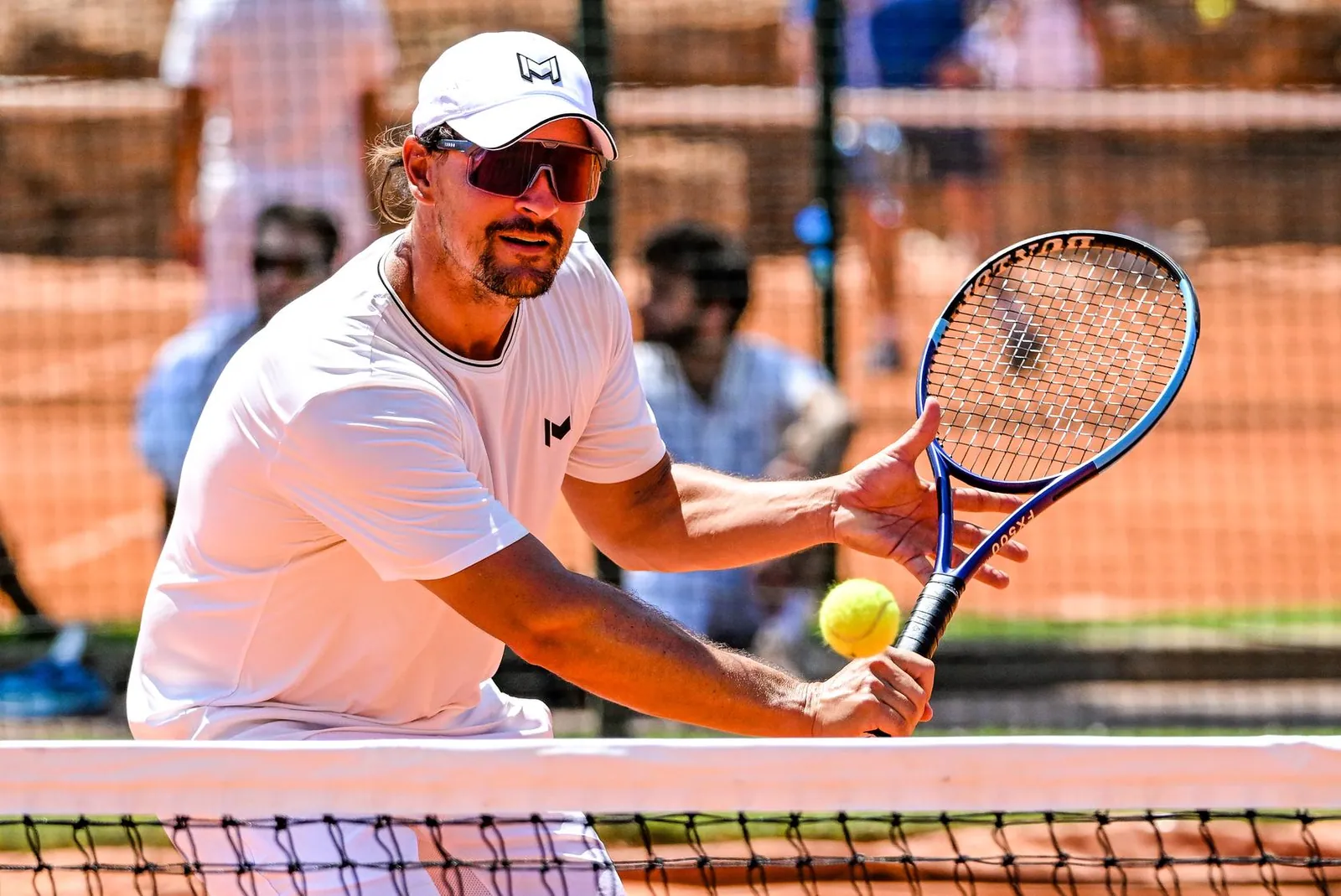 AdultsFull daysAll levelsPerformance Camp AdultA week of intensive tennis, 4 players per coach: technique, match play, physical and mental training.DISCOVER
 Frequently asked questions
Which grip for the backhand volley?
The continental (hammer) grip is the reference for experienced players, as it avoids changing grip between forehand and backhand. Beginners can start with a firmer eastern backhand grip before switching.
Why does my backhand volley lack power?
Usually because contact is too late or your weight stays on the back foot. Meet the ball in front of the body with a step of the front foot, and let the free hand move back at contact.
Can you play the backhand volley with two hands?
Yes, especially if you hit a two-handed backhand from the baseline. It is stable on fast balls but reach is limited: on a wide ball, switch to one hand.
How do you play a ball hit straight at your body?
Play it on the backhand, racquet in front of your stomach, face slightly open. It is the quickest way to get out of the ball’s path, especially in doubles.
Which drills improve your backhand volley?
Volley-to-volley inside the service boxes, with the racquet held short, builds a stable racquet face. Add volleys from fed balls at different heights, with a target to hit. Finish with approaches to the net in live points. On the Performance Camp Adult, these sequences are part of the work on transitioning to the net.