Technique · Forehand
The high-ball forehand: tips to stop being pushed around
A high ball on the forehand side is one that bounces above shoulder height, usually because of heavy topspin or a looping trajectory. You have three options: move in and take it early, step back and let it drop, or hit it high with a more closed grip. Moving in is the most aggressive choice, stepping back the safest: a good player knows when to use each.
Key takeaways
- The problem: above the shoulder it is hard to hit topspin and power; the bounce pushes you far behind the baseline.
- Option 1, move in: take the ball on the rise or at the top of the bounce, at chest height.
- Option 2, step back: let the ball drop; safer, but you lose ground and time.
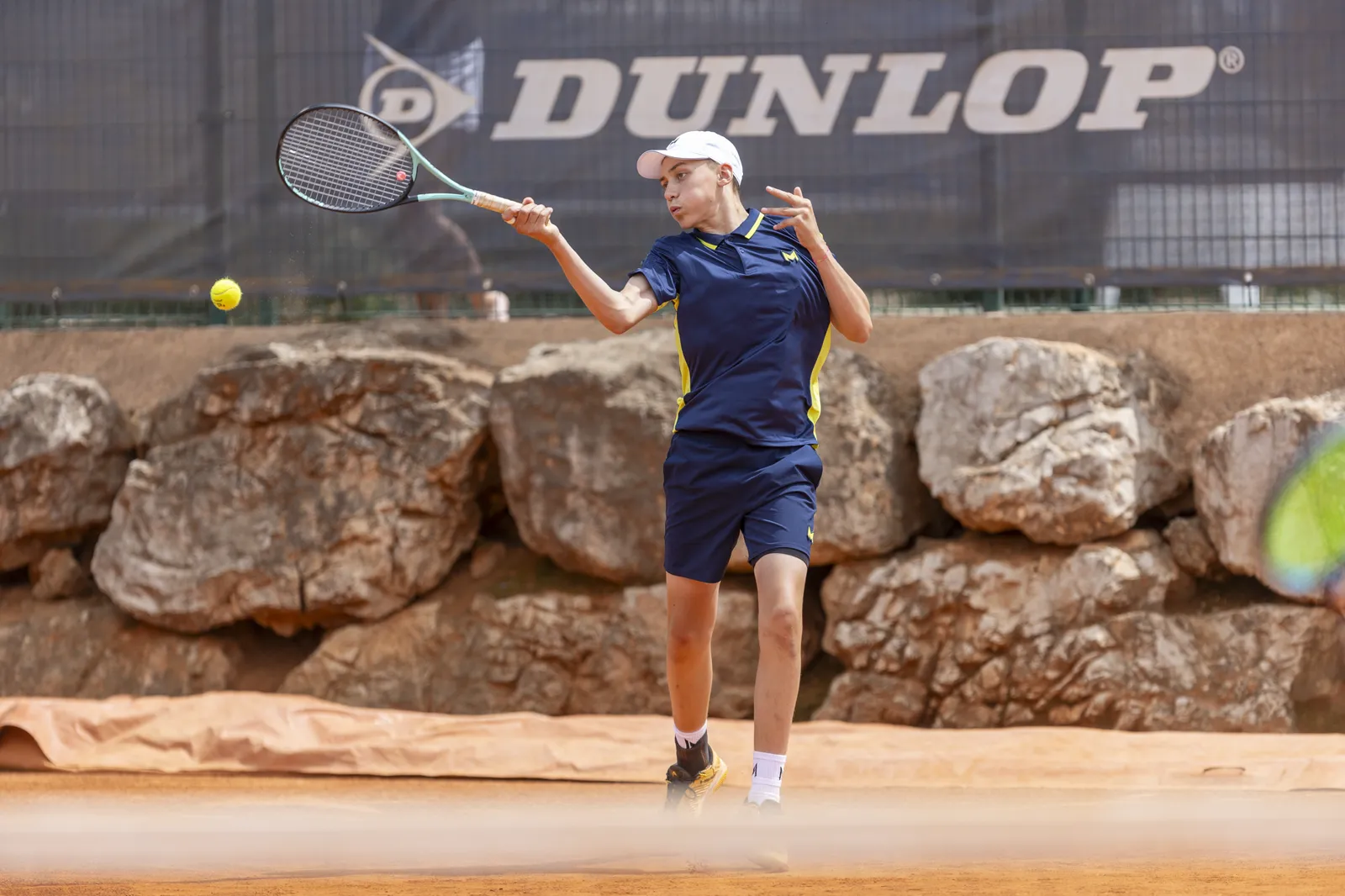
- Option 3, hit high: shoulder lined up with the ball, swing forward and slightly down; a semi-western or western grip helps a lot.
- On the volley: against a slow moonball, a swinging volley (or a smash) takes time away from your opponent.
Why is the high-ball forehand so difficult?
The forehand swing is designed for contact between knee and chest height. Above the shoulder, three problems appear: it becomes hard to get under the ball to hit topspin, the arm works in a zone where it produces less speed, and the bounce pushes you far behind the baseline.
That is exactly what an opponent playing high, heavy topspin or moonballs wants: to push you back, make you hit off balance and get harmless balls in return. This style is typical of very consistent players: see also our tips on beating a pusher.
Step back, move in or hit high: which option to choose?
| Option | How | Advantage | Drawback |
|---|---|---|---|
| Move in | Take the ball on the rise or at the top of the bounce | You keep the initiative and rush your opponent | Demanding timing |
| Step back | Let the ball drop to waist height | Comfortable, safe swing | You lose ground; your opponent takes the centre |
| Hit high from where you are | Contact above the shoulder, forward swing | No retreat, aggressive shot possible | Needs a suitable grip and strength |
| Swinging volley / smash | Take the moonball before it bounces | Very aggressive on a slow ball | Risky if the ball is deep or spinning heavily |
As a rule of thumb: move in whenever the ball is not very deep, step back when you are already under pressure and the priority is to get the ball back, and hit high when you do not want to give up ground on a deep ball.
Which grip for a high-ball forehand?
The grip is the first adjustment. The more closed it is, the higher your ideal contact point: a semi-western (base of the index finger on bevel 4) or western grip (bevel 5) lets you stay over the ball and hit topspin even at shoulder height. With an eastern or continental grip, high balls become very awkward and you are forced to step back.

The detailed comparison is in our guide to forehand grips. A grip change is worked on over several weeks, not in the middle of a match.
The high-ball forehand swing, step by step
- Spot the high ball early: looping trajectory, heavy topspin, a bounce that will clearly go above your shoulder. Decide straight away whether to move in or back.
- Raise your preparation: take the racquet back higher than usual, around head height, with a full shoulder turn.
- Line your shoulder up with the ball: standing slightly further away sideways gives your arm room to extend.
- Hit in front and forward: the racquet meets the ball level or slightly above it and drives through it, rather than swinging low to high.
- Follow through: the racquet finishes lower than on a classic topspin shot, often across the body.
- Stay grounded: a solid open stance, weight slightly forward; a small jump can help you reach the ball.
Turning a high ball into a chance to attack
A slow, high ball is not only a threat: it is often an invitation to move forward. If the moonball lands around the service line, step in, take it at the top of the bounce and hit it with attacking intent: that is the logic of the attacking forehand.
- Aim for depth or your opponent’s backhand rather than maximum pace.
- Follow your shot to the net: players who hit moonballs are often uncomfortable against someone at the net.
- On a very slow moonball, take it out of the air: you leave your opponent no time to recover.
- Mix it up: a low slice in reply breaks the rhythm of a player who loves high balls.
 AdultsFull daysAll levelsPerformance Camp AdultA week of intensive tennis, 4 players per coach: technique, match play, physical and mental training.DISCOVER
 Drills to improve on high balls
- High-ball basket: the coach feeds topspin balls that bounce above your shoulder. 10 balls stepping back, 10 moving in, 10 hitting where you stand. Note which works best for you.
- Moonball then attack: your partner plays a short moonball; you move in, attack at the top of the bounce, then finish at the net.
- Swinging volley: on slow, high balls, take the ball before the bounce with a full forehand swing.
- Themed match: points only count if you play at least one high ball from inside the baseline.
For the whole stroke, see our complete tennis forehand guide. Young players, who often face very high balls because of their height, make quick progress on this at the Performance Camp Junior.
These drills fit into a wider progression: our guide on improving your technique explains how to balance them, and your baseline footwork decides whether you can step back or move in on time. In the Mouratoglou Method, the choice between these options depends on your player profile. Our tennis camps at the Mouratoglou Academy on the French Riviera (Biot, near Nice) let you repeat them against genuine topspin hitters.
Frequently asked questions
Should you step back or move in on a high ball?
Moving in is the most aggressive option: you take the ball early and keep the initiative. Stepping back is safer when you are already under pressure, but you give up ground. Ideally, master both and choose depending on the depth of the ball.
How do you hit a forehand above your shoulder?
Take the racquet back higher, stand a little further from the ball and hit in front, driving forward through the ball with a slightly closed face. A semi-western or western grip makes this much easier.
What is a moonball in tennis?
A ball hit very high over the net on an arcing trajectory, which bounces high and deep. It is used to buy time, break the rhythm or trouble an opponent who dislikes hitting above the shoulder.
Why do children struggle with high balls?
Because for them, a normal-height ball often bounces at head level. Age-appropriate balls (slower and lower-bouncing) and learning to take the ball early help them keep it in their hitting zone.
How do you play a high ball on the backhand?
On the backhand, a high ball is even more demanding, especially one-handed. The options are the same as on the forehand: step back to let it drop, or move in to take it on the rise. With two hands, the non-dominant hand helps control a higher contact. See our guide to the one-handed backhand, and the Performance Camp Junior to work on these situations with a coach.